
A three-phase motor is an AC electric motor supplied by three electrical phases, displaced by 120 electrical degrees, which produce a rotating magnetic field in the stator. For industrial buyers, the most common example is the squirrel-cage induction motor used on pumps, fans and conveyors. However, “three-phase” describes the supply—not a single rotor design, efficiency class or frame material.
This overview focuses on motor types, applications and matching a requirement to a product series. For the underlying theory, see Understanding the Induction Electric Motor: Principles and Applications.
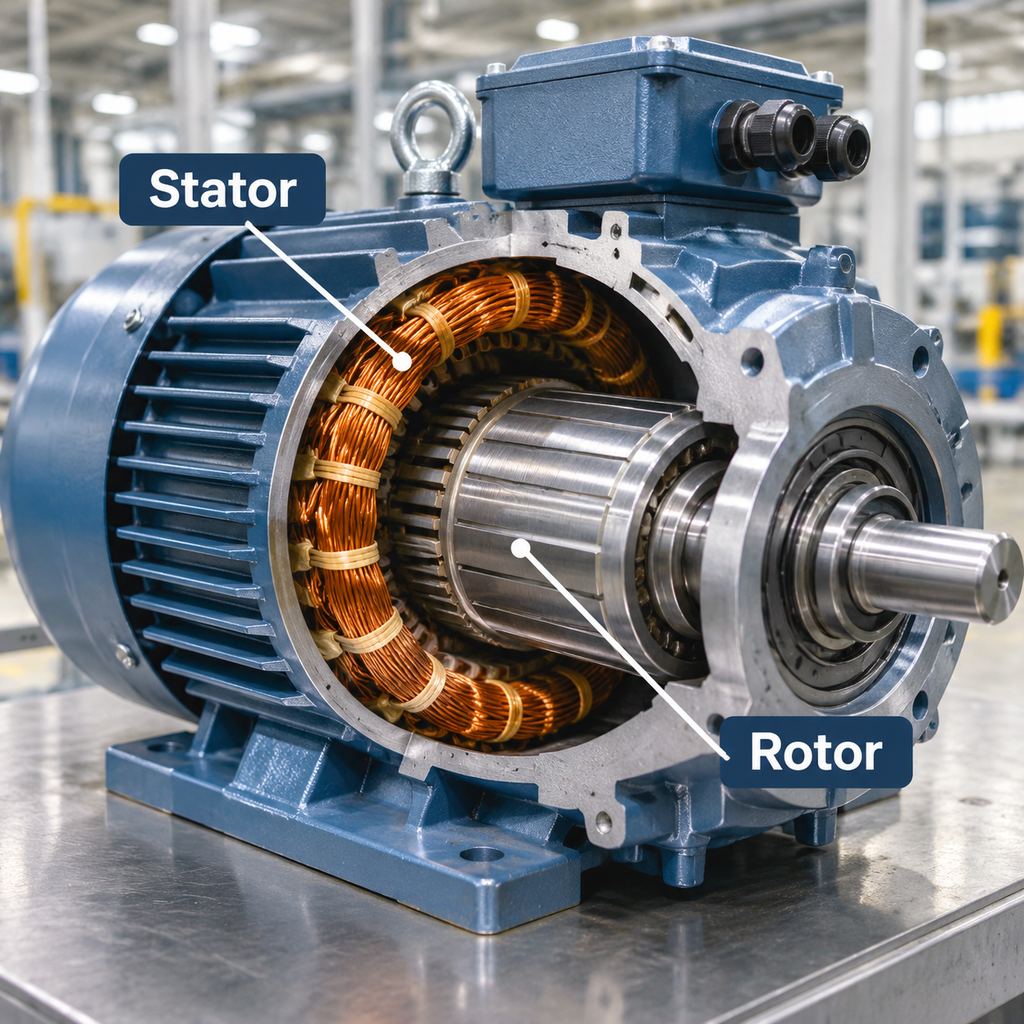
How It Works—in Brief
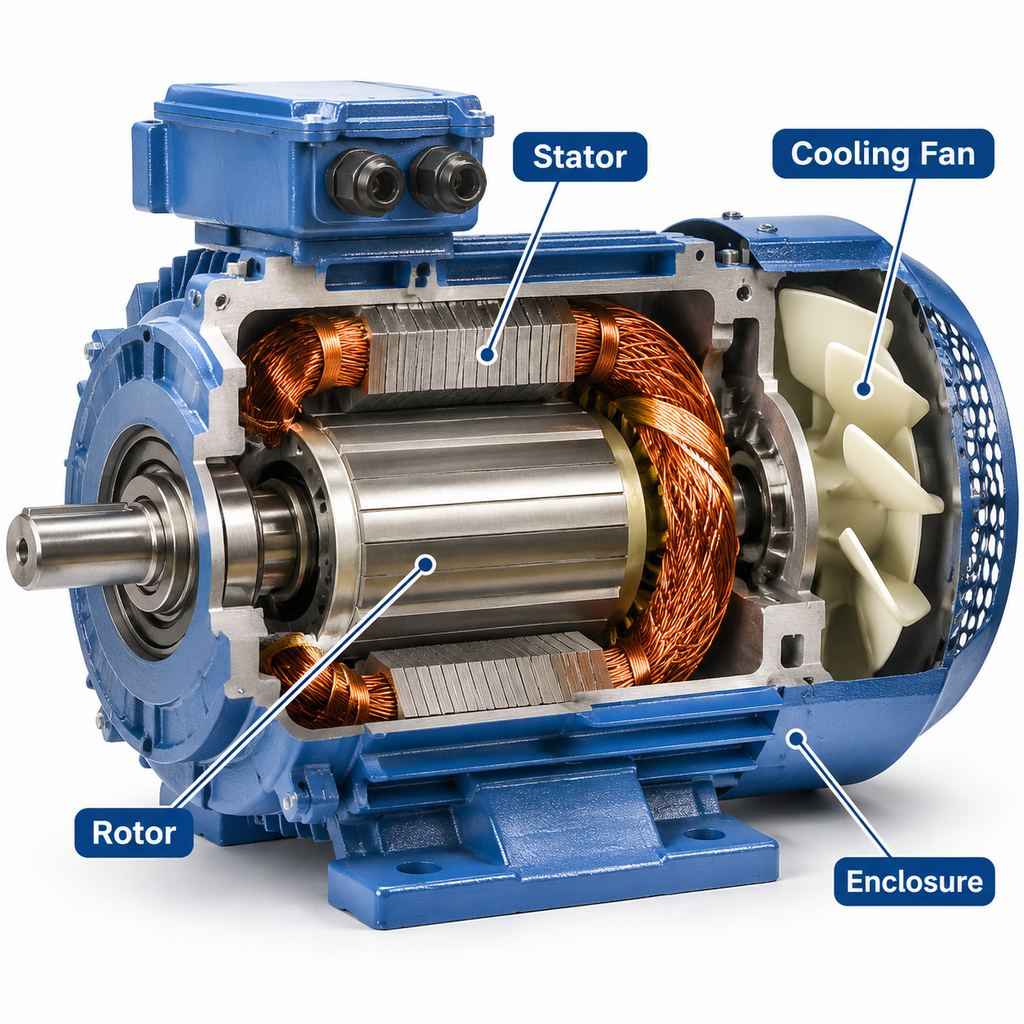
In an induction motor, the rotating stator field induces rotor current, and their interaction produces torque. The rotor must run slightly below the field speed to produce motoring torque; for more detail, see the AC induction motor principle and squirrel-cage motor explanation.
Three-Phase vs Single-Phase Motors
A balanced three-phase supply naturally creates the rotating field needed for starting torque in a three-phase induction motor. A single-phase induction motor needs an additional starting arrangement, such as an auxiliary winding or shaded pole, because its main winding alone does not produce net starting torque at standstill.
| Selection point | Three-phase induction motor | Single-phase induction motor |
|---|---|---|
| Supply | Requires a compatible three-phase source | Runs from a suitable single-phase source |
| Starting arrangement | Inherently self-starting; still requires appropriate switching and protection | Uses an auxiliary starting arrangement; design varies |
| Torque delivery | Generally smoother on a balanced supply | More pulsating electromagnetic torque |
| Typical buying context | Industrial plant and commercial machinery | Smaller equipment where single-phase supply is available |
Self-starting does not mean every load can be accelerated without checking its torque and inertia. Nor does it mean that all three-phase motors are self-starting: synchronous designs may need a drive or a specific starting arrangement. Choose according to the available supply and machine duty, not a blanket claim that one supply type is always better.
Types of Three-Phase Motors
Induction (asynchronous) vs synchronous
An induction motor operates with a speed difference between the rotating field and rotor. A synchronous motor runs in step with the field during steady synchronized operation and may use permanent magnets, electrical excitation or a reluctance rotor design. Its drive and starting requirements differ from those of a standard induction motor.
Synchronous speed is the reference set by frequency and pole count; slip explains why an induction motor’s loaded speed is lower. Buyers should compare rated shaft speed, not just a catalogue speed class.
Squirrel-cage vs wound-rotor induction motors
| Rotor construction | What distinguishes it | Buying implications |
|---|---|---|
| Squirrel cage | Conductive rotor bars joined by end rings; no rotor brushes or slip rings | Dominant general-purpose industrial choice; robust and relatively low maintenance |
| Wound rotor (slip ring) | Rotor windings connected through slip rings, traditionally to external resistance | Used for selected heavy-duty applications needing particular torque characteristics; extra equipment and maintenance must be considered |
Squirrel-cage motors are common on pumps, fans, compressors, conveyors and many machine tools. Wound-rotor motors remain relevant in some demanding and legacy installations, but are not the default choice for a new general-purpose drive. A standard squirrel-cage motor with a suitably engineered variable-frequency drive may meet many variable-speed requirements; it is not automatically interchangeable with an existing wound-rotor package.
Efficiency classes are not rotor types
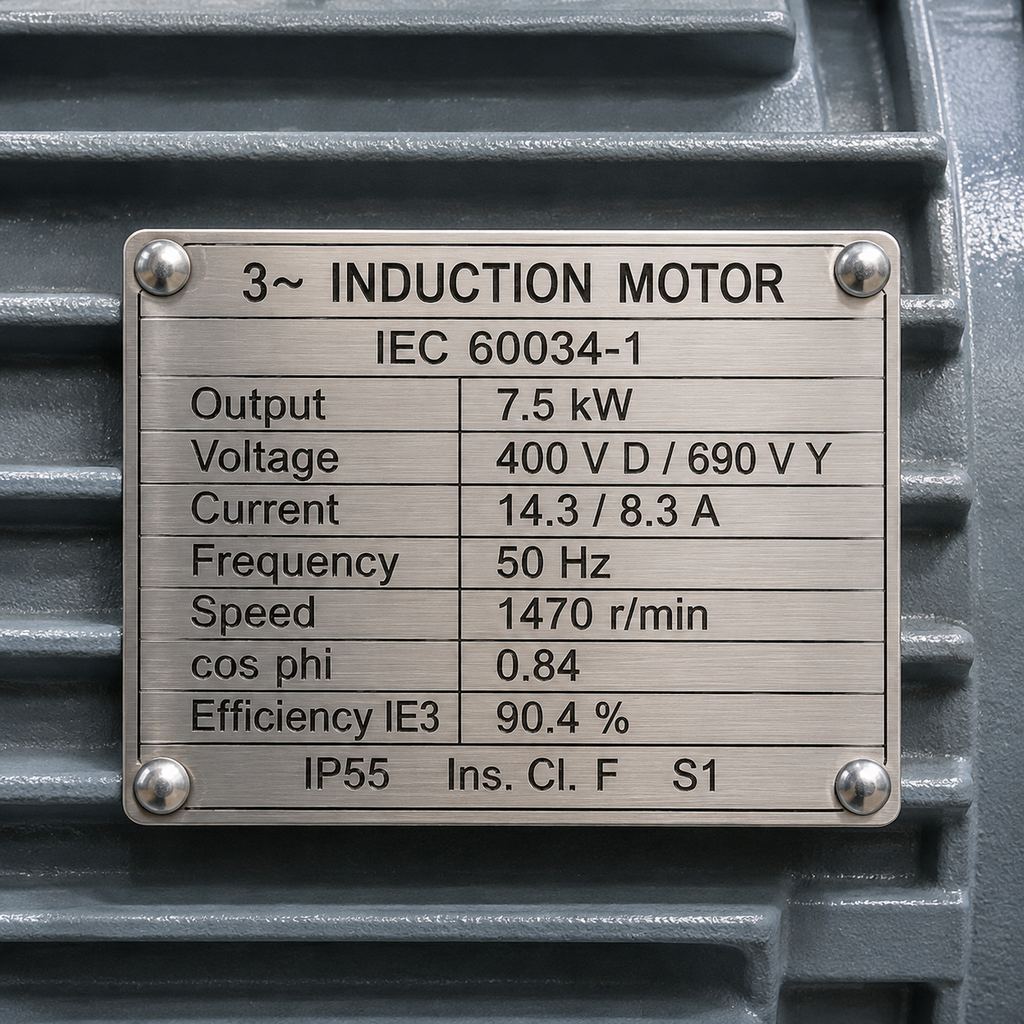
IE2, IE3 and IE4 classify efficiency under applicable rating conditions; they do not describe a different supply or mechanical arrangement. Compare the specific ratings and destination requirements using the IE2 vs IE3 vs IE4 motor comparison, rather than treating a class label as a complete specification.
Cast iron vs aluminum frame
Frame material is another separate selection axis: cast iron is generally heavier and valued for structural rigidity, while aluminum can reduce handling weight. Corrosion protection, mounting loads, cooling and installation conditions also matter; see the cast iron vs aluminum motor comparison.
Advantages of Three-Phase Induction Motors
- Simple rotor construction: squirrel-cage designs eliminate brushes and slip rings, reducing routine maintenance points. Bearings, cooling surfaces and other service items still require attention—these motors are not maintenance-free.
- Smooth torque delivery: balanced three-phase operation suits continuously driven industrial equipment, subject to correct mechanical installation and supply quality.
- Practical efficiency and power density: industrial three-phase motors often offer efficient conversion and useful output in a compact package. Actual savings depend on the selected model, load and operating hours.
- Broad application coverage: general-purpose, geared, multi-speed, inverter-duty and brake configurations allow selection around machine requirements rather than one universal motor.
These advantages do not remove the need for overload protection, correct cooling or an appropriate enclosure. A poor supply, unsuitable environment or mismatched load can undermine an otherwise suitable motor.
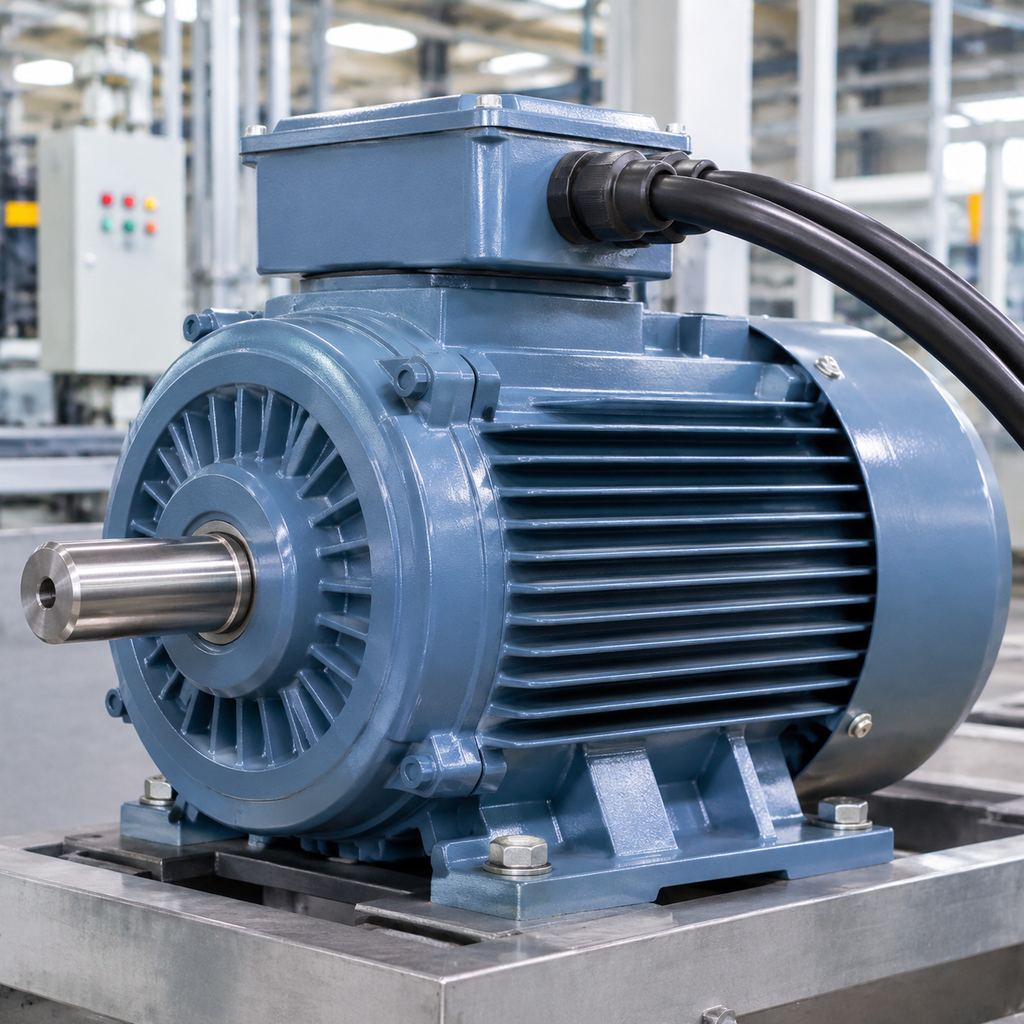
Three-Phase Motor Applications
| Application | What buyers should establish | Likely configuration to discuss |
|---|---|---|
| Pumps | Duty point, absorbed shaft power, fluid properties and speed requirements; centrifugal and positive-displacement pumps have different load profiles | General-purpose induction motor; inverter-duty option where speed regulation is needed |
| Fans and blowers | Airflow demand, inertia, acceleration time and cooling across the speed range | General-purpose, multi-speed or variable-frequency motor |
| Compressors | Compressor type, loaded or unloaded acceleration and duty cycle | Motor selected against the compressor maker’s torque and power requirements |
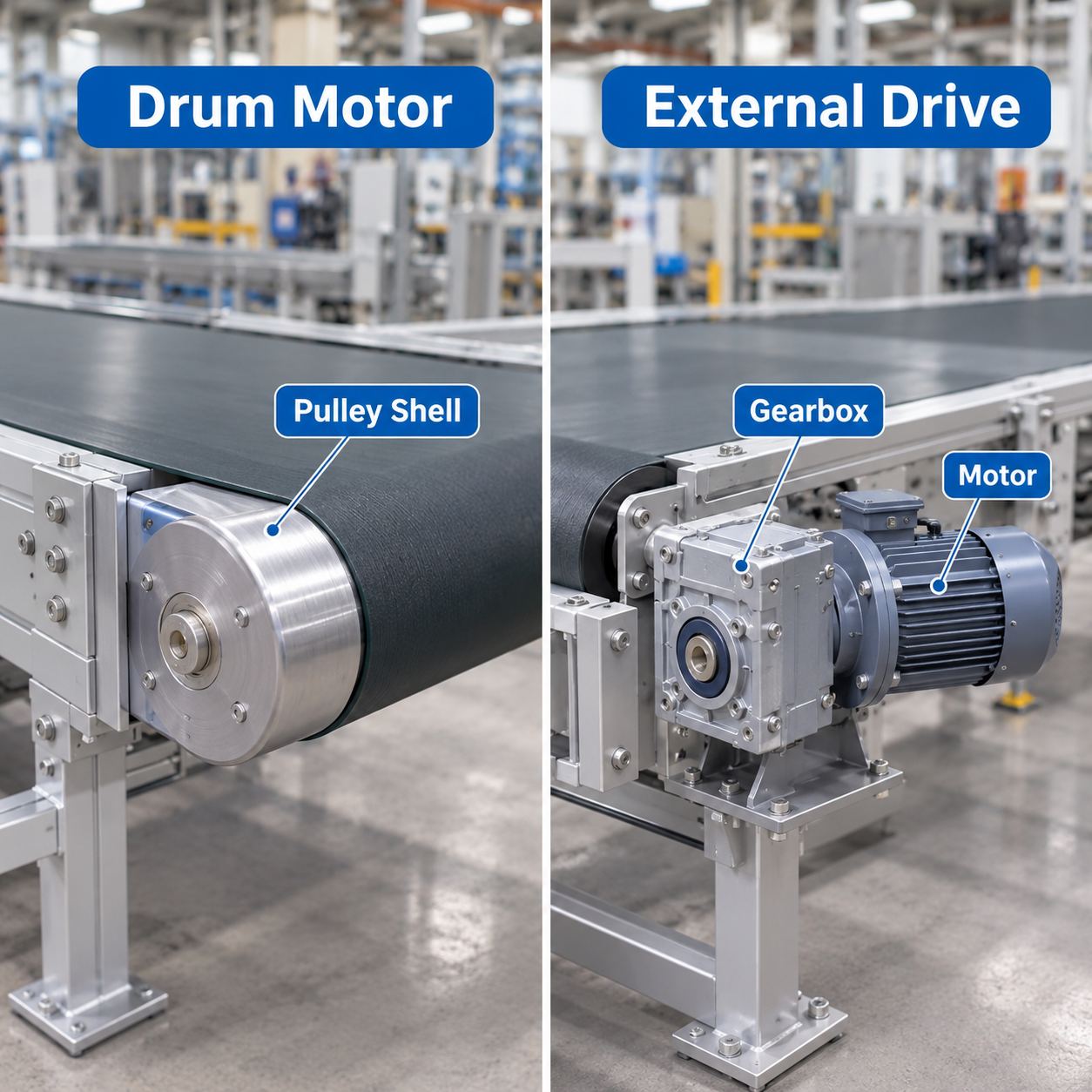
| Conveyors | Loaded starting, line speed, output torque and stopping/holding needs | Geared drive; brake option when required |
| Machine tools | Spindle/feed speed, torque range, control accuracy and installation space | General-purpose or special-purpose drive as specified by the machine builder |
| Mixers | Material viscosity, process changes, reducer output torque and shaft loads | Geared drive or a separately engineered motor/reducer combination |
These are starting points, not guaranteed matches. A mixer that starts full, a compressor that starts under pressure and a conveyor with frequent reversals can demand very different motor characteristics despite having the same nominal power.
Map the Requirement to JWMotor Series
| Series | Role | Where to look |
|---|---|---|
| Y2 / YE3 / YE4 | Cast-iron general-purpose three-phase induction motors, associated with IE2 / IE3 / IE4 respectively; confirm each model’s declared rating | General-purpose motors |
| R / F / K / S | Geared arrangements for the specified output speed, torque and mounting | Gear motors |
| YD / YDT | Multi-speed selections for agreed discrete speeds and load characteristics | Special-purpose motors |
| YVF2 | Variable-frequency applications; verify speed range, torque duty and cooling | Inverter-duty motor guide |
| YEJ | Brake motor applications with specified stopping or holding requirements | Brake motor guide |
A gear motor combines a motor and reduction gearing to match machine output requirements. Specify output torque and speed before selecting a ratio, and identify any brake or safety requirements separately.
FAQ
Is every three-phase motor an induction motor?
No. Three-phase motors include asynchronous (induction) and synchronous designs. Squirrel cage and wound rotor are two construction types within the induction category.
Why are three-phase induction motors self-starting?
The three-phase stator supply creates a rotating field and starting torque without the auxiliary starting arrangement used by single-phase induction motors. Load acceleration and protection still need to be checked.
Can a three-phase motor run directly from single-phase supply?
Not as a normal direct substitute. A suitable conversion or drive solution must be engineered for the available supply and motor duty; simply connecting a standard three-phase motor to single-phase supply is not an acceptable selection method.
Which type is most common in industrial plants?
The squirrel-cage induction motor is the usual general-purpose choice. Wound-rotor, synchronous, geared and special-purpose configurations are selected where the machine or process calls for them.
Next Step: Turn the Overview Into a Specification
Use the three-phase motor selection checklist and RFQ guide to record load, power, speed, voltage, duty, mounting and environment. For an inquiry, provide those requirements and the machine drawing through customization; ask for a confirmed model datasheet and operating limits rather than ordering by series name alone.


1 thought on “What Is a Three Phase Motor? Types, Applications and Series Selection”