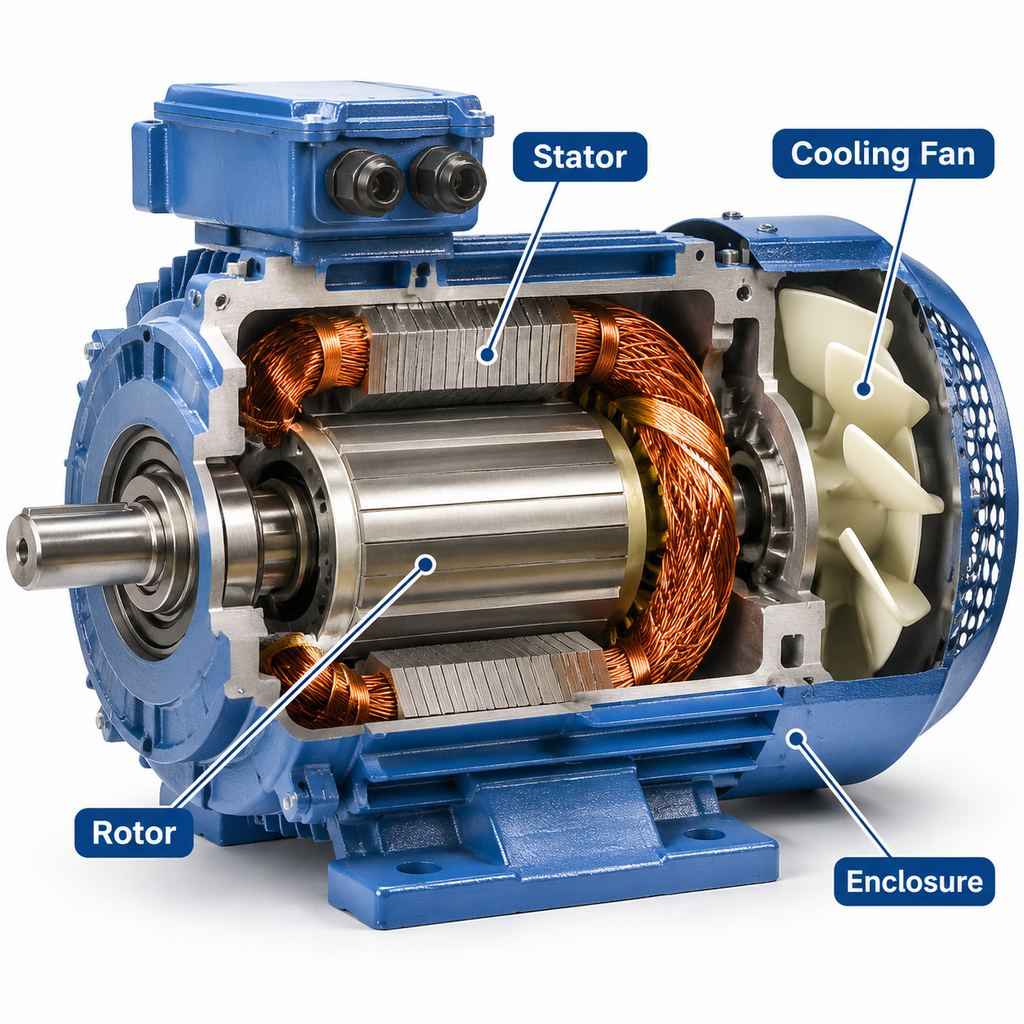
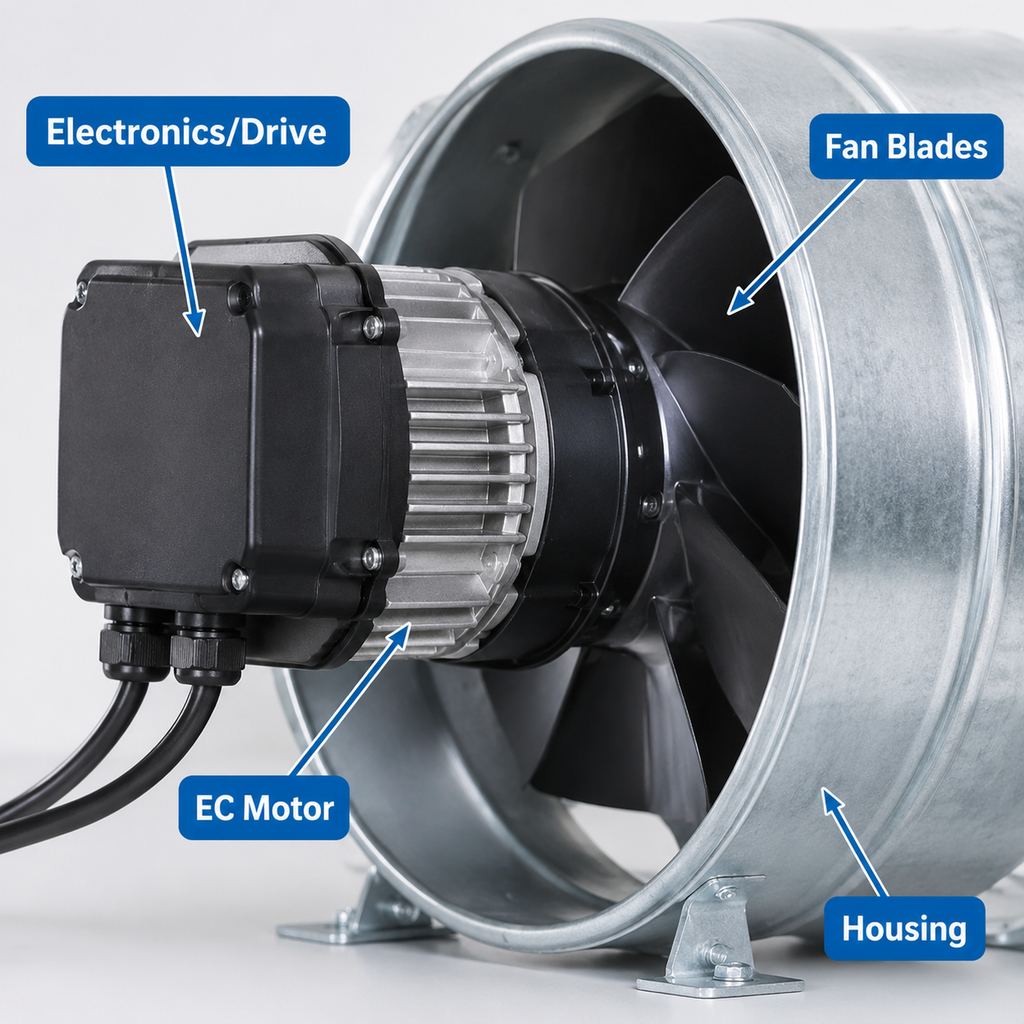
An EC motor (electronically commutated motor) is a brushless permanent-magnet motor with the commutation electronics built in. In HVAC and other air-moving equipment it usually arrives as a compact fan or blower module: it takes an AC supply, rectifies it, and electronically switches the stator windings so the magnet rotor turns. There are no carbon brushes.
The machine itself is closely related to a brushless DC (BLDC) or permanent-magnet synchronous motor. What people usually mean by “EC” in fans and smaller blowers is that PM machine plus the on-board drive, often in an external-rotor layout that carries the impeller. The construction of PM motors more generally is covered in what is a permanent magnet motor; this page does not repeat that article.
JWMotor does not manufacture EC motors. The comparison below is with the induction alternative a plant buyer already knows: a cast-iron IE3 or IE4 motor plus a VFD.

How an EC Motor Works
The on-board electronics first convert the incoming AC to DC. A controller then switches the stator phases in sequence, using Hall sensors or a sensorless estimate of rotor position, so a rotating field is produced. The rotor magnets follow that field. Speed is set by how fast the electronics commutate, not by a separate inverter in a cabinet.
That is why an EC fan can be speed-controlled from a 0–10 V, PWM or bus signal without a stand-alone VFD. How a separate VFD changes frequency for an induction motor is explained in what is a VFD drive; this article does not retell that process.
EC Motors vs an IE3/IE4 Induction Motor Plus a VFD
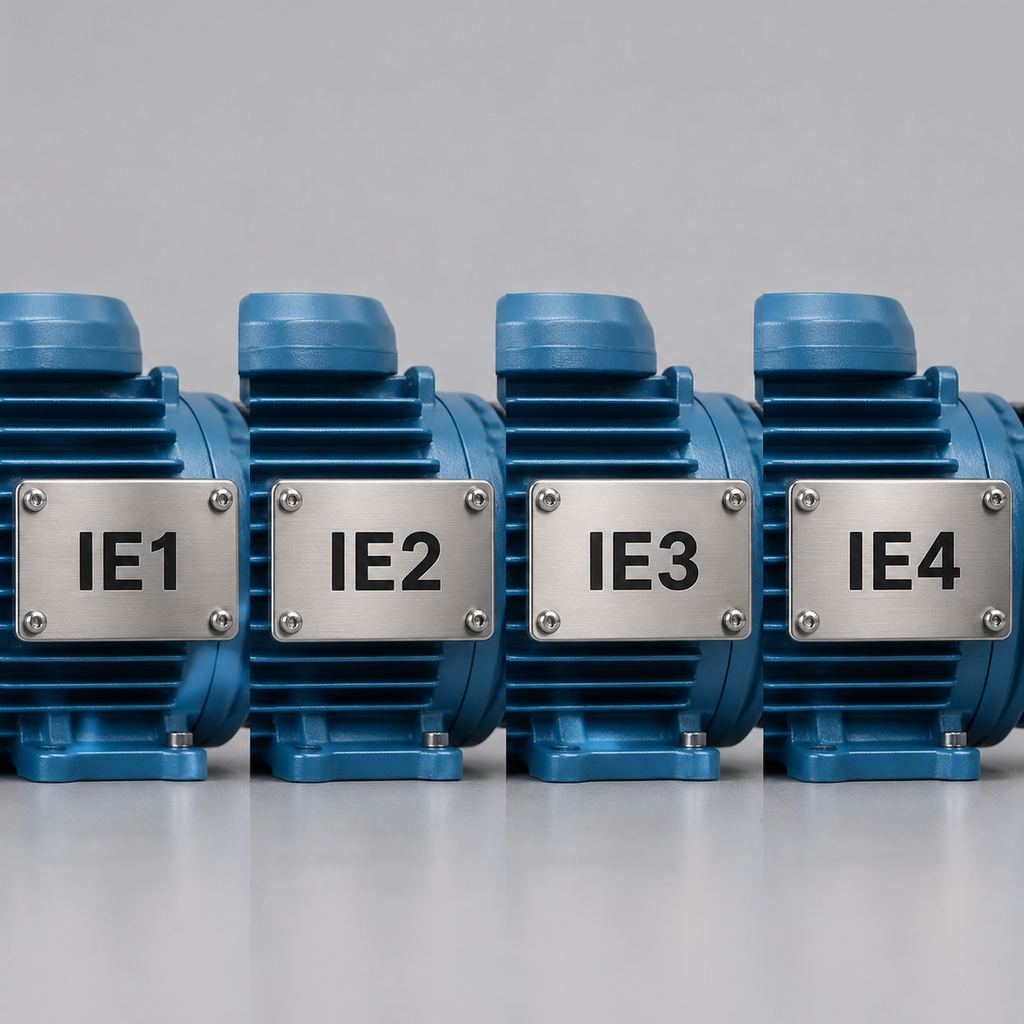
On industrial fans and pumps the practical choice is often an EC module versus a standard IEC induction motor (YE3 or YE4) with a VFD. If the induction motor will run for long periods on a drive, an inverter-duty design such as YVF2 is the usual option; see what is an inverter duty motor. IE class differences are in IE2 vs IE3 vs IE4 and the comparative analysis; they are not repeated here.
Typical power range. EC motors in HVAC fans and smaller blowers are most often in the small-to-a-few-kilowatt range, frequently as an external-rotor fan. Cast-iron IE3/IE4 induction motors cover a much wider industrial kW range and standard IEC frames for pumps, fans and other driven machines. This article does not invent a hard upper limit for either type.
First cost vs long-term electricity. An EC unit packages the motor and the drive, so you are buying one assembly. An induction motor plus a VFD is two pieces of equipment, plus cabling and commissioning. Which installed cost is lower depends on the kW, the frame and the control already in the plant; no price or payback figure is given here. In use, both options can run efficiently at reduced speed on fans and pumps (affinity laws still apply). A PM rotor does not need a magnetizing current the way an induction motor does, so EC efficiency often holds up well at part load—but that is a tendency, not a guaranteed saving percentage. How to estimate motor efficiency and energy use is in how to determine motor efficiency.
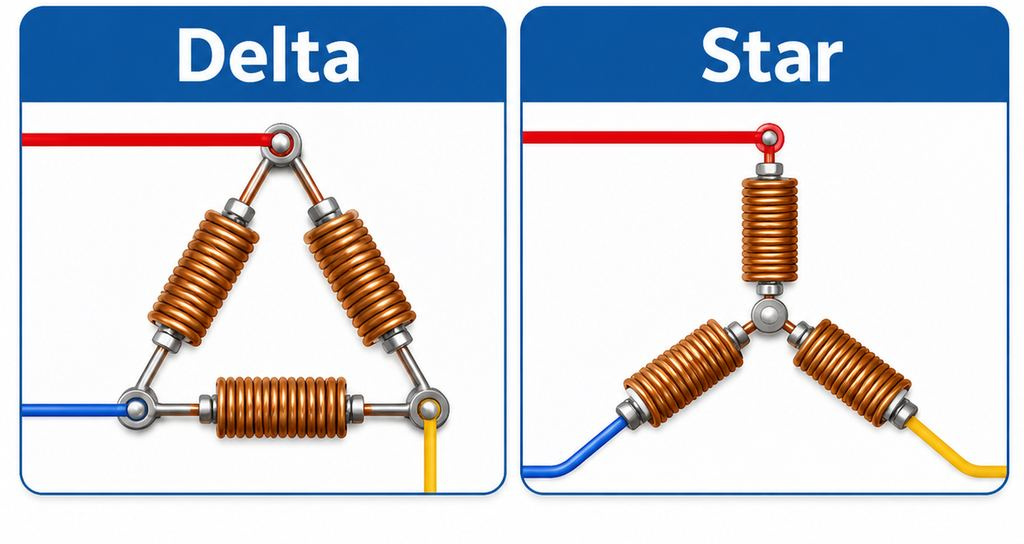
Whether a separate VFD is required. For an EC motor, usually no: the commutating electronics are already in the housing. For an induction motor, yes, if you need a speed range: a VFD is a separate device. An IE3 or IE4 motor can still be started DOL or star-delta when the speed is fixed.
Maintenance and repair. An EC motor has no brushes, but it does have electronics and a magnet rotor. Local shops that routinely rewind a squirrel-cage stator may not repair a failed drive board or remagnetize a rotor. An IE3/IE4 induction motor is a standard IEC machine: bearings, rewind and a replacement VFD are more widely understood. If the site depends on local repair, that difference can outweigh a smaller package.
When each option makes sense. Choose an EC motor for compact HVAC fans, smaller blowers and OEM air-moving modules where the integrated drive and a tight envelope matter, and where a replacement module is an acceptable service path. Choose a cast-iron IE3 or IE4 induction motor plus a VFD when you need a standard IEC frame, a larger kW, a pump or fan already set up for a conventional motor, or a rewind-and-replace service model. YVF2 is the induction choice when the motor will live on the drive.
| Point | EC motor | IE3/IE4 induction motor + VFD |
|---|---|---|
| What it is | Brushless PM motor with on-board commutation electronics | Squirrel-cage IEC motor; speed control added by a separate VFD |
| Typical power / form | Small to a few kW; common as HVAC fan and compact blower modules | Wide industrial kW range in standard IEC frames (pumps, fans and other driven equipment) |
| Separate VFD needed? | Usually no (drive is integrated) | Yes, for variable speed. Fixed-speed IE3/IE4 can still run DOL or star-delta |
| First cost vs electricity | One packaged assembly; part-load efficiency is often strong. Do not assume a generic payback | Motor plus drive and commissioning; energy use should be calculated from actual hours and load |
| Maintenance and repair | No brushes, but electronics and magnet rotor are harder to service locally | Squirrel-cage rewind and a replacement VFD are more widely available |
| Best fit | Compact air-moving modules and HVAC fans | Industrial pumps and fans, standard frames, and sites that want conventional service |
FAQ
What is an EC motor?
An electronically commutated motor: a brushless permanent-magnet motor with the drive electronics built in. In HVAC it is the usual name for that package on a fan or small blower.
What is an electronically commutated motor?
The same thing. “Electronically commutated” means the stator current is switched by electronics rather than by brushes on a commutator.
Are EC motors the same as BLDC or PM motors?
They are in the same family. EC, in fan and blower practice, usually means a BLDC or PM synchronous machine with an integrated drive. The PM-motor article linked above covers the rotor construction.
Can an EC motor replace an induction motor and a VFD?
On a compact HVAC fan or small blower, often yes, if the duty, mounting and control signal match. On a larger industrial pump or fan that uses a standard IEC frame, an IE3/IE4 induction motor plus a VFD is usually the more practical fit.
Does JWMotor make EC motors?
No. YE3 and YE4 are cast-iron IE3 and IE4 induction motors; YVF2 is the inverter-duty induction option for VFD service.
If You Need an Induction Motor or a VFD-Duty Frame
When an EC module is not the right fit, start from the YE3 (IE3) or YE4 (IE4) ranges, or from YVF2 if the motor will run on a VFD. They are listed under general-purpose motors. For a non-standard shaft, voltage or mounting, use customization or all products.