Key Differences Between Cast Iron and Aluminum Electric Motors
1. Durability and Strength
Cast iron electric motors excel in mechanical robustness, making them an ideal choice for industries like mining and heavy manufacturing where shock, vibration, and wear are common factors. The material’s inherent strength ensures long service life even under the most demanding conditions, offering protection for the internal components against external forces. This added durability, however, often comes with an increase in motor weight, transportation challenges, and more labor-intensive installation procedures.
2. Weight and Portability
Aluminum motors are significantly lighter than their cast iron counterparts. This makes aluminum an excellent material choice for applications where weight constraints are important, such as in mobile equipment or smaller panel-mounted configurations. The reduced weight also simplifies handling during installation and maintenance. However, the lighter structure of aluminum may not withstand heavy mechanical loads as efficiently as cast iron.
3. Thermal Conductivity
Aluminum outperforms cast iron in terms of heat dissipation. Its high thermal conductivity allows aluminum motors to operate at cooler temperatures, reducing the stress on internal components and extending the motor’s lifespan. For industries where motors operate under continuous high loads, such as HVAC or continuous production lines, aluminum housings can contribute to better overall efficiency and prevent overheating.
4. Cost Implications
Generally, aluminum motors are more cost-effective in terms of raw material and manufacturing. Aluminum is easier to die-cast, reducing production costs and potentially offering a shorter lead time. Conversely, cast iron motors are pricier due to their heavier material and more intricate casting processes. Buyers need to weigh these upfront costs against the long-term benefits of durability and reduced downtime.
5. Application Suitability
Cast iron motors are suited for harsh environments, given their resistance to corrosion, abrasion, and external impact. They are common in applications like industrial compressors and conveyors that require high mechanical strength. Conversely, aluminum motors are better for environments lacking extreme mechanical stress, such as food processing facilities or small machinery, where their lighter weight can be leveraged without a compromise in performance.
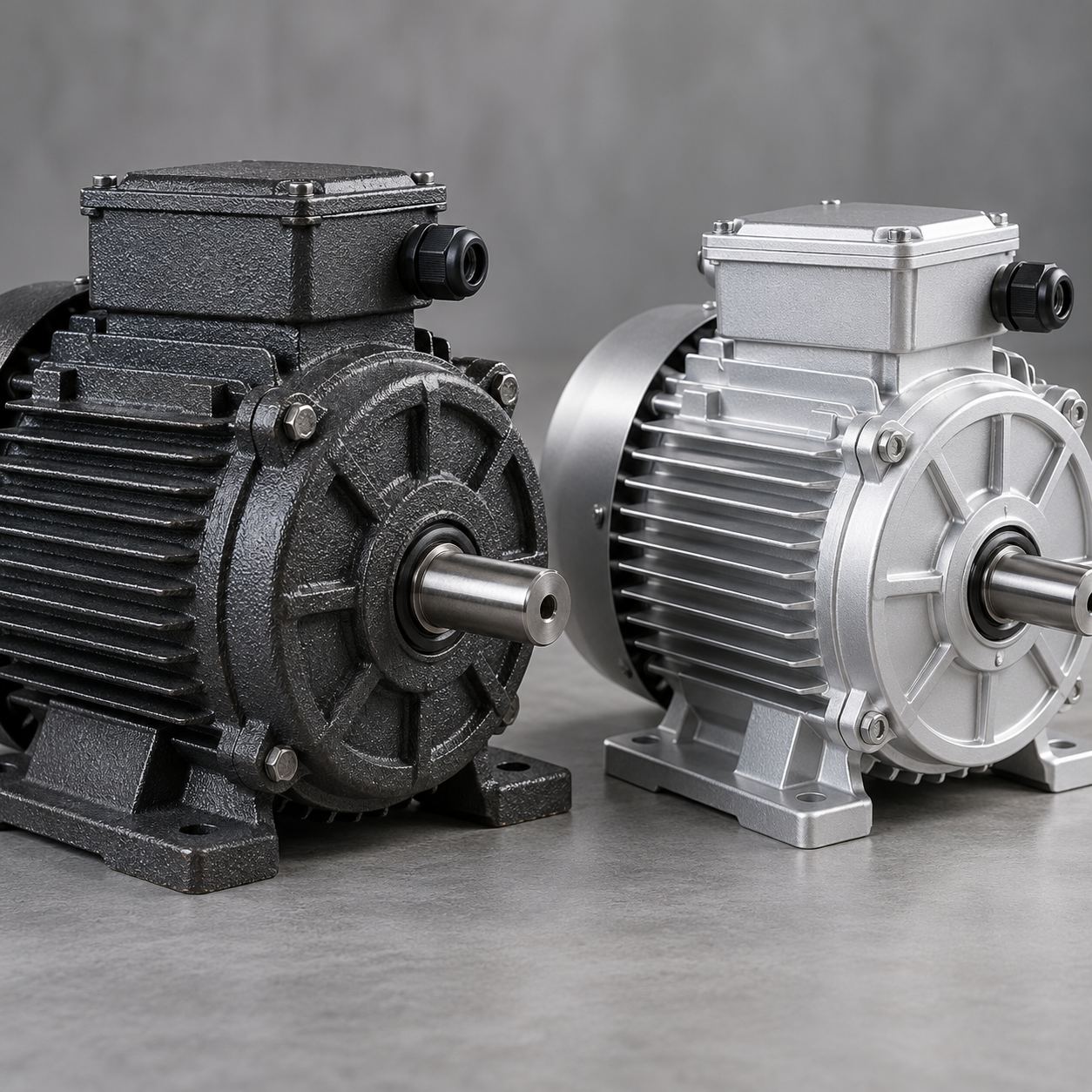
Comparison of cast iron and aluminum electric motors side by side.
Pros and Cons of Cast Iron Motors
- Pros: Cast iron motors offer exceptional mechanical strength, making them highly resistant to impacts, wear, and vibrations. This makes them ideal for heavy-duty or stationary applications in industries such as mining, construction, and manufacturing, where durability is critical.
- Pros: Cast iron provides excellent thermal stability, ensuring reliable operation under high-temperature environments or prolonged usage conditions. Its insulating properties prevent quick temperature fluctuations and reduce thermal stress on the motor components.
- Cons: The significant weight of cast iron motors can be a disadvantage for applications needing portability or in systems with strict weight constraints, such as mobile equipment or ceiling-mounted installations.
- Cons: Cast iron is less naturally resistant to corrosion compared to aluminum, necessitating additional anti-corrosion measures such as painting or coating, especially when operating in humid, saline, or chemically aggressive environments.
Pros and Cons of Aluminum Motors
- Lightweight Design: Aluminum motors are considerably lighter than their cast iron counterparts, making them ideal for applications where reduced weight is crucial—such as mobile equipment, rooftop installations, and shipping or storage solutions. This also enables easier handling and installation, potentially reducing overall labor costs.
- Enhanced Heat Dissipation: With higher thermal conductivity compared to cast iron, aluminum housings dissipate heat more efficiently. This results in lower operating temperatures, which can prolong the motor’s service life and reduce the risk of overheating, especially in environments with continuous operation and moderate loads.
- Good Corrosion Resistance: Aluminum naturally forms an oxide layer that offers built-in protection against rust and corrosion. This makes it a preferred choice in humid or mildly corrosive settings, such as food and beverage processing facilities, or water treatment plants.
- Fragility Under Impact: A significant drawback of aluminum is its inferior mechanical strength compared to cast iron. Aluminum housings are more susceptible to dents or deformation upon impact, making them less suitable for heavy-duty applications or environments with high mechanical stress and potential collisions.
- Cost Savings: Aluminum motors are generally less expensive due to the lower cost of the raw material and the simplicity of manufacturing processes such as die-casting. This makes them a financially attractive choice for applications where ruggedness is not critical.
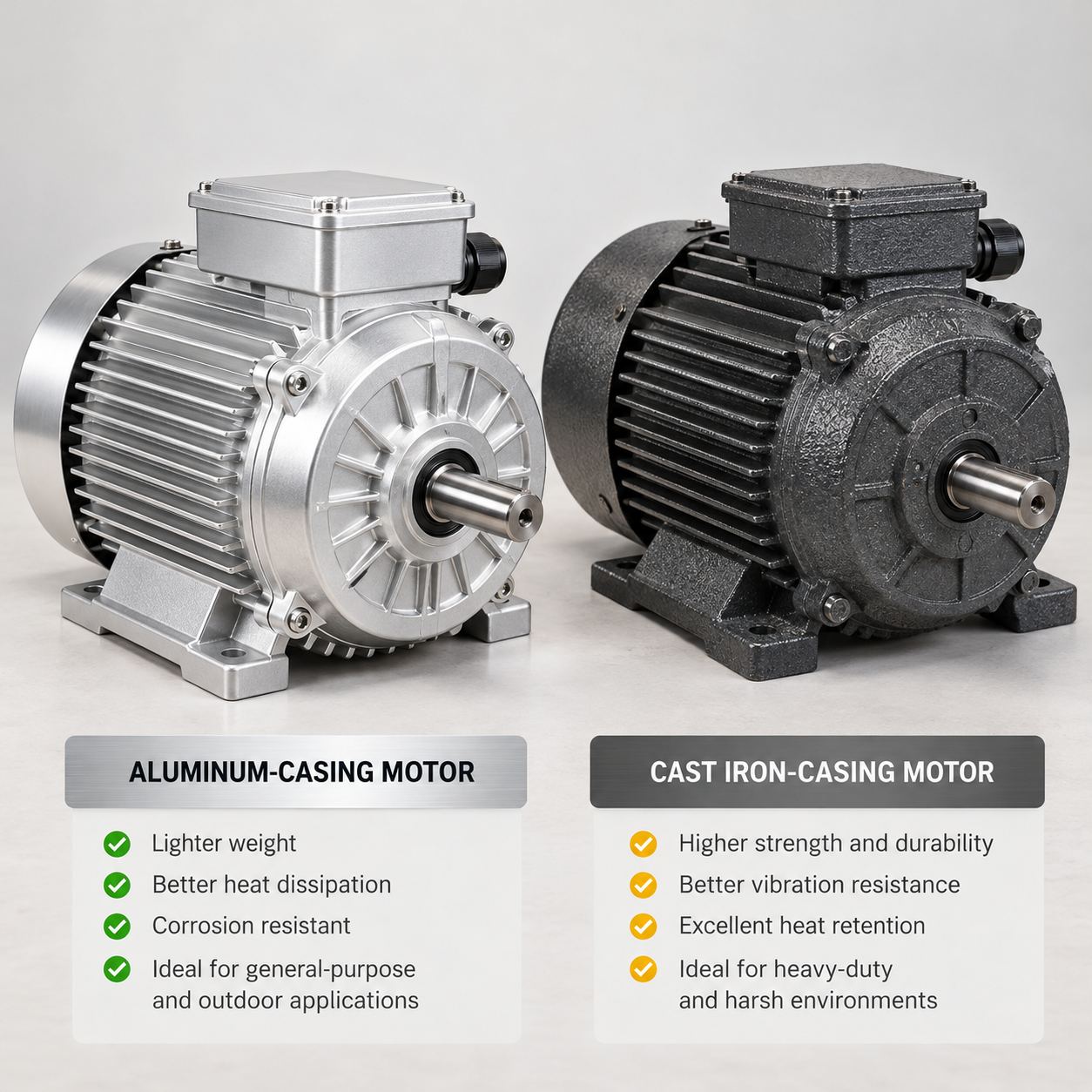
Aluminum motor alongside a cast iron motor for material comparison.
Cast Iron vs Aluminum Electric Motor Comparison
When comparing cast iron and aluminum electric motors, the key differences lie in material properties, cost, and adaptiveness to various applications. This table provides an overview for engineers and procurement managers to make decisions tailored to their specific operational needs.
| Feature | Option A | Option B |
|---|---|---|
| Material Weight | Cast Iron – Heavy, ideal for stationary applications | Aluminum – Lightweight, suitable for mobile or compact setups |
| Mechanical Strength | Cast Iron – Superior strength, resists impacts and abrasions | Aluminum – Moderate durability; less impact resistance |
| Thermal Conductivity | Cast Iron – Lower heat dissipation; better heat retention | Aluminum – Excellent heat dissipation; reduces operating temperatures |
| Corrosion Resistance | Cast Iron – Requires coatings or treatments to prevent rust | Aluminum – Natural oxide layer; better resistance in humid environments |
| Cost | Cast Iron – Higher material and machining costs | Aluminum – Economical due to lower material costs |
| Portability | Cast Iron – Heavy, less suitable for portable applications | Aluminum – Lightweight, easier handling and installation |
Frequently Asked Questions
What are the main differences in durability between cast iron and aluminum electric motors?
Cast iron motors are significantly more durable due to their mechanical strength, making them capable of withstanding heavy impacts, vibrations, and structural wear. This makes them ideal for heavy-duty applications like mining and construction. Aluminum motors, while less robust, are lighter and better suited for lighter industrial tasks or environments where weight is a critical factor.
How does the weight of the motor housing material impact the overall application?
The lighter weight of aluminum motors simplifies installation and maintenance, particularly in applications where mobility or overhead mounting is required. Cast iron motors, being heavier, can be more challenging to handle and are typically better suited for stationary or fixed installations requiring higher mechanical stiffness.
Why is thermal conductivity important when choosing between cast iron and aluminum motors?
Thermal conductivity determines how effectively a motor dissipates heat. Aluminum housings excel in heat dissipation, helping keep the motor cooler during continuous operation, which can reduce wear and extend service life. Cast iron holds heat longer, which could be a drawback in heat-sensitive applications but offers thermal stability in high-temperature environments.