
To choose a three-phase industrial motor, start with the machine’s required torque, shaft speed and operating cycle—not the nearest catalogue kW rating. Then match the supply, mechanical interface, environment and control method before comparing purchase price. This motor selection guide gives OEMs, contractors and plant buyers a practical sequence and a copyable RFQ checklist. It focuses on cast-iron induction motors for industrial equipment, rather than comparing every electric motor technology.
1. Identify the Load and Operating Profile
Describe what the motor must drive and how the load changes. Centrifugal pumps and fans generally have variable-torque loads: required torque increases as speed increases. Conveyors and positive-displacement pumps are often closer to constant-torque loads, so reducing speed does not necessarily reduce the torque requirement. Do not classify every pump as variable torque.
Record normal and maximum operating conditions, loaded starts, acceleration time, machine inertia, reversals and possible jams. Obtain the driven-machine manufacturer’s torque-speed curve where available. A motor that meets running power alone may still be unsuitable for accelerating a loaded conveyor or high-inertia fan.
2. Size Shaft Power Without Unnecessary Oversizing
Calculate mechanical power at the required speed from the machine duty, allowing for transmission losses between motor and load. Check both the continuous demand and the torque needed during acceleration or temporary process peaks. Select an appropriate available rating after accounting for environmental derating and the motor’s permitted duty; there is no universal percentage margin that fits every application.
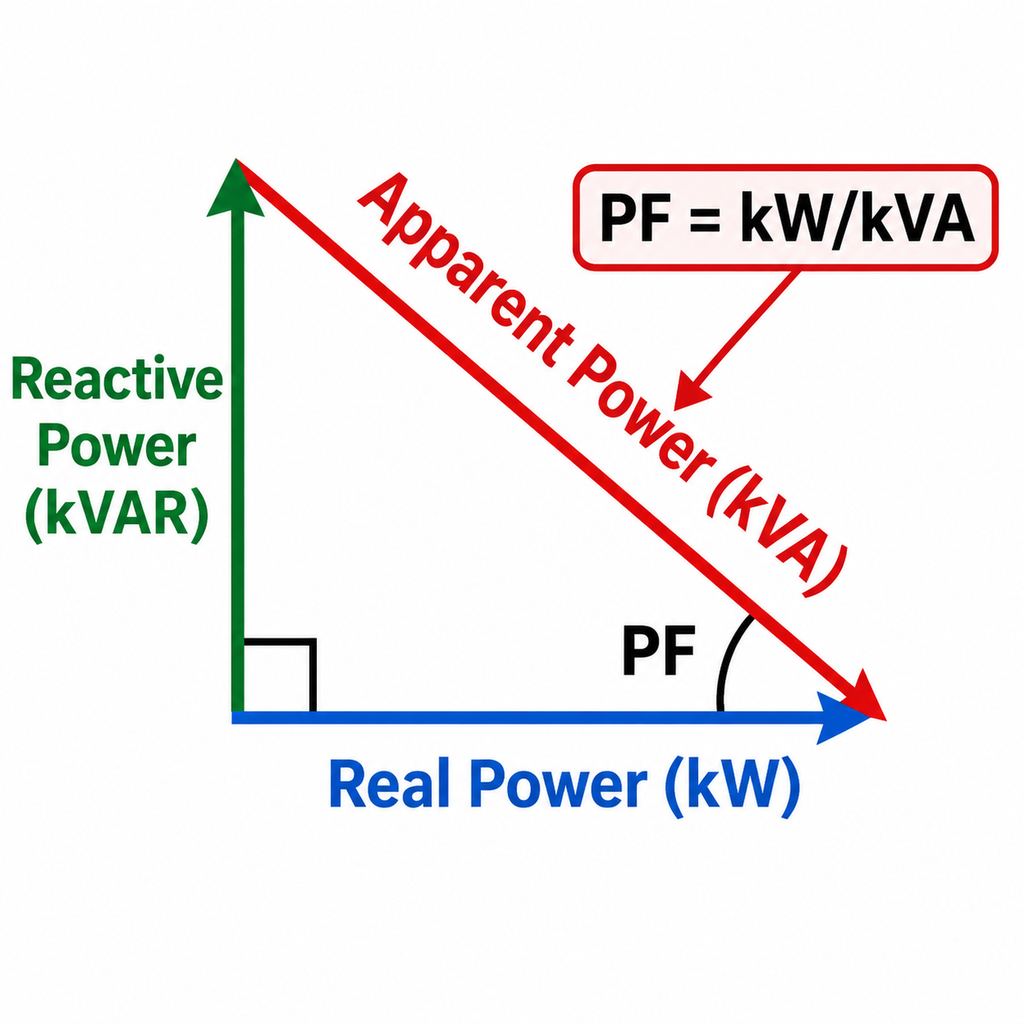
Excessive oversizing raises first cost and can reduce efficiency and power factor at light load. Ask for efficiency at the intended operating point, not just the rated-load value; see motor efficiency.
Keep overload reserve distinct from continuous design power: motor service factor is conditional margin, not permission to select a permanently undersized motor.
3. Confirm Voltage, Phase and 50/60 Hz Supply
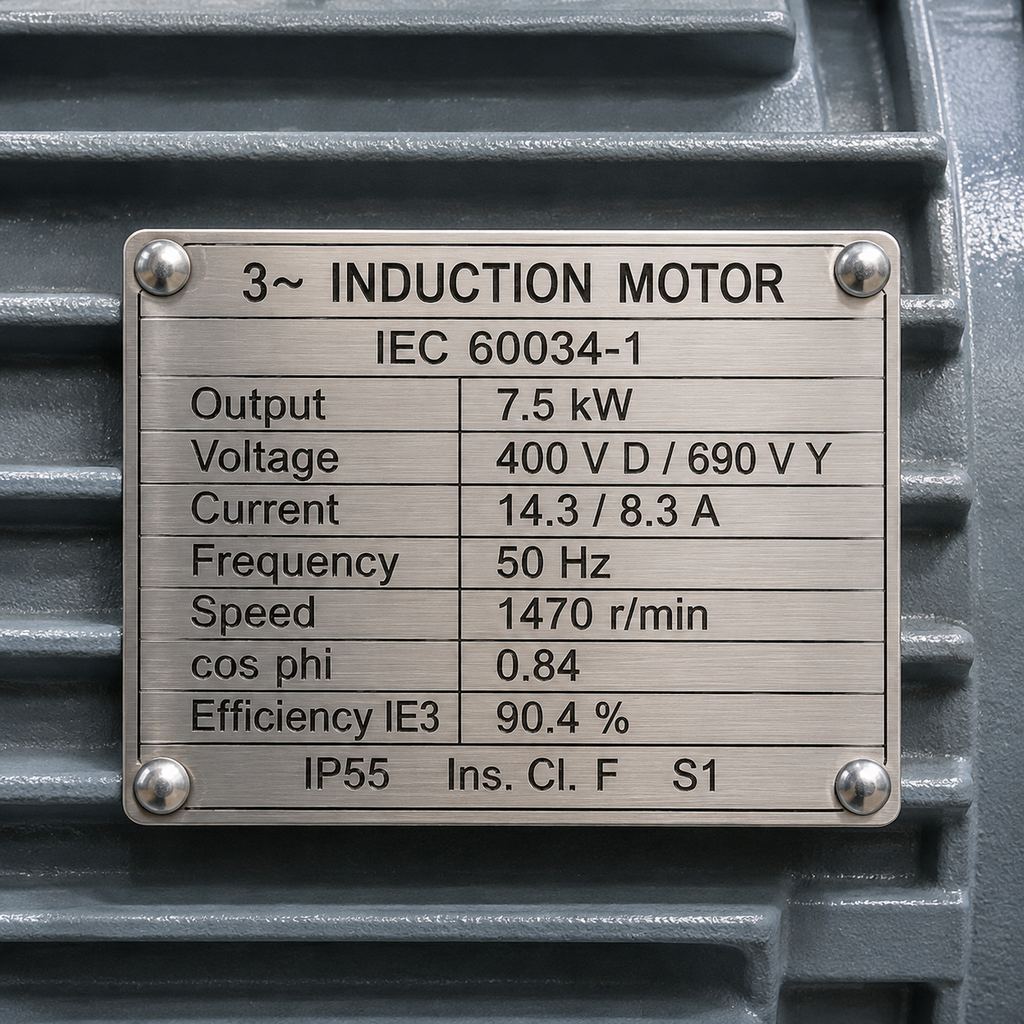
State the site’s actual three-phase voltage and frequency, including permitted variation. Request a motor explicitly rated for that supply; a series name such as Y2 or YE3 does not by itself establish voltage or frequency compatibility. Do not assume a motor rated for 50 Hz can deliver the same speed, torque and power on 60 Hz without manufacturer confirmation.
If the project involves several markets, ask for the applicable dual-frequency ratings and approvals in writing. For a replacement, give the supplier the existing datasheet and terminal arrangement requirements without assuming that an identical power rating guarantees interchangeability.
4. Specify Required Shaft Speed and Poles
Start with the speed needed at the machine shaft, accounting for any reducer or belt ratio, then ask the supplier to match motor poles and rated speed. Synchronous speed depends on supply frequency and pole count, so it is a reference rather than the actual loaded shaft speed.
The slip of an induction motor makes rated speed slightly lower than synchronous speed; compare actual rated rpm when replacing a motor on a speed-sensitive machine.
5. Define Duty Cycle, Not Just Running Hours
Specify S1 for continuous duty at the stated load where appropriate. Short-time and intermittent duties need their own duration, load/rest sequence and thermal assessment; an S3 designation alone is incomplete without the cycle details. Include starts per hour, acceleration time, braking, reversing and whether the motor cools while stopped.
For variable-speed equipment, provide the torque and speed profile across the whole operating cycle. A motor’s acceptable continuous output at rated speed does not establish its continuous low-speed torque capability.
6. Choose Efficiency Class and Evaluate Operating Cost
For general-purpose selections, Y2 (IE2), YE3 (IE3) and YE4 (IE4) are the relevant cast-iron series; confirm the exact model’s declared efficiency and suitability for the destination’s current requirements. Use the existing IE2 vs IE3 vs IE4 comparison rather than choosing on class label alone.
Compare quotations at the same shaft duty, voltage, frequency and duty cycle. Running hours, tariff, expected load profile and maintenance access all matter to ownership cost; do not assume a premium always pays back regardless of use.
7. Match Mounting and Mechanical Interfaces
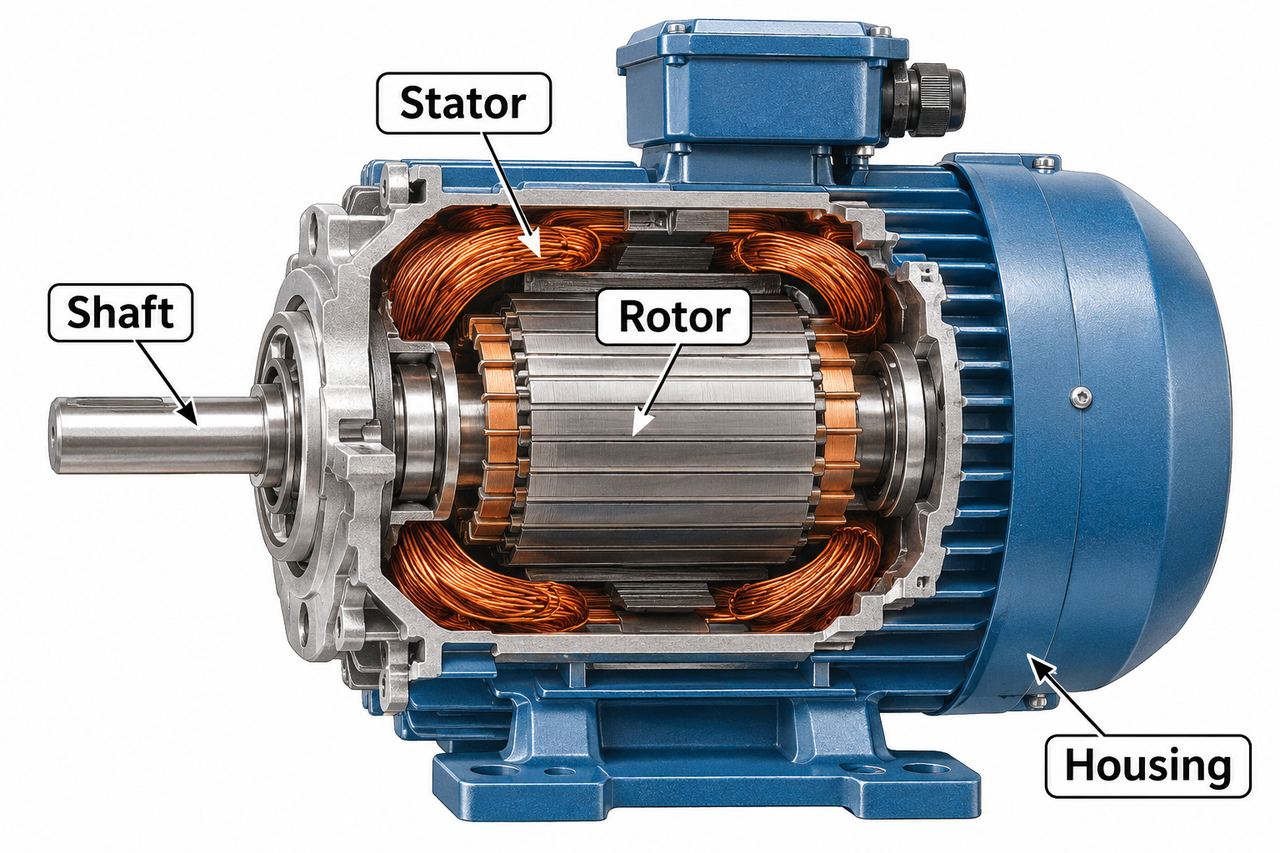
Specify B3 for foot mounting, B5 for flange mounting without feet, or B35 for the combined foot-and-flange arrangement. These mounting designations do not replace a dimensional check: confirm frame size, shaft diameter and extension, key, foot-hole spacing, flange spigot and bolt circle.
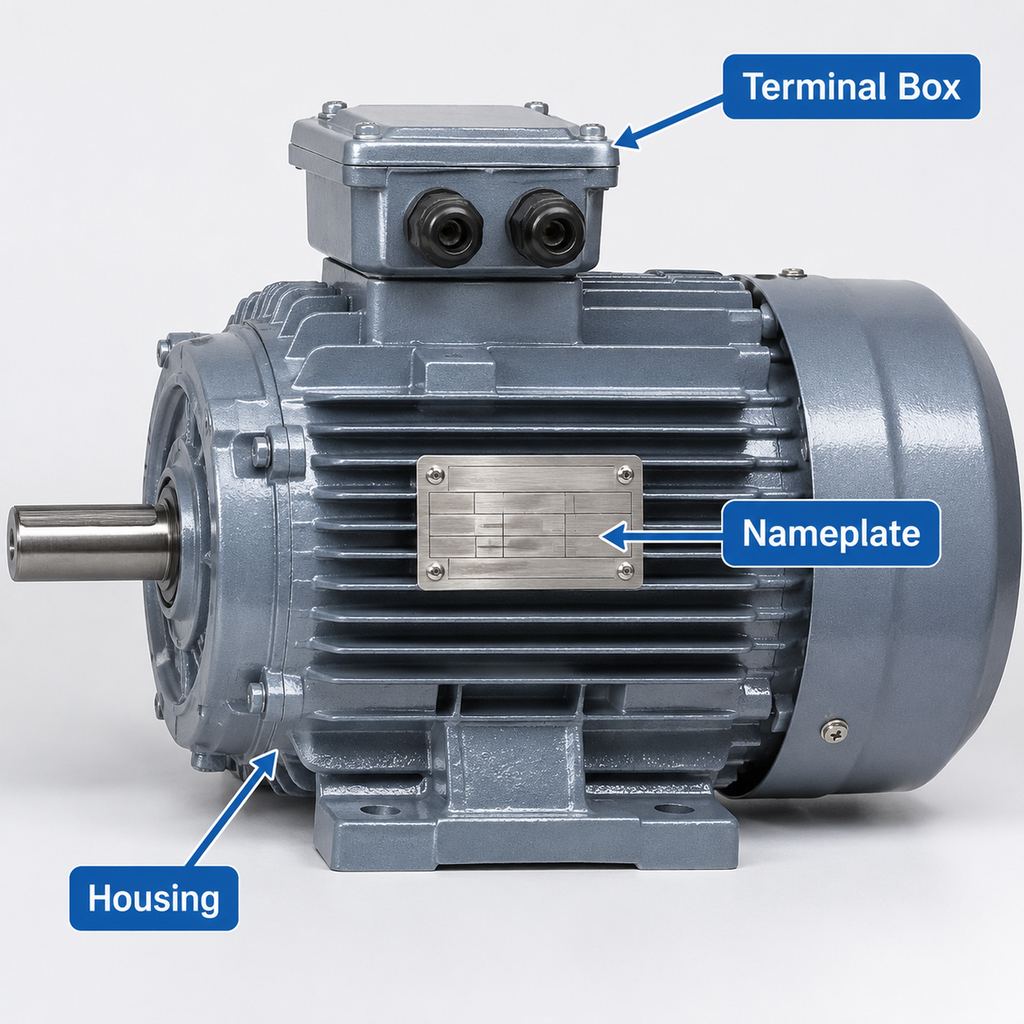
Also state horizontal or vertical installation, shaft direction, terminal-box position and access restrictions. Give the supplier coupling or belt details and radial/axial loads so the bearing arrangement can be checked rather than assumed suitable.
8. Specify IP Rating and the Real Environment
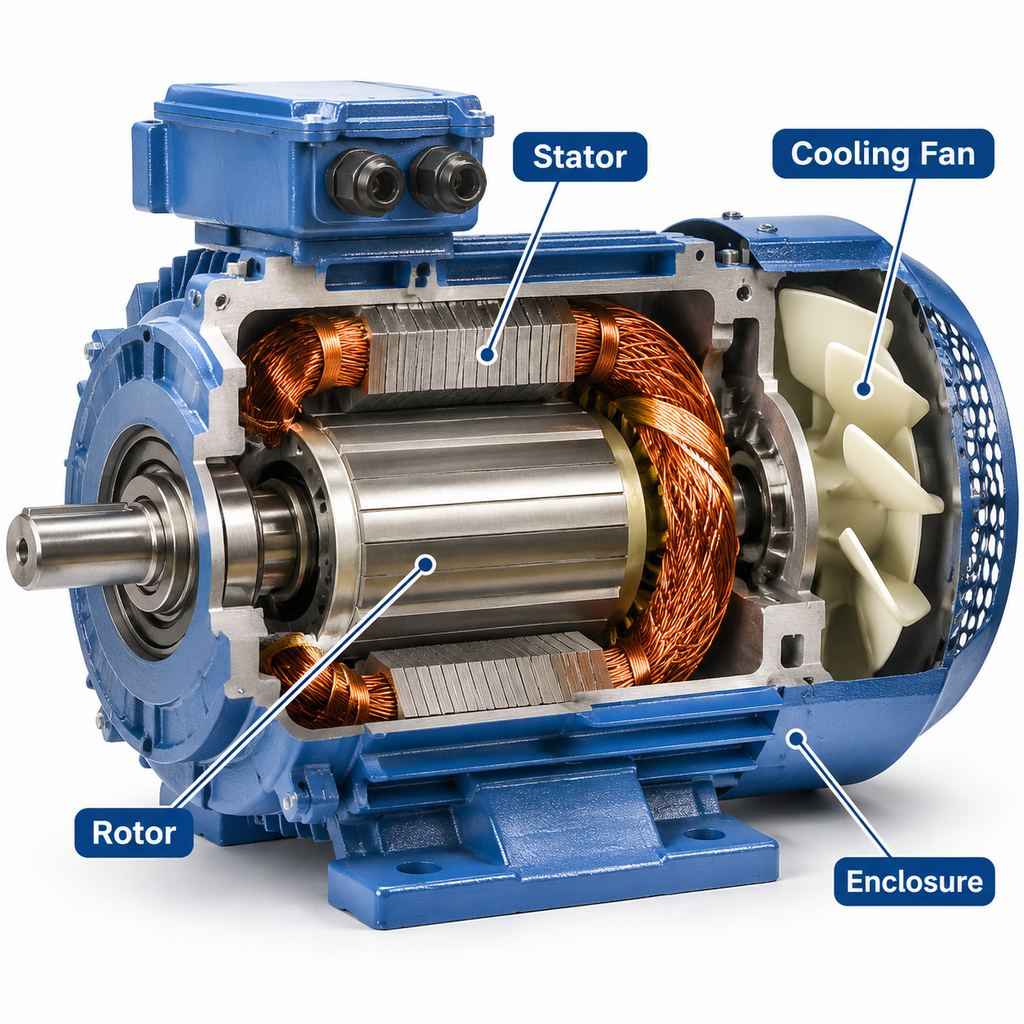
List ambient temperature, altitude, humidity, condensation, rain, washdown, dust and corrosive exposure. Select an IP rating for the actual ingress risk; IP protection does not by itself establish corrosion resistance, immersion capability or suitability for explosive atmospheres. Enclosure construction and cooling method also need confirmation.
High temperature or altitude may require derating, a different frame or additional cooling. Dust can obstruct heat transfer even where ingress protection is adequate. Hazardous gas or combustible-dust locations require the appropriate certified equipment, not simply a higher IP number.
9. Check Insulation and Temperature Rise Together
Request the insulation system and permitted temperature rise as separate data, together with any winding sensors or anti-condensation heaters required. Insulation class does not override ambient limits, blocked ventilation or excessive continuous load.
10. Agree Starting, Control and Protection Requirements
Tell the supplier whether the machine needs fixed-speed operation, a few discrete speeds, or continuous speed variation, together with the intended starter or drive. The motor controller must be selected for the application and coordinated with the motor.
For continuous speed control, check the operating range, cooling and drive supply requirements using the inverter-duty motor guide; YVF2 is a series to discuss for variable-frequency duty. YD/YDT multi-speed designs instead suit agreed discrete speeds, subject to their individual load and duty ratings.
Ask the panel designer to coordinate short-circuit and overload protection with the selected motor; a motor circuit protector alone does not provide overload protection.
11. Decide Whether a Reducer or Brake Is Needed
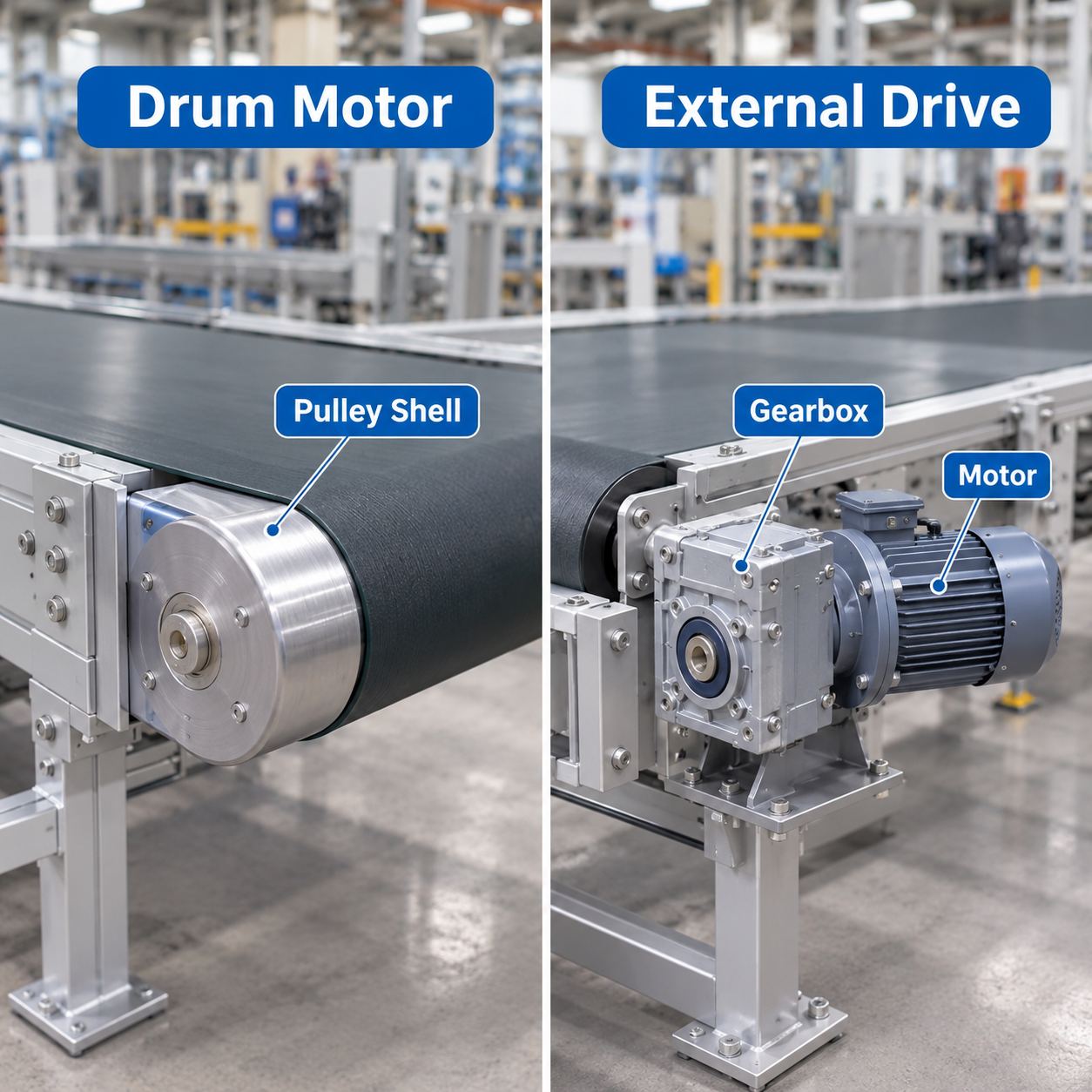
For low machine speed and higher output torque, specify the output duty before selecting an R/F/K/S unit from the gear motor range; see what is a gear motor for the selection context.
If controlled stopping or holding is required, discuss YEJ brake motors and the required braking duty using the brake motor guide. Confirm stopping versus holding requirements and any safety function separately—an ordinary motor brake is not automatically a safety-rated system.
Match the Requirement to a Series
| Requirement | Series to discuss | Category |
|---|---|---|
| General-purpose three-phase duty | Y2, YE3, YE4; select efficiency and rating for the project | General-purpose motors |
| Reduced output speed and increased output torque | R/F/K/S; confirm ratio, output torque and mounting | Gear motors |
| Discrete speeds, variable-frequency operation or braking | YD/YDT, YVF2 or YEJ respectively | Special-purpose motors |
Copyable Motor RFQ Checklist
Fill in the actual values or mark unknown items for supplier review. Attach machine curves, drawings and any site specifications rather than leaving the manufacturer to guess.
| RFQ field | Information to provide |
|---|---|
| Application and quantity | Driven machine, new build or replacement, quantity and delivery location: ______ |
| Load profile | Constant/variable torque, normal and peak torque, inertia, loaded/unloaded starts: ______ |
| Power and output speed | Required shaft kW and rpm, transmission losses, minimum/maximum speed: ______ |
| Electrical supply | Three-phase voltage, 50/60 Hz, variation and site requirements: ______ |
| Duty | S1 or complete intermittent cycle, starts per hour, acceleration, reversing: ______ |
| Efficiency and compliance | Required class, destination standards and documentation: ______ |
| Mounting and dimensions | B3/B5/B35, frame, shaft, flange, installation orientation and drawing: ______ |
| Mechanical loads | Coupling/belt details, radial/axial loads, bearing requirements: ______ |
| Environment | Ambient range, altitude, humidity, dust, water, corrosion or hazardous-area classification: ______ |
| Enclosure and thermal requirements | IP, cooling, insulation, temperature rise, sensors and heaters: ______ |
| Control and protection | Starter/drive details, speed range, overload/short-circuit coordination, thermal sensors: ______ |
| Reducer or brake | Ratio, output torque, mounting, stopping/holding duty and brake supply: ______ |
| Options and approval documents | Terminal-box position, coatings, approved drawing, datasheet, certificates and requested tests: ______ |
Application Checks Before Ordering
For water and wastewater, provide the pump operating envelope and moisture exposure; for HVAC and ventilation, provide fan inertia, airflow-control method and speed range. For material handling, include loaded starts, reversing and stopping requirements.
For agriculture, specify seasonal running patterns and outdoor exposure. For mining and aggregates, identify abrasive dust, shock loading and any hazardous-area requirements.
Compare candidates in all products only after the requirements are defined. Where the standard offering does not match, request customization and written confirmation of the final rating, dimensions and operating limits before placing the order.


1 thought on “How to Choose a Motor: 3-Phase Selection Checklist and RFQ Guide”