
Ask plant teams what is the most common cause of motor failure and you will often hear “the bearings failed” or “the winding burned.” Both are common end states. Industry surveys and maintenance experience usually put bearing wear and winding insulation breakdown at the top of recorded failure modes, while overheating is one of the main stresses that drives both. Heat, contamination, poor lubrication, overload and supply problems rarely act alone—they combine until the motor trips, locks or fails.
This guide is for plant maintenance staff and equipment buyers working with three-phase industrial motors, including continuous-duty fans and pumps. It covers the usual failure and overheating causes, what an overheated fan motor does next, a short troubleshooting table and practical prevention. It is not a rewind or megger procedure.
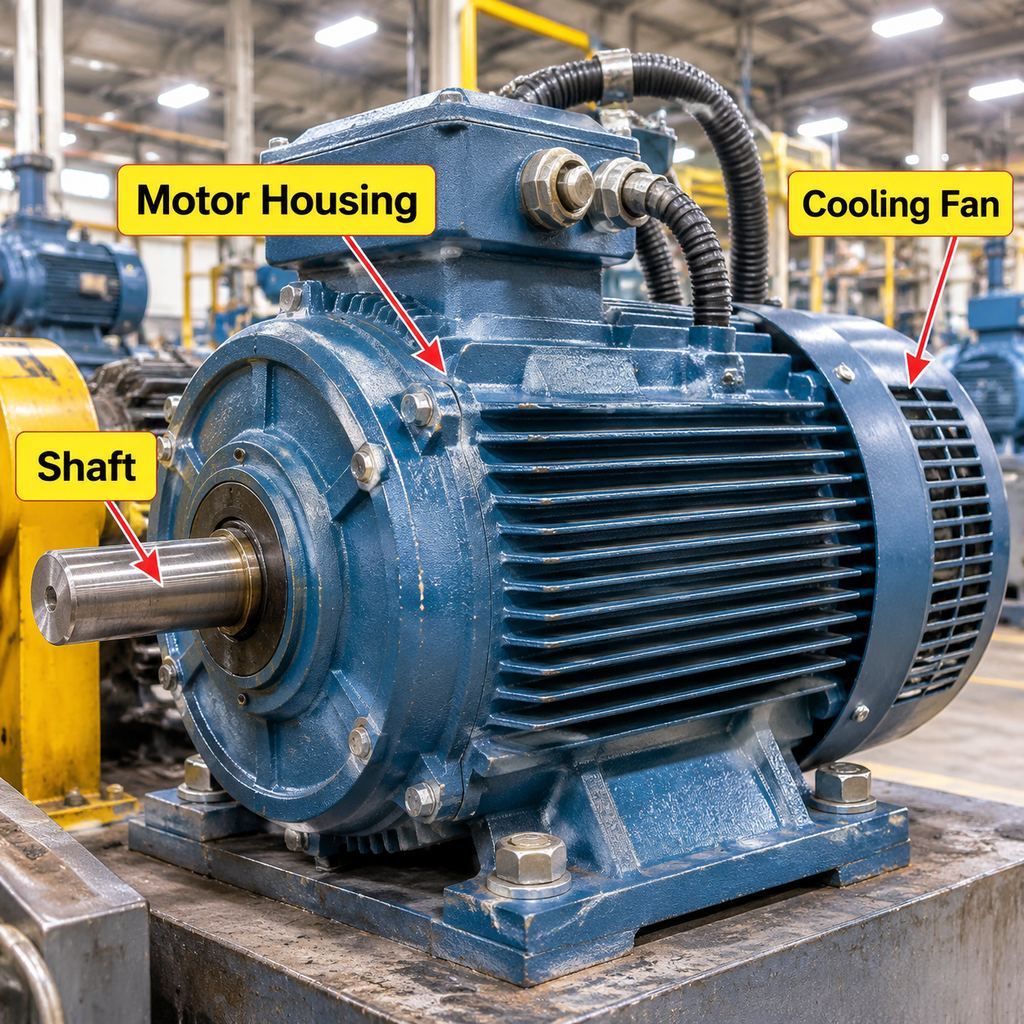
What “Most Common Cause” Really Means
Failure statistics are usually reported by the failed part: bearings or stator insulation. The initiating cause is often heat, load or environment. For buyers, that distinction matters. Replacing a burned motor without correcting blocked ventilation, unbalance or overload simply repeats the failure.
On continuous S1 duties such as HVAC fans and pumps, overheating is especially common when the motor is oversized or undersized poorly, cooling is obstructed or the load has drifted above nameplate. Frequent-start conveyors and compressors add a different heat pattern: each start injects extra current and heat before the winding has fully cooled.
Common Causes of Motor Failure and Overheating
| Cause | What happens | Typical warning signs |
|---|---|---|
| Bearing wear / lubrication problems | Friction rises, local heat builds and rotor drag increases. Contaminated or wrong grease, over-greasing, under-lubrication and shaft loads from misalignment all shorten bearing life. See motor bearings. | Noise, vibration, hot end-shields, rising current for the same load |
| Winding insulation aging / burn-out | Excess temperature accelerates insulation aging. Contaminants and moisture reduce dielectric strength until a turn-to-turn or phase-to-ground fault appears. Background: insulation class. | Burning smell, ground faults, trips that do not reset, low insulation resistance |
| Overload | Shaft load above rated continuous power raises current and copper loss. Treating service factor as free continuous capacity is a common design error. | Hot frame, overload trips, current above nameplate FLA |
| Voltage unbalance / single phasing | Unbalanced phases create negative-sequence current and hot spots in the windings. Complete phase loss is worse. Details: single phasing of a motor. | One phase hotter, vibration, rapid trip after a fuse or contactor failure |
| Blocked ventilation / high ambient | Dust on fins, clogged fan cowls, nearby hot process air or a sealed enclosure remove the motor’s cooling margin even at rated load. | Uniformly hot housing, trips on warm days, dirty fan cover |
| Frequent starts / stops | Each start heats the winding and rotor. Duty cycles with too many starts per hour can exceed thermal design even when running load looks modest. | Trips after several cycles, high winding temperature early in the shift |
| Misalignment and vibration | Coupling offset, soft foot and belt tension problems overload bearings and can transfer heat into the shaft. | Vibration, coupling wear, repeated bearing replacements |
| Moisture and dust | Ingress attacks insulation and bearings. Dust also blankets cooling surfaces. Match IP rating to the site rather than assuming a standard enclosure is enough. | Corrosion, condensation, abrasive wear, contaminated grease |
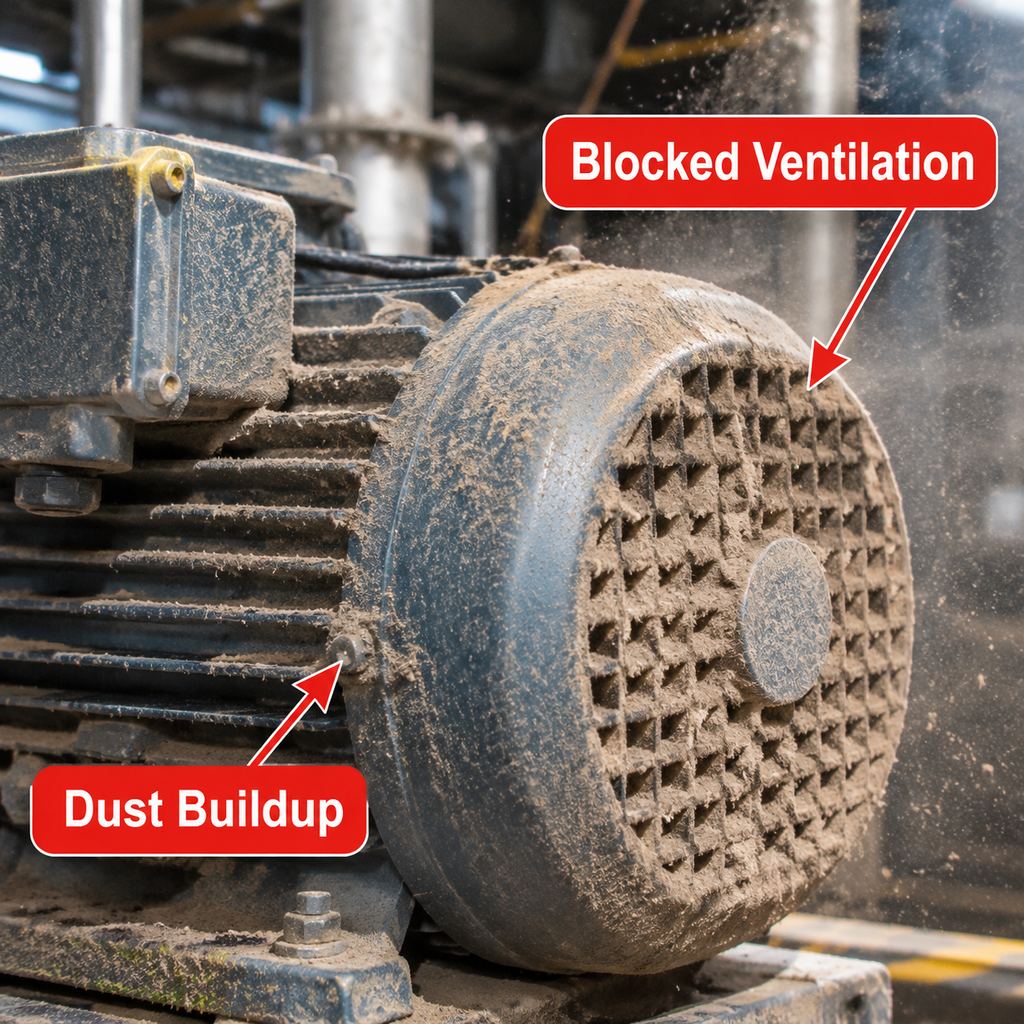
What Happens to an Overheated Fan Motor
When a fan motor overheats, insulation life shortens first—even if the motor still runs. Grease softens or separates, bearings lose film strength and the thermal protector or overload may cycle. If the root cause continues, winding varnish can carbonize, leading to shorted turns, a ground fault or a locked rotor. A burned smell, repeated trips or a motor that restarts only after a long cool-down are late warnings, not early ones.
Common fan-specific triggers include dirty inlet screens and cowls, high plant ambient around condensers or process rooms, belt slip heating the shaft, damper or filter loading that raises absorbed power, and poor airflow across TEFC fins. The same pattern appears on pump motors when strainers clog or the duty point moves off the pump curve.
Qualitatively: each sustained rise above the motor’s design temperature accelerates insulation aging. Exact multipliers vary with insulation system and time at temperature, so do not treat a rule of thumb as a warranty calculation. Keep continuous temperature rise within the nameplate and insulation limits, and investigate any unexplained temperature step-up.
Short Troubleshooting Table (No Deep Test Methods)
Use this only as a first-pass field screen. Detailed insulation testing belongs in the megger procedure; see how to meg a 3-phase motor when that step is required.
| Observation | Likely direction | First check |
|---|---|---|
| Motor hot, current above FLA | Overload or process change | Compare load with nameplate; inspect driven machine |
| Motor hot, current near normal | Cooling / ambient problem | Clean fins and cowl; check room temperature and enclosure |
| Noise / vibration, hot end-shield | Bearing or alignment | Lubrication history, coupling alignment, soft foot |
| Rapid trip after a phase event | Unbalance / single phasing | Supply and starter contacts; phase-loss protection |
| Repeated start-related trips | Duty / thermal cycling | Starts per hour vs motor duty; soft start or drive if justified |
| Burning smell or ground fault | Insulation damage | Isolate, inspect, insulation test before re-energizing |
Protection devices matter: a correctly applied motor circuit protector addresses short circuits but does not replace overload or winding-temperature protection.
How to Fix an Overheated Electric Motor (Practical Sequence)
- Remove the heat source, not just the symptom. Do not keep resetting an overload while the motor is still dirty, overloaded or single-phasing.
- Cool and inspect. Clean the fan cover and fins, verify the external fan turns freely and look for oil leaks, water ingress or damaged cables.
- Confirm electrical conditions. Check that voltage and phase balance are within the motor and site standards before returning to service.
- Confirm mechanical conditions. Alignment, belt tension, bearing condition and driven-machine drag often explain “mystery” heat.
- Repair or replace based on insulation and bearing condition. A motor that has already suffered insulation carbonization or bearing damage may not be a candidate for “clean and restart.”
- Correct the application. Re-size, improve enclosure rating, add PTC thermistors or change duty controls so the failure does not repeat. Use the motor selection checklist when the original motor was a poor match.
Prevention Tied to Specification and Maintenance
- Size for continuous S1 duty on pumps and fans so normal operation sits near the efficient load range rather than chronic overload or deep light-load heating from a badly matched machine. Efficiency context: motor efficiency.
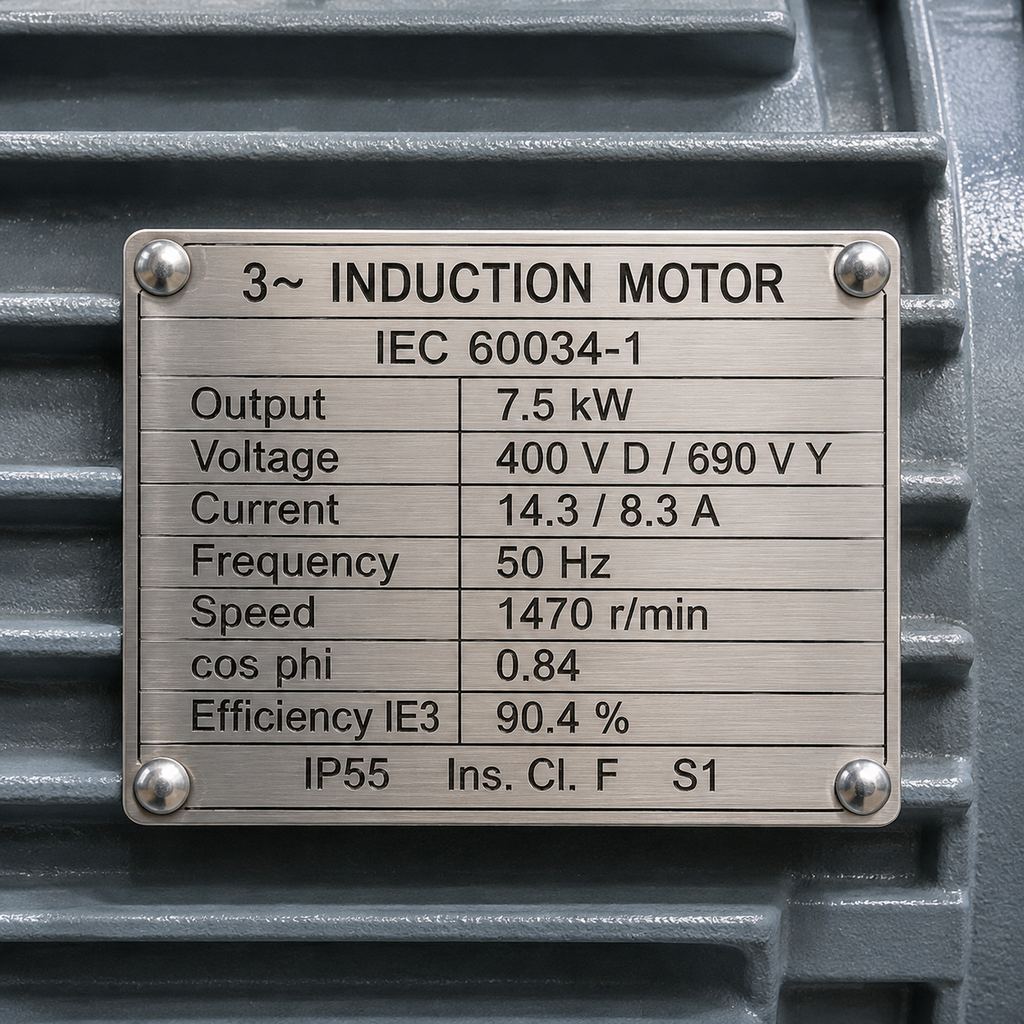
- Prefer adequate thermal margin. Many YE3/YE4 cast-iron motors use Class F insulation systems with Class B temperature rise, giving headroom when ambient or minor load variations occur—confirm on the actual datasheet.
- Add winding temperature protection where cooling is uncertain. Optional PTC thermistors can trip the control circuit before insulation is destroyed.
- Match IP rating to the environment. IP55 is common for dusty/wet industrial areas; IP56 may be specified where stronger water jets are expected. Neither rating replaces cleaning of external fins.
- Protect the supply and the branch circuit. Phase-loss sensitivity, correctly set overload relays and coordinated short-circuit protection reduce electrical burnouts.
- Maintain bearings and alignment on a schedule suited to running hours and contamination, not only after noise appears.
Browse cast-iron options under general-purpose motors. For non-standard ambient, sensors or enclosure needs, use customization.
FAQ
What is the most common cause of motor failure?
Bearing failure and winding insulation failure are the most frequently recorded end modes. Overheating—from overload, poor cooling, unbalance or excessive starting—is among the most common underlying causes that produce those modes.
What causes a fan motor to overheat?
Blocked ventilation, high ambient air, excess aerodynamic load, belt or bearing problems and electrical overload or unbalance are the usual industrial causes.
How do you fix an overheated electric motor?
Find and remove the cause, inspect electrically and mechanically, then repair or replace based on insulation and bearing condition. Resetting protection alone is not a fix.
Does a higher insulation class prevent all overheating failures?
No. It improves thermal capability within design limits. Continuous overload, blocked cooling or single phasing can still destroy the winding.


2 thoughts on “What Is the Most Common Cause of Motor Failure? Overheating, Bearings and Prevention”