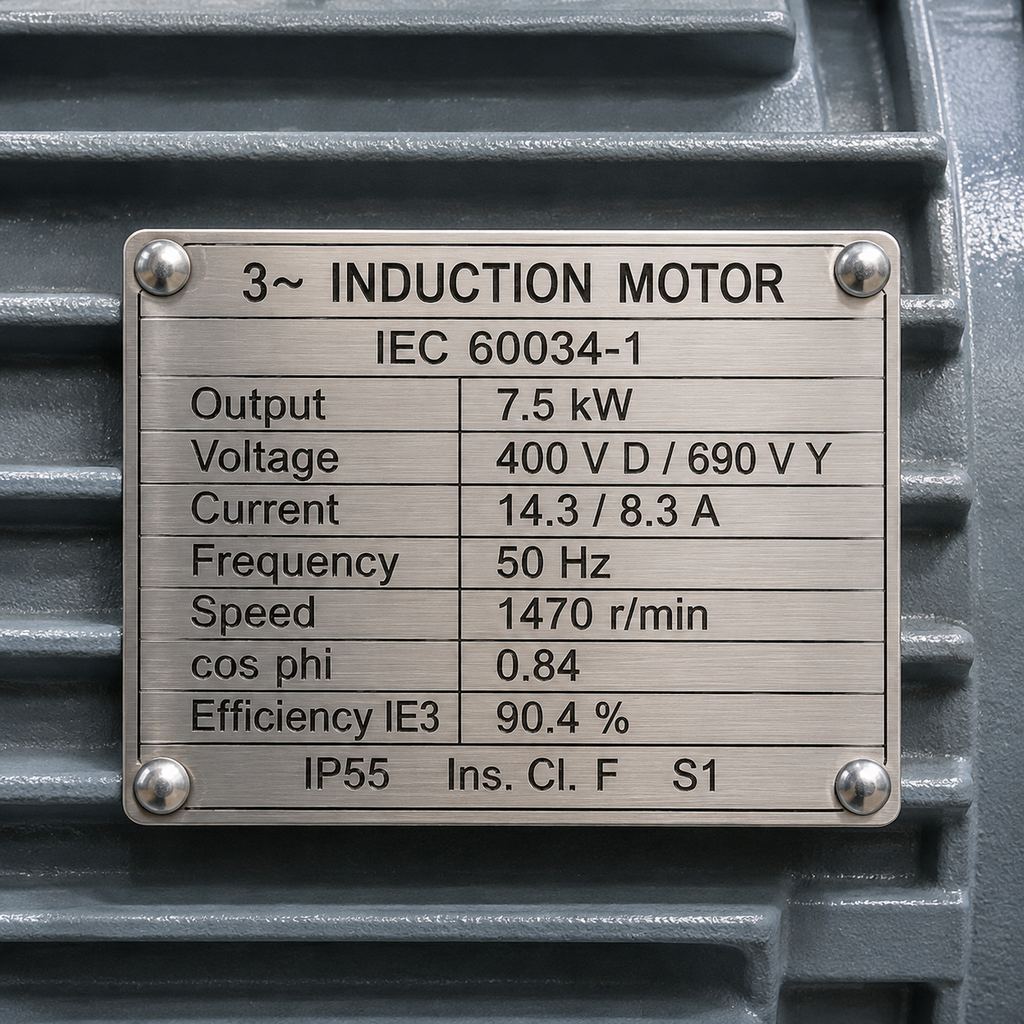
A dual-voltage motor is built to run at two listed nameplate voltages. Switching to the higher rating is not a way to increase shaft power. The windings must already be arranged for that higher voltage according to the nameplate. Two common families exist: a 2:1 series-parallel arrangement, typified by 230/460 V, and a √3 (about 1.73:1) star-delta arrangement, typified by 220/380 V, 380/660 V and 400/690 V. JWMotor’s standard dual-voltage range belongs to the second family, not to 230/460 V. Read the voltages and connection method on the motor nameplate before judging whether a higher supply is even applicable. Never apply the higher voltage while the motor is still connected for the lower rating.
Overview of Dual Voltage Motors
Dual-voltage motors are designed to operate at two distinct voltage levels, which gives plants some flexibility when supply conditions differ. That flexibility comes from the winding arrangement, which must match the voltage actually applied. In the 2:1 voltage-ratio group, winding halves are connected in parallel for the lower voltage and in series for the higher voltage. In the √3 ratio group (for example 220/380 V, 380/660 V or 400/690 V), the same windings are connected in delta at the lower line voltage and in star (wye) at the higher line voltage. That adaptability can help buyers standardize inventory across different grids, but only if the connection matches the nameplate. A mismatch can overheat or damage the motor. Product ratings in the √3 family are summarized on the dual voltage motors overview.
Key Principles of Doubling Voltage
- The nameplate must explicitly show a dual-voltage rating and list both voltages. A single-voltage motor cannot be treated as dual-voltage, and a generic “double the volts” rule is not a substitute for the plate.
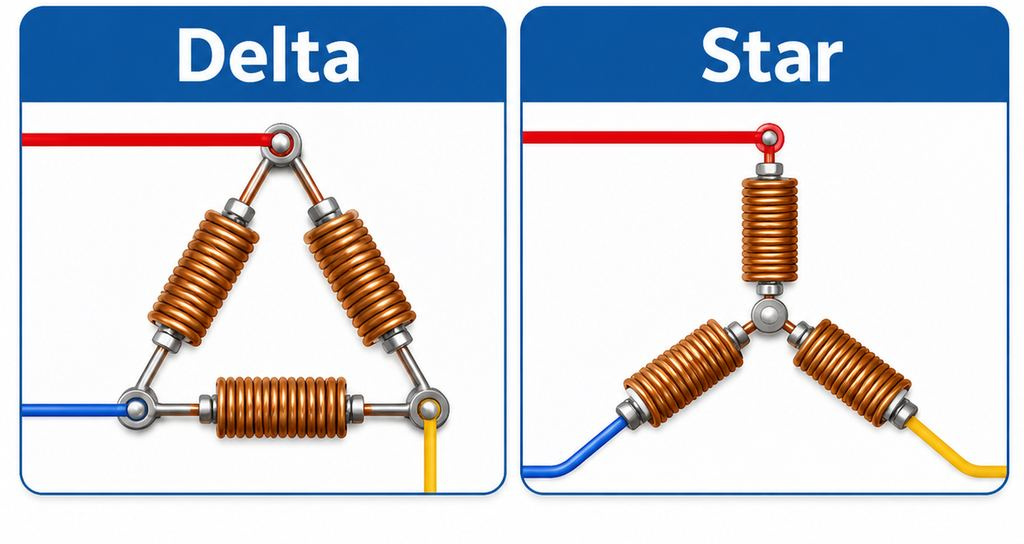
- The windings must already be in the nameplate connection that belongs to the higher voltage. For a 2:1 ratio, that is the series connection (the low-voltage connection is parallel). For a √3 ratio, that is the star (wye) connection (the low-voltage connection is delta). Do not apply the higher supply while the motor is still arranged for the lower voltage.
- Supply frequency must match the nameplate rating. Changing only the voltage, with the correct connection, does not change the motor’s rated speed; speed follows frequency and pole count. Frequency limits and 50/60 Hz rating questions are covered in 60 Hz motors.
Reconnecting Dual Voltage Motors
This section is for nameplate judgment only. It is not a how-to-wire procedure and does not replace the connection diagram that belongs to the motor.
- Confirm that the nameplate identifies a dual-voltage motor and lists both voltages. The plate—not a rule of thumb—shows whether the higher rating uses a 2:1 series-parallel method or a √3 star-delta method.
- Identify which connection belongs to the higher voltage on that plate. On a 2:1 rating such as 230/460 V, the high-voltage connection is series and the low-voltage connection is parallel. On a √3 rating such as 220/380 V, 380/660 V or 400/690 V, the high-voltage connection is star (wye) and the low-voltage connection is delta. Do not assume a JWMotor nameplate is a 230/460 V series-parallel machine, or the reverse. How the winding groups are arranged inside the stator is described in more detail in what is a motor winding.
- Before power is applied, both the supply voltage and the supply frequency must match the selected nameplate rating. Applying the higher voltage to a motor that is still connected for the lower voltage can over-voltage the windings and damage the machine.
Voltage Ratios and Configuration Differences
Dual-voltage motors are commonly grouped by the ratio of the two nameplate voltages: 2:1, or √3 (approximately 1.73:1). The ratio tells you how the windings are rearranged so that each winding still sees its intended voltage at either supply.
The 2:1 ratio is common on many NEMA motors rated 230/460 V. Each phase has two equal winding halves, connected in parallel at the lower voltage and in series at the higher voltage. After the correct reconnection, the voltage across each half winding remains essentially the same, and line current at the higher voltage is about half. This does not mean each half winding is exposed to the line voltage, and it does not mean that every 9-lead NEMA dual-voltage motor is internally delta-connected. Shaft power and speed stay essentially the same if frequency is unchanged, because the reconnection keeps the same current through each winding turn.
Many IEC dual-voltage motors use the √3 ratio, as in 220/380 V, 380/660 V or 400/690 V. At the lower line voltage the windings are connected in delta, so each winding sees the line voltage. At the higher line voltage the same windings are connected in star (wye): the voltage across each winding is the line voltage divided by √3, which equals the lower (delta) winding voltage, and the line current is about 1/√3 of the current drawn on the delta connection. Mechanical output and speed again remain essentially the same at the same frequency, because each winding still operates at the same voltage and current.
JWMotor’s standard dual-voltage range uses this √3 star-delta family (220/380 V, 380/660 V and 400/690 V). It is not a 230/460 V series-parallel product line. When specifying a motor, use the voltages printed on the nameplate and data sheet; see the dual voltage motors page for the available ratings, and the 3-phase selection checklist if you are writing a request for quotation.
Frequently Asked Questions
Can I double the voltage on any electric motor?
No. You can use the higher of two listed voltages only if the motor is a dual-voltage machine and the windings are in the nameplate connection for that higher rating. Doing this on a single-voltage motor, or applying the higher supply while the motor is still connected for the lower voltage, can damage the motor and create a safety risk.
What happens to the current and performance when doubling the voltage on a dual voltage motor?
When the windings are correctly arranged for the higher voltage, line current falls and rated shaft power and speed stay essentially the same, provided frequency is unchanged. On a 2:1 rating such as 230/460 V, line current at the higher voltage is about half. On a √3 star-delta rating, line current at the higher voltage is about 1/√3 (about 58%) of the lower-voltage line current—not half. Doubling the supply is not a power upgrade.
How do I determine the appropriate voltage configuration for my dual voltage motor?
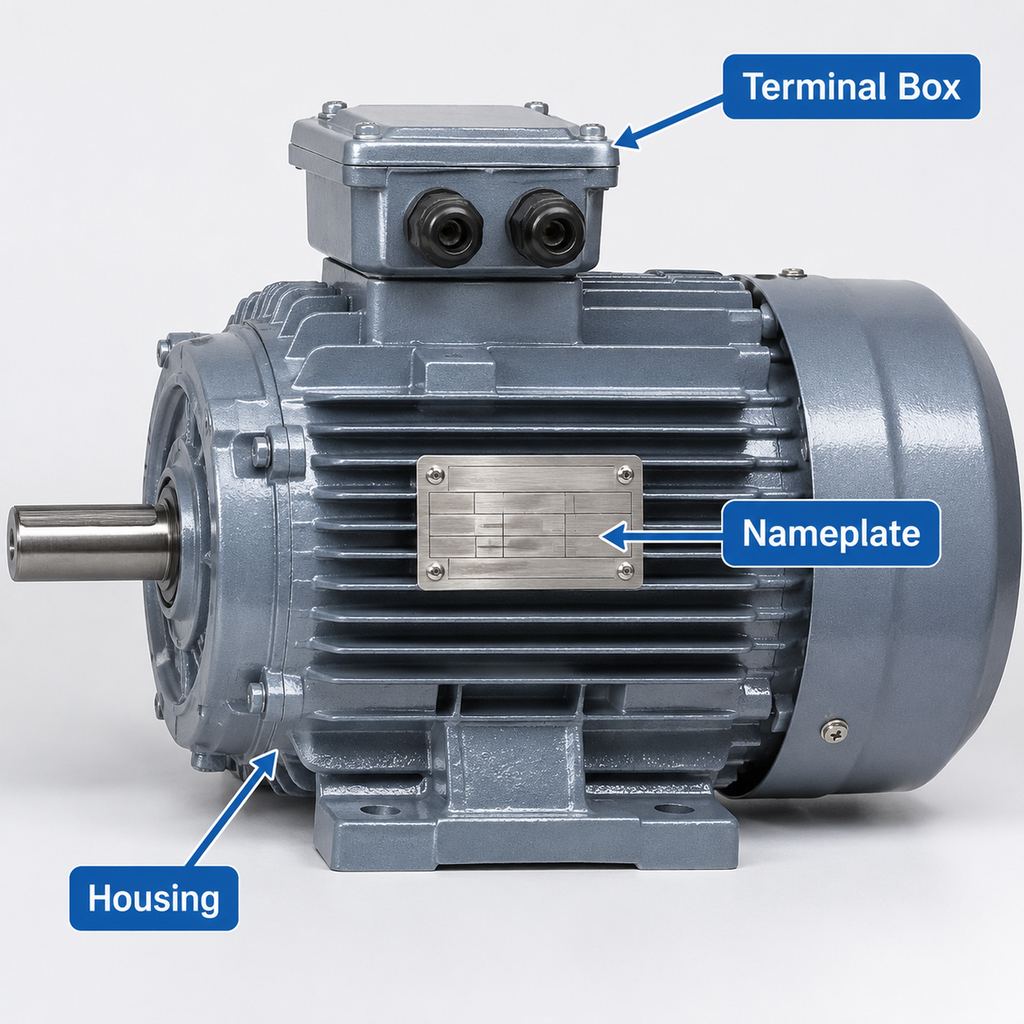
Use the nameplate as the authority. It lists the two voltages and shows whether the lower and higher ratings correspond to parallel/series or delta/star (wye). Match both supply voltage and frequency to that rating before applying power. This article does not provide lead numbers or a hookup diagram; follow the plate and the manufacturer’s connection document for the actual motor.
Conclusion
Moving a dual-voltage motor to its higher nameplate voltage is a reconnection and a supply match, not a redesign of the machine. The nameplate decides whether the higher rating is a 2:1 series-parallel arrangement or a √3 star-delta arrangement. After the correct high-voltage connection is used, and frequency still matches the plate, shaft power and speed stay essentially the same; line current is about half on a 2:1 motor and about 1/√3 on a star-delta motor. Never apply the higher voltage while the windings are still arranged for the lower voltage. For JWMotor ratings in the √3 family, start from the dual voltage motors overview rather than from a 230/460 V assumption.