There is no single electric motor that is always the most efficient. Efficiency is the ratio of mechanical output power to electrical input power, and the “best” figure depends on the motor type, the rated power and speed, the actual load, and the test standard used to declare the value. How to measure and interpret that ratio is covered in how to determine motor efficiency; this article does not repeat that procedure in full.
For everyday industrial buying, the practical comparison is usually among induction motors in the IEC efficiency classes, and other technologies such as permanent-magnet (PM) and electronically commutated (EC) motors. JWMotor does not manufacture PM or EC motors. The induction options discussed at the end are YE3, YE4 and, where a drive is used, YVF2.
Understanding Motor Efficiency: What It Means
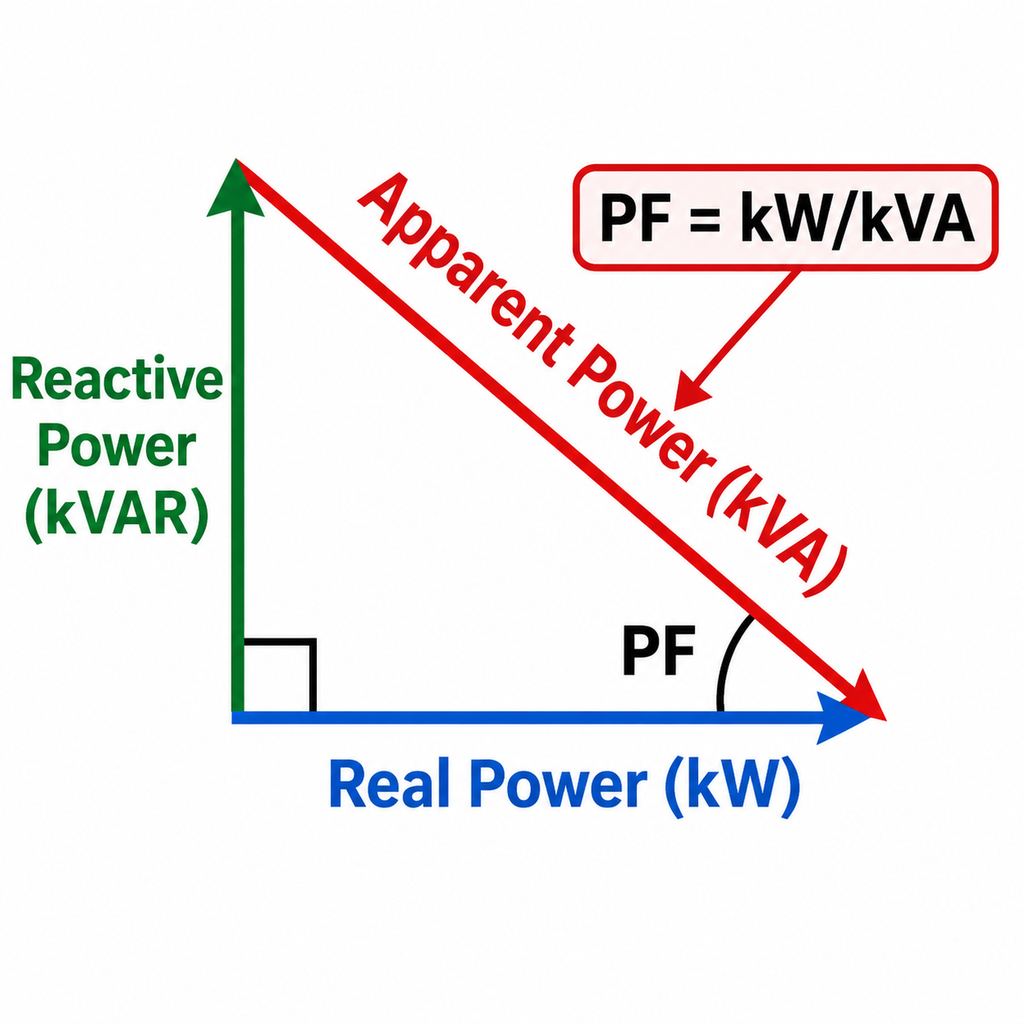
Motor efficiency is the ratio of useful mechanical output power to electrical input power, usually written as a percentage. A motor that is 90% efficient converts 90% of the real electrical input into shaft output; the rest is lost as heat in the windings, iron, friction, windage and stray load losses. The input in this formula is real power (kW), not apparent power (kVA).
Design (materials, winding and rotor construction) and operating conditions (load, speed and environment) both affect the result. A more efficient motor wastes less energy as heat, which can reduce running cost and thermal stress. That does not, by itself, guarantee a longer service life or a fixed saving percentage.
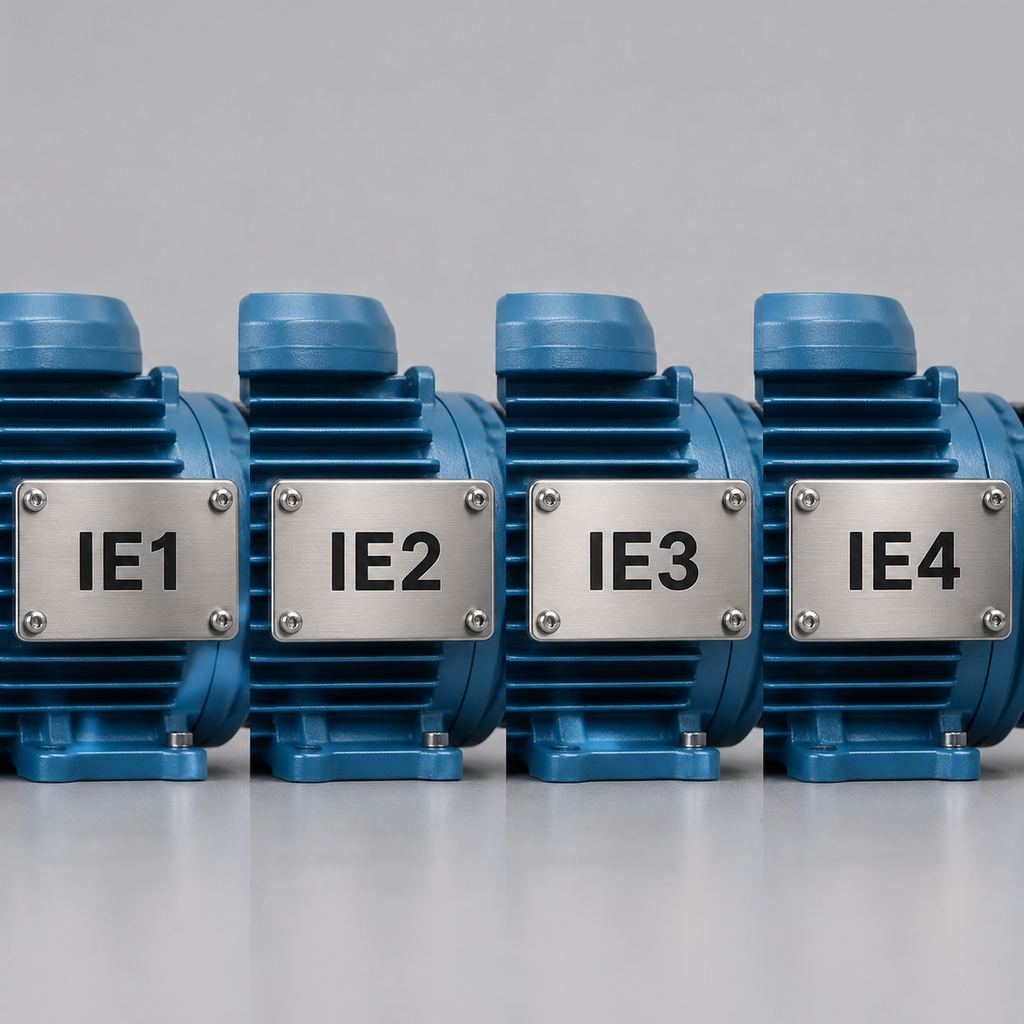
Line-operated AC motors are classified under IEC 60034-30-1:2025 (Edition 2.0) into IE1 (standard), IE2 (high), IE3 (premium), IE4 (super-premium) and IE5 efficiency. Each higher class sets a lower loss limit at the rated point for a given power and speed; it is not a promise about part-load or a complete driven system (motor plus drive plus machine). This 2025 edition cancels and replaces the 2014 edition, which ended at IE4, and introduces IE5; see the official IEC catalogue entry for IEC 60034-30-1:2025. The class definitions and a comparison of IE2, IE3 and IE4 are in IE2 vs IE3 vs IE4 (Y2, YE3, YE4), the comparative analysis, and what is IE1. Minimum legal classes vary by region and rating; this page does not restate those rules as a global requirement.
Key Factors Affecting Electric Motor Efficiency
- Motor design and materials. Core steel, winding copper and rotor construction set a large part of the loss budget. Better materials and geometry can reduce iron, copper and stray losses, but only the tested or nameplate efficiency should be used in an energy calculation.
- Load conditions. Many industrial motors are at their best somewhere in the upper part of the load range (often around three-quarters to full load). Deep underload or sustained overload usually worsens efficiency. The exact curve is specific to the machine.
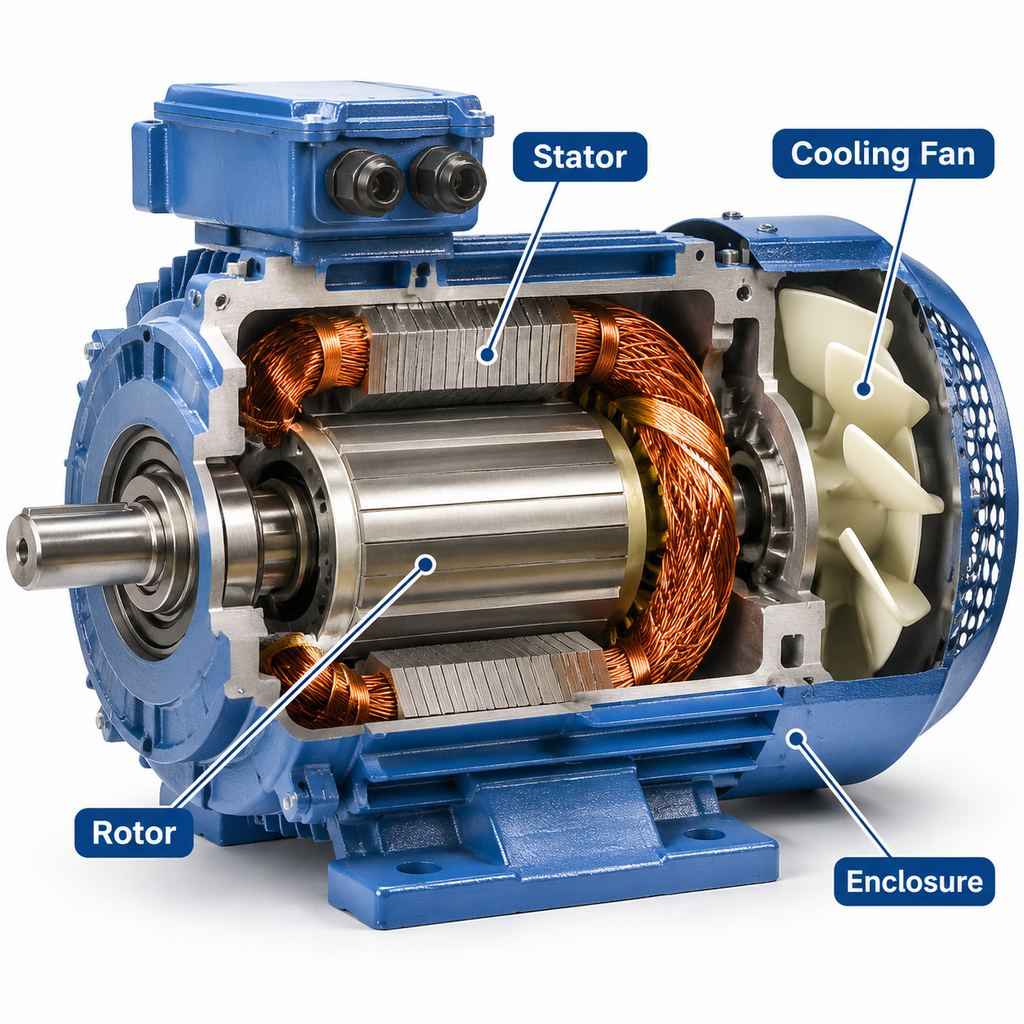
- Enclosure and cooling. A totally enclosed fan-cooled (TEFC) motor rejects heat through the frame and an external fan. The enclosure must match the site; it is not, by itself, an efficiency class.
- Efficiency class (IE rating). Moving from IE2 to IE3 or IE4 lowers the allowed full-load losses for a line-operated motor of the same rating. Compare like with like: same output, speed and test method.
- Variable-speed drives. A VFD can cut energy use on fans and pumps by matching speed to demand. That is a system effect. Drive losses still count, and a motor that will live on an inverter should be chosen for that duty; see what is a VFD drive and what is an inverter duty motor.
- Operating environment. High ambient temperature, dust, humidity and poor ventilation raise winding temperature and can increase losses over time. Select the motor for the actual site conditions.
Comparative Analysis of Electric Motor Types
Different motor types convert power in different ways, so their efficiency—and what you must buy with them—is not interchangeable. The notes below are qualitative. They are not a ranking of a single “winner,” and they do not mix motor-only efficiency with motor-plus-drive system efficiency.
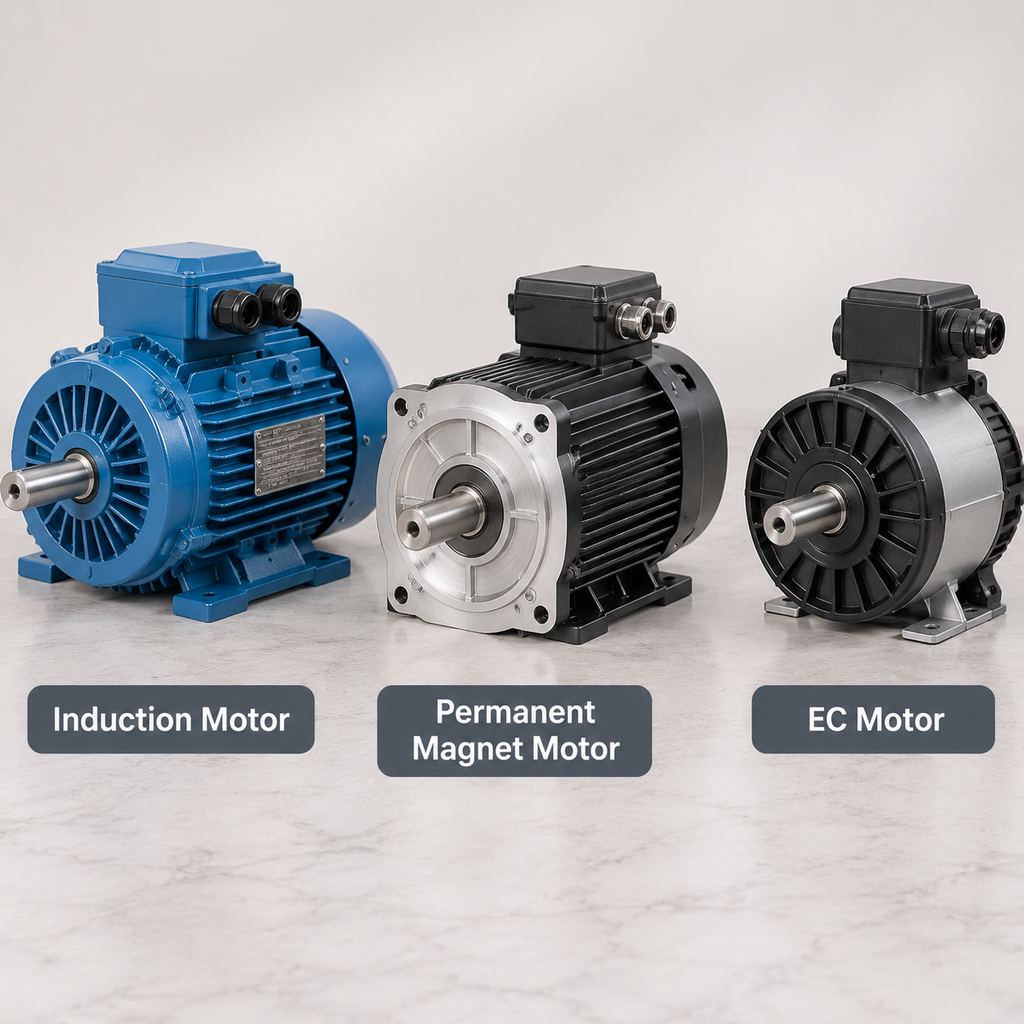
AC induction motors are the usual industrial workhorse: robust, widely repaired, and classified to IEC 60034-30-1. They are designated IE1 (standard), IE2 (high), IE3 (premium), IE4 (super-premium) or, in the 2025 edition, IE5. Full-load efficiency still depends on rated kW and pole count, so a small motor and a large motor in the same IE class are not equally efficient in percentage terms. YE3 and YE4 are induction ranges in IE3 and IE4; they are not PM or EC products.
Synchronous AC motors (including wound-field machines used at higher outputs, and synchronous-reluctance designs offered by some manufacturers) can show very high full-load efficiency on suitable ratings. Some synchronous-reluctance motors are sold at IE4 or higher and typically need a matching drive. Treat catalogue figures as applying to the stated test point only.
DC motors are less common in heavy industrial duty today but are still used where a particular control characteristic is required. Brushed machines add brush and commutator losses and maintenance. Efficiency is application-specific; a DC motor is not automatically more efficient than an AC motor.
Permanent-magnet motors use rotor magnets instead of an induced rotor current, so they avoid that component of rotor I²R loss. On many ratings they can reach very high full-load and part-load efficiency, often with a dedicated drive. The exact percentage depends on the design, the power and the test method; no universal peak figure is quoted here. Construction and speed control are covered in what is a permanent magnet motor. JWMotor does not make PM motors.
EC motors are typically brushless PM machines with the commutation electronics built in, common on HVAC fans and smaller blowers. They can be efficient at reduced speed because the drive is integrated, but that is a packaged system, not a drop-in IEC frame in every case. See what is an EC motor. JWMotor does not make EC motors.
Calculating Electric Motor Efficiency
- Measure real input power (kW). Use a power meter on the motor supply. Efficiency uses real (active) power, not apparent power. Reactive power affects current and kVA but is not added into the efficiency numerator or denominator.
- Measure mechanical output power. Output comes from shaft torque and speed: power (W) = torque (N·m) × ω, where ω in rad/s is RPM × 2π/60. In the field, a dynamometer is the direct method; other estimates are discussed in the efficiency article linked above.
- Divide. Efficiency (%) = (output power / input power) × 100, using the same units in both terms.
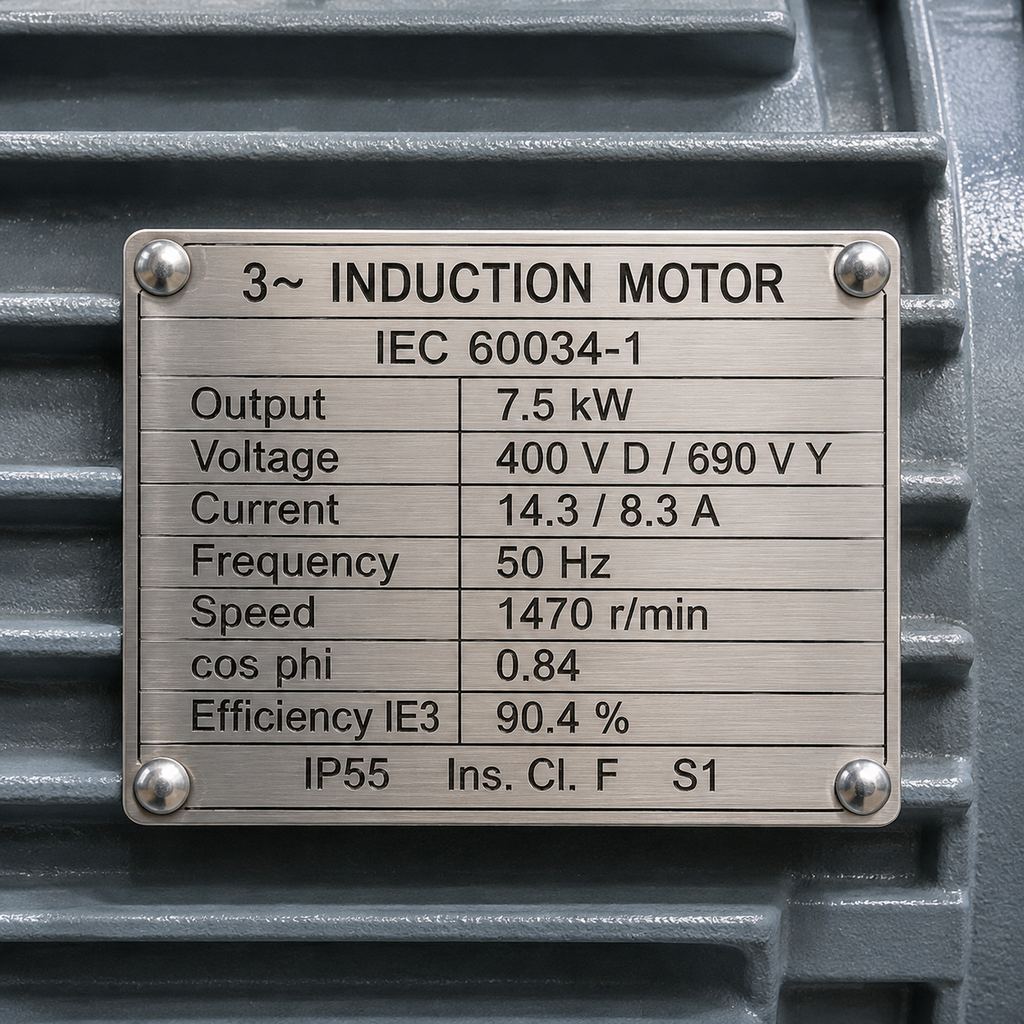
- Compare at a stated load point. Nameplate or catalogue efficiency is usually a full-load (or other tabulated load) value under a stated test method. A shop measurement at a different load, voltage or temperature will not match that number exactly. If you are choosing a replacement class, use the data sheet for the actual rating rather than a generic average.
Frequently Asked Questions about Electric Motor Efficiency
What does “efficiency of a motor” mean?
It is the ratio of useful mechanical output to real electrical input, expressed as a percentage. It is not power factor, and it is not the efficiency of the motor plus the driven machine.
Is an AC or DC motor more efficient?
It depends on the design, the rating and the duty. There is no general rule that DC is more efficient than AC, or the reverse. In most industrial plants, three-phase induction motors are used because they are standardized, serviceable and available in documented IE classes.
What is the average efficiency of an electric motor?
There is no single average. Full-load efficiency rises with rated power and varies by type, pole count and IE class. Broad published patterns put many small or older machines below 90% and many larger IE3/IE4 induction motors above 90% at full load, but those are typical ranges, not guarantees for a given nameplate.
Can IE3 and IE4 motors directly replace standard models?
Often an IE3 or IE4 induction motor can replace a lower-class machine in the same IEC frame, but it is not automatic. Check mounting, shaft, voltage, speed, full-load current and starting method. Some IE4 designs use PM or reluctance rotors and need a drive. Clearance and weight can also change. Use the 3-phase selection checklist when you specify a replacement.
What is the most efficient electric motor?
The highest-efficiency option depends on the power, the duty (fixed speed or variable speed), whether a drive is acceptable, and the test standard. PM and some synchronous designs often lead on a motor-only percentage; a well-applied IE3 or IE4 induction motor is still the usual industrial choice where standard frames and local repair matter. No type is the most efficient in every application.
If You Are Specifying an Industrial Induction Motor
For a standard IEC frame at fixed or inverter-fed industrial duty, start from the YE3 (IE3) or YE4 (IE4) induction ranges, or from YVF2 if the motor will run on a VFD. They are listed under general-purpose motors. Use the nameplate or data sheet efficiency for the exact rating. For a non-standard shaft, voltage or mounting, see customization or all products.