
Fans · Blowers · Ventilation · Multi-speed or VFD
Industrial Fan Motors
Choosing a motor for an industrial fan starts with one question: how will the airflow be controlled? One fixed speed, two or three fixed speeds, or stepless on a frequency converter. This page sets out which JWMotor series fits each, from our HVAC and ventilation page and catalog.
Three ways to control a fan, three series
Fans follow the affinity laws: as our YDT page puts it, halving the speed drops the power needed to about one eighth. That is why the control method matters as much as the kW. These are the three series our HVAC page names.
| How the airflow is set | Series | Catalog range | What the series is built for |
|---|---|---|---|
| Two or three fixed speeds, for example full and reduced flow | YDT variable torque | 0.17–160 kW, frames 80–315; pairs 2/4, 4/6, 4/8, 6/8 and 4/6/8 | Windings matched to fan and pump loads, torque varying with the square of speed; the catalog names HVAC and ventilation systems |
| Two fixed speeds on contactors, general loads | YD pole-changing | 0.45–82 kW, frames 80–280; pairs 4/2, 6/4 and 8/4 | Speed steps on contactors, no converter; the catalog names equipment that needs adjustable airflow |
| Stepless speed on a frequency converter | YVF2 inverter duty | 0.18–375 kW, frames 80–355 | Independent axial cooling fan keeps cooling at low speed; constant torque 5–50 Hz, constant power above 50 Hz |
Ranges from our catalog performance tables at 380 V 50 Hz. The live YDT pages give 0.45–82 kW and frames 80–280; the catalog runs to 160 kW and frame 315 and is used here. YVF2 top frequency is lower on the largest frames; see VFD motors. A fan on one fixed speed can use a general-purpose motor: our catalog lists fans among Y2 applications, and YE3 is the IE3 option.
What our HVAC page states, and how it shows on the motor
Each line below is on our live HVAC and ventilation page or the page named. Where a claim needs a check for your fan, we say so.
Converter-ready insulation
Class F insulation in the catalog. Our HVAC page states the winding wire is chosen to withstand converter voltage spikes. For a converter drive, YVF2 is the motor built for it; see inverter duty motors.
Balance and vibration
Our HVAC page states G2.5 precision balancing. Every motor’s vibration is measured on several axes against ISO 10816-3 before it ships, as on our quality page.
Bearings
Deep-groove ball bearings, per our HVAC page; SKF, NSK or C&U brands with C3 clearance, per our materials and service pages.
Quiet areas
Our HVAC page aims these motors at quiet commercial building zones. The catalog tables give a noise level for each model, so you can compare before you order.
Hot air streams
Class H insulation is available on request for high-temperature duty. Our HVAC page mentions smoke exhaust and ovens.
Smoke extraction ratings
We do not publish a fire-rated temperature and time class for smoke-extraction fans. If your project needs a certified rating, raise it with your inquiry before anything else.
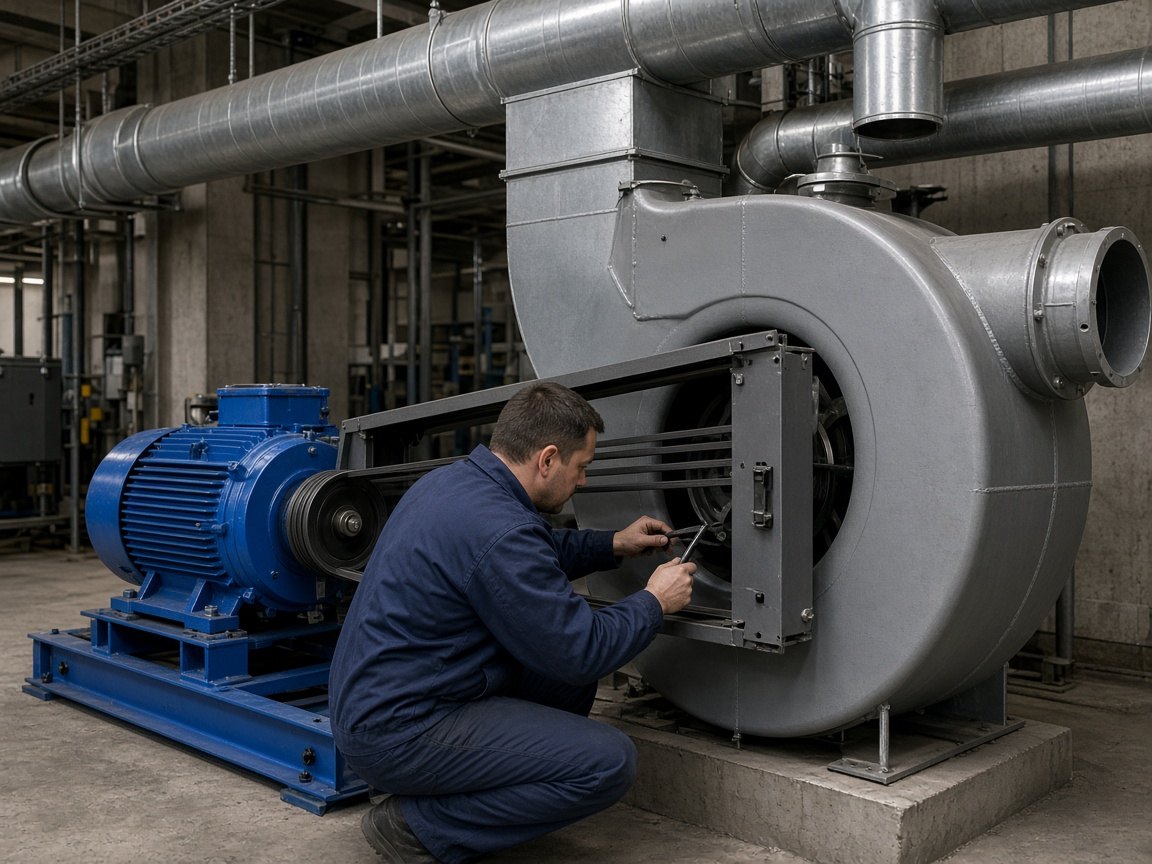
What we need to size a fan motor
We make the motor; the fan curve comes from the fan maker. With these details we propose the series and confirm the rating.
01
Shaft power at each speed
From the fan maker’s data, at the duty point you will run.
02
Drive
Direct on the shaft or by belt; pulley sizes if belted.
03
Speeds and control
One speed, two or three fixed speeds, or a converter.
04
Mounting
Foot B3, flange B5 or vertical V1, shaft to drawing if needed.
05
Air and room temperature
Whether the motor sits in the air stream, and how hot that air gets.
06
Supply
Voltage, frequency and starting method.
Fan motors from three series
All three are three-phase cage induction motors, Class F and IP55 in the catalog tables.
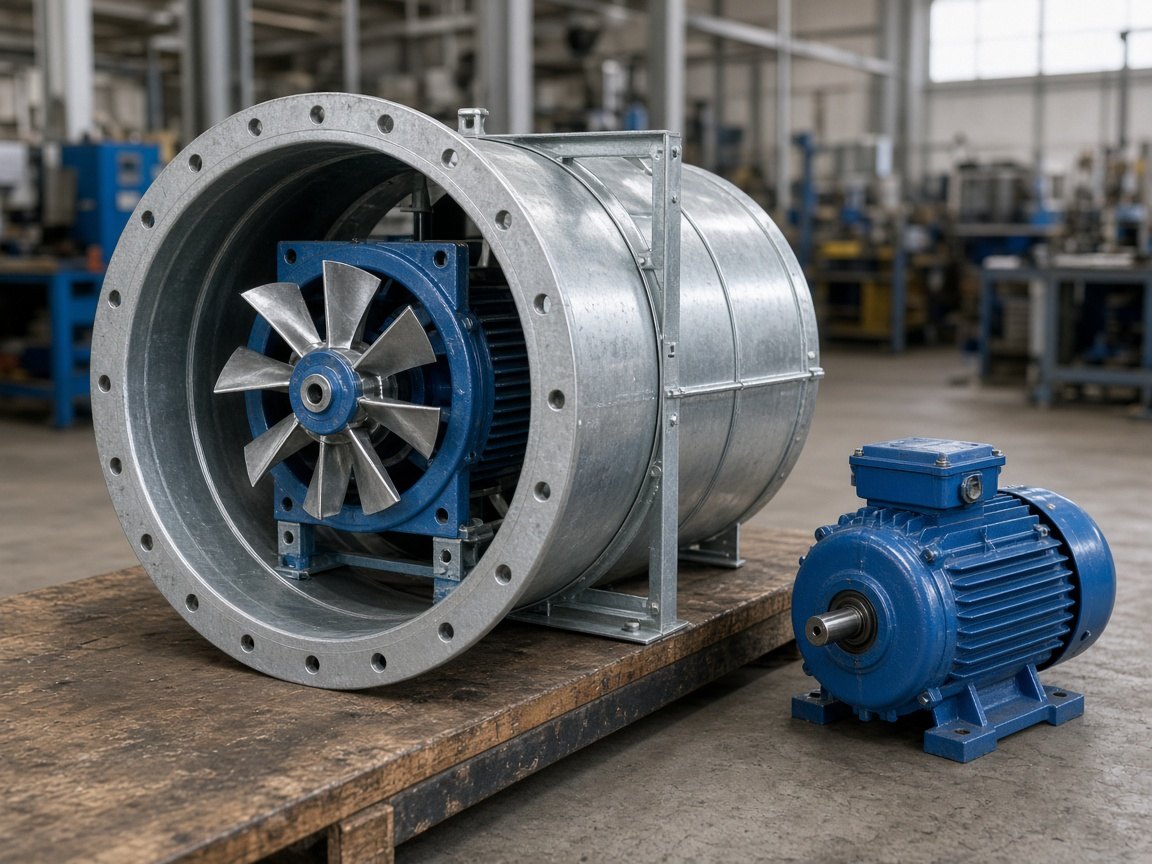
For fans and blowers
YDT · YD · YVF2
YDT variable torque: 0.17–160 kW, frames 80–315, two or three speeds. YD pole-changing: 0.45–82 kW, frames 80–280, two speeds. YVF2 inverter duty: 0.18–375 kW, frames 80–355, with an independent axial cooling fan.
IP55 · Class F · S1 · 380 V 50 Hz catalog data · 1-year warranty
More on choosing speeds: multi speed motors for fans and pumps · two speed motors · multi-speed motors for fan pumps (guide).
Where our motors move air
Nanchang West Station
Ventilation for Central China’s largest rail hub: steady, continuous airflow and low-noise running in passenger areas.
Nanchang Metro Line 1
Motors for fire and ventilation systems, with our partner Xinjietong, as told on our About page.
Jiangxi Runtian Water Plant
40 JWMotor three-phase motors across conveying, packaging and ventilation.
Projects from our projects page and About page.
Quote a fan motor
Send the fan data and how it is controlled. We reply with the series and the data sheet.
- Fan type and the shaft power at each speed
- Direct or belt drive, mounting position
- One speed, two or three speeds, or a converter
- Air temperature around the motor
- Voltage, frequency and starting method
- Quantity
Jiangxi Jiawang Special Motor · +86 199 0684 4761 · [email protected] · 1-year warranty on all products
Fan motor questions
Pole-changing or a VFD for my fan?
If the fan needs two or three set flows, a YDT pole-changing motor on contactors is the simpler choice. If the flow must follow demand continuously, use a frequency converter with a YVF2 motor. Tell us how the fan is controlled and we confirm.
What is the difference between YDT and YD?
Both change speed by switching winding poles. YDT is wound for variable-torque loads such as fans and pumps. YD is the general pole-changing series; its page names machine tools, mixers and conveyors, and its speed stays nearly constant as the load changes. The catalog lists different pole pairs and sizes for each.
Can a standard motor run a fan on a converter?
Our YE3 page says the series is compatible with frequency converters thanks to Class F insulation, and asks you to consult us for cables over 50 m or voltages over 500 V. For long hours at low speed, YVF2 with its separate cooling fan is the safer choice.
Do you supply the fan as well?
No. We make the motor. The impeller, housing and airflow figures come from the fan maker, and we match the motor to the shaft power they give.
Can your motors be used for smoke extraction?
Class H insulation is available for high-temperature duty, but we do not publish a certified smoke-extraction rating. If the fan must carry one, raise it at the start of your inquiry.
How loud are the motors?
The catalog performance tables list a noise level for each model. Send the model or kW and poles and we send the figure.