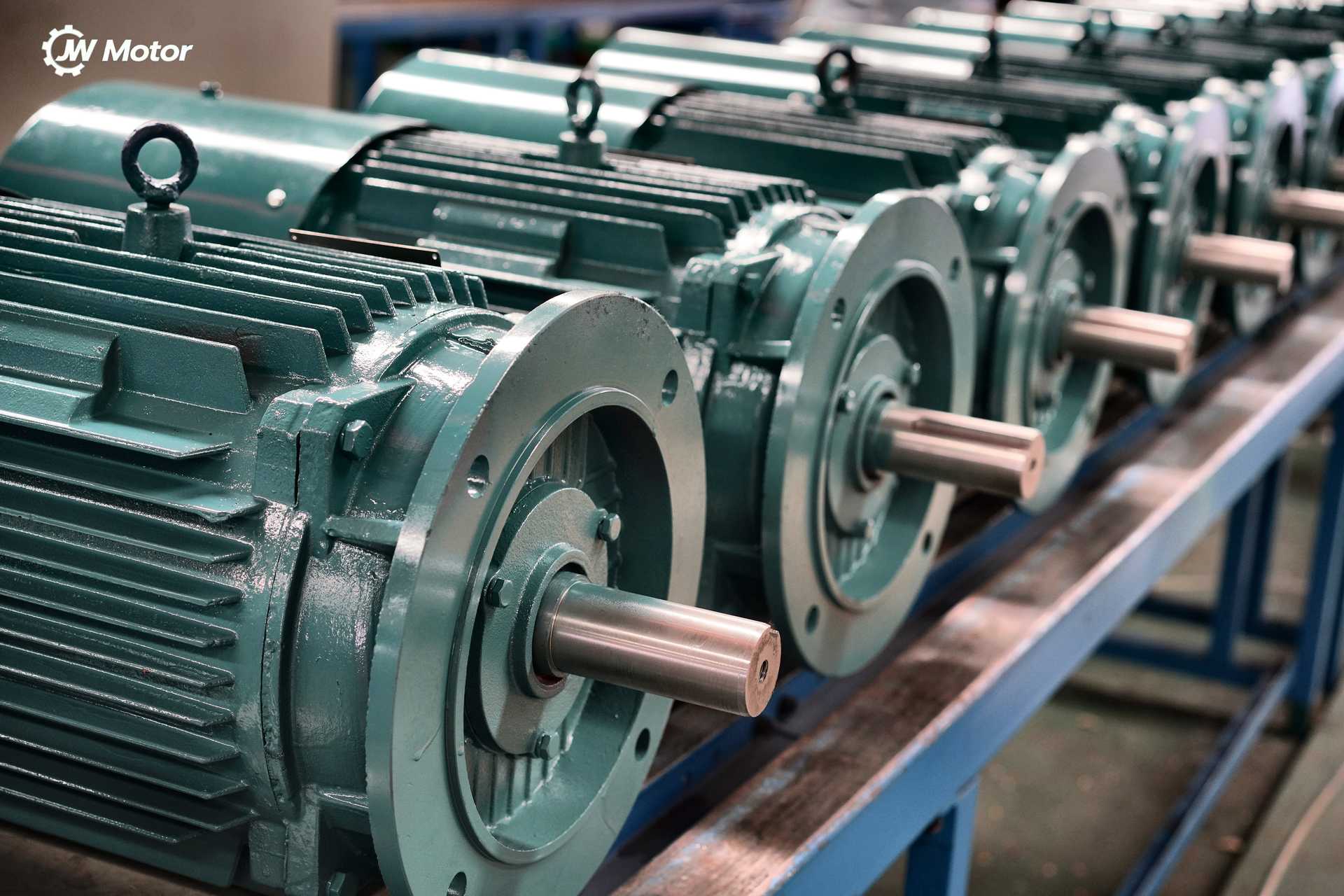
Variable torque · YDT · 2 or 3 speeds
Multi speed motors for fans and pumps
A centrifugal fan or pump needs far less power at low speed. A variable-torque multi-speed motor is wound for that curve. Switch to the low speed off peak and the flow drops without a damper or a throttling valve. JWMotor builds them as the YDT series, on contactors, with no converter.
Why the low speed is rated lower
Fans and pumps follow the affinity laws. Torque rises with the square of speed, and power with the cube. The YDT winding is built for that load, not for constant torque.
01
Half speed, about one eighth
The series page states that cutting speed by half drops power to about one eighth. The motor does not need full torque at the low speed, because the impeller does not ask for it.
02
No oversizing at low speed
A constant-torque motor run slow on a fan delivers power the load never uses. The series page names the result: over-excitation, overheating and waste.
Match the pair to the duty points
Take the flow you need at peak and off peak. Choose the pair whose two speeds sit nearest those duty points, then check the power at each. The YDT catalog lists these pairs.
| Pair | Synchronous speeds at 50 Hz | Power, high speed | Power, low speed | IEC frame |
|---|---|---|---|---|
| 2/4 | 3000 / 1500 r/min | 0.75–16.5 kW | 0.17–3.8 kW | 80–160 |
| 4/6 | 1500 / 1000 r/min | 1.1–160 kW | 0.32–55 kW | 90–315 |
| 4/8 | 1500 / 750 r/min | 1.0–155 kW | 0.22–41 kW | 90–315 |
| 6/8 | 1000 / 750 r/min | 0.65–132 kW | 0.25–66 kW | 90–315 |
| 4/6/8 | 1500 / 1000 / 750 r/min | 2.3–140 kW at 4 poles | 0.8–51 kW at 6 poles · 0.8–35 kW at 8 poles | 112–315 |
Catalog performance is at 380 V, 50 Hz, IP55, Class F. To see the variable-torque rating, compare one frame. The YDT160L-4/8 is 12 kW at 1440 r/min and 2.7 kW at 720 r/min. The constant-torque YD160L-8/4 in the same frame is 11 kW and 7 kW. Three speeds: the YDT225M-4/6/8 gives 34, 12 and 7.5 kW at 1470, 980 and 740 r/min.
03
Flow by contactor
Flow is changed by switching poles, not by a damper or a throttling valve, and not by a converter. Against a single-speed motor held back by mechanical throttling, the series page puts the saving at about 30–50% when high speed runs at peak and low speed off peak.
04
Large impellers start smoothly
A large fan impeller is a high-inertia start. YDT specifies copper windings and a reinforced rotor so the start stays smooth and spares belts, pulleys and couplings.
05
Long hours
The catalog describes low-loss cores, improved cooling and protection for continuous running, with low starting current, low vibration and low noise.
06
Site conditions
Ambient −15 °C to +40 °C. Altitude up to 1,000 m, with a power derating above that. Voltage tolerance ±5%. Class H insulation is available for hot sites.
Fan or pump
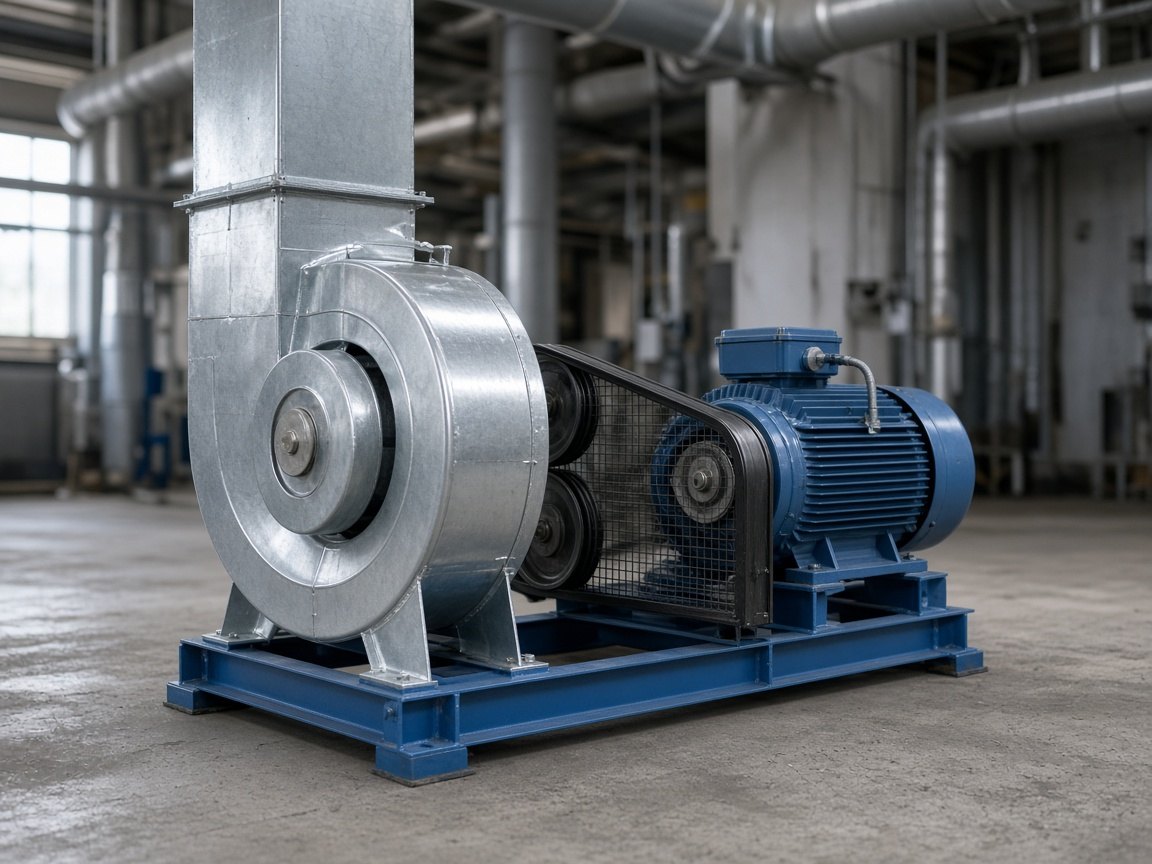
The same variable-torque curve covers both. What changes is the duty and how the motor is mounted.
Ventilation fans
Industrial ventilation and exhaust, high speed at peak hours and low speed off peak.
Cooling towers
Tower fans that follow the cooling load through the day and the season.
Pump stations
Water pumps on the same curve. Close-coupled pumps often use a B5 flange.
HVAC plant
Air handling and circulation, where two or three flow levels cover the year.
If the flow has to follow demand continuously, not in two or three steps, run the fan on a frequency converter. See YVF2. For machine tools and conveyors with a constant-torque load, see YD.
The YDT series
The model code reads like YD. In YDT160L-4/8, YDT is the series, 160 the frame height in millimetres, L the core length, and 4/8 the pole pair. Read it off the old nameplate with the power at each speed.
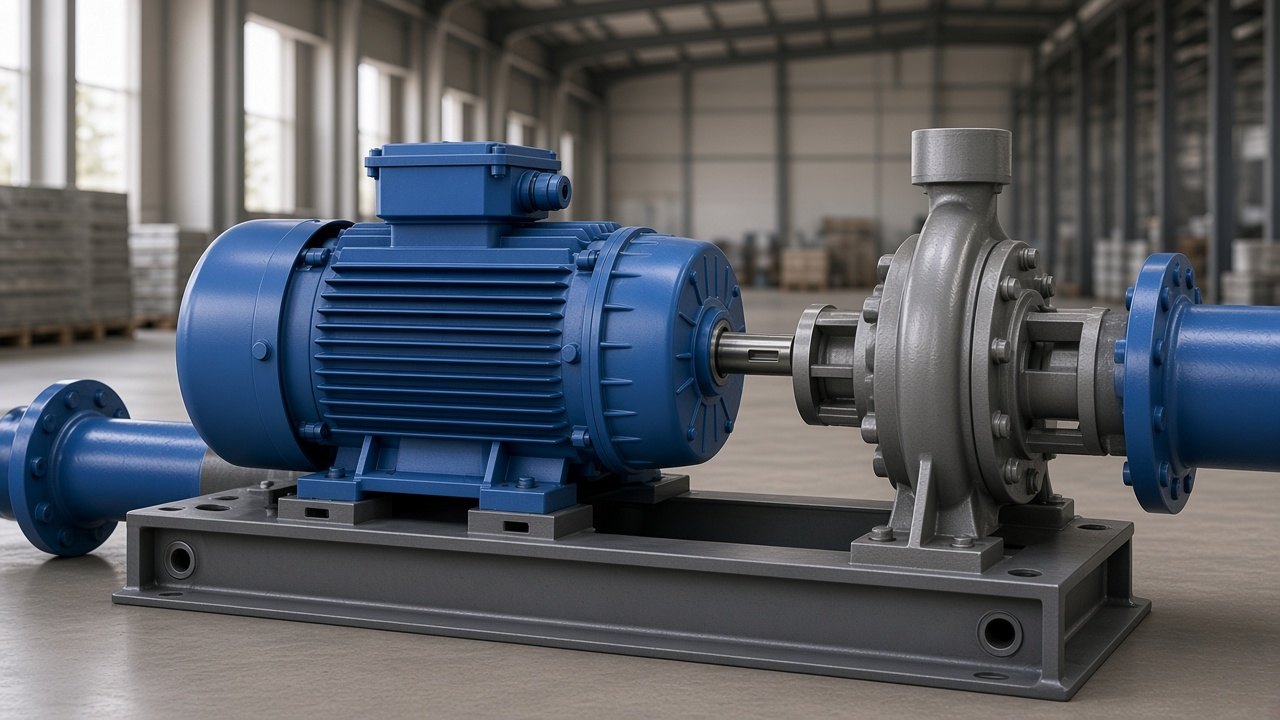
Variable torque · pole-changing
YDT Series Fan and Pump Motors
Multi-speed induction motor with a variable-torque winding for centrifugal fans and pumps. Torque follows the square of speed. Two or three fixed speeds on contactors. Copper windings and a reinforced rotor for high-inertia starts.
2/4 · 4/6 · 4/8 · 6/8 · 4/6/8 in the catalog · IP55
Where YDT goes
HVAC and ventilation
Industrial fans, air handling, cooling towers and exhaust.
Water and wastewater
Pump stations and treatment plants with changing flow.
Process plant
Fan systems in production lines that change airflow by stage.
Industry pages: HVAC and ventilation · Water and wastewater · Guide: Multi-speed motors for fan pumps
Send the duty points
Tell us what the fan or pump has to do at each speed. The pair and the frame follow from that.
- Fan, pump, cooling tower or other duty
- Flow or speed needed at peak and off peak
- Pole pair and kilowatts at each speed, or the old nameplate
- Direct drive or belt drive
- Voltage and frequency
- Mounting: B3, B5, B35 or V1. The factory also builds B14, B34, V3 and V5.
Jiangxi Jiawang Special Motor · +86 199 0684 4761 · [email protected]
Before the quote
What is a multi speed motor for fans and pumps?
A pole-changing induction motor with two or three fixed speeds and a variable-torque winding. Its output torque follows the square of speed, which is the load curve of a centrifugal fan or pump. On JWMotor this is the YDT series.
Why not use a standard two-speed motor?
A constant-torque two-speed motor such as YD is rated for much more power at the low speed than a fan needs. Compare one frame: YD160L-8/4 is 7 kW at the low speed, YDT160L-4/8 is 2.7 kW. On a fan, the variable-torque winding avoids over-excitation and overheating at low speed.
How much energy does it save?
The series page states about 30–50% against a single-speed motor controlled by mechanical throttling, by running high speed at peak and low speed off peak. Halving speed drops fan power to about one eighth. Your saving depends on how many hours run at each speed.
Multi speed motor or VFD for a fan?
If two or three flow levels cover the duty, a YDT motor on contactors is simpler, with no converter, shielded cable or filter. If the flow has to follow demand continuously, a converter and a motor like YVF2 is the match.
Which pole pairs are available?
The YDT catalog lists 2/4, 4/6, 4/8 and 6/8 for two speeds, and 4/6/8 for three speeds, in frames 80 to 315.
Will it start a large fan?
YDT specifies copper windings and a reinforced rotor for the inertia of large fan impellers and water pumps, so the start stays smooth on belts, pulleys and couplings. Send the impeller or the fan model with the quote.