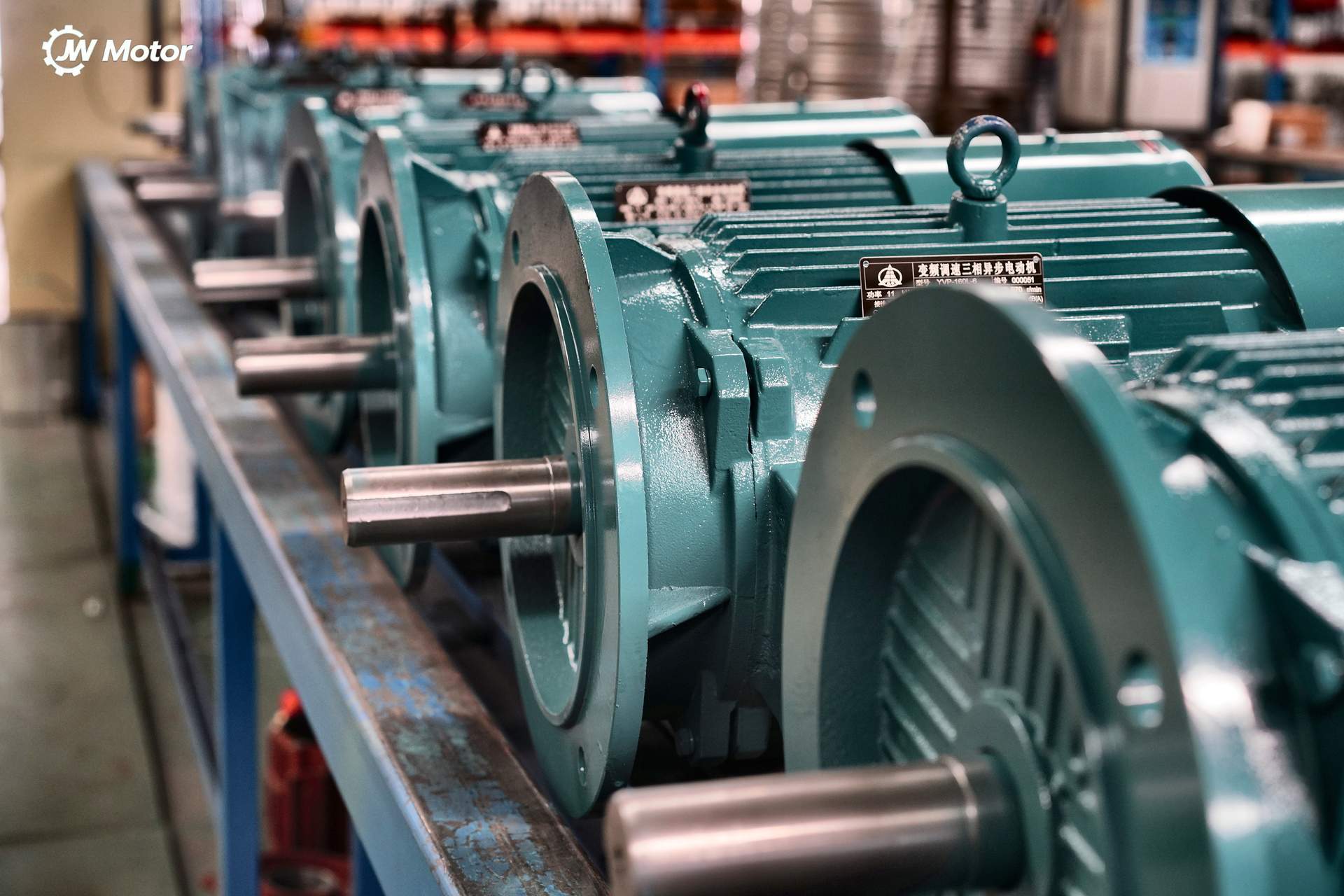
Pole-change or converter · YD · YDT · YVF2
Variable speed electric motors
There are two ways JWMotor varies the speed of a three-phase motor. Change the number of poles, and the motor steps between two or three fixed speeds on contactors. Or change the frequency with a converter, and the speed moves through a band from 5 Hz to 100 Hz. This page compares the two.
Steps or a band
Speed of an induction motor is set by the supply frequency and the number of poles. Pole-changing motors change the poles. Variable frequency motors change the frequency.
| YD | YDT | YVF2 | |
|---|---|---|---|
| How speed changes | Stator connection changes the poles | Stator connection changes the poles | Converter changes the frequency |
| Speeds | 2 fixed speeds in the catalog (4/2, 6/4, 8/4). 3-speed versions on the series page | 2 or 3 fixed speeds | Any speed in the band |
| Control gear | Contactors | Contactors | Frequency converter |
| Torque curve | Stiff speed: rpm stays nearly constant as load changes | Variable torque: torque follows the square of speed | Constant torque 5–50 Hz, constant power above 50 Hz |
| Catalog range | 0.45–82 kW, frames 80–280 | Pairs 2/4, 4/6, 4/8, 6/8 and 4/6/8 | 0.18–375 kW, frames 80–355 |
| Best for | Machine tools, mixers, conveyors, winches | Centrifugal fans and pumps | Conveyors, hoisting, cutting, winding, CNC |
Catalog performance is at 380 V, 50 Hz. YD generates no high-frequency harmonics, which is why its series page also names laboratory equipment and auxiliary drives on precision machine tools.
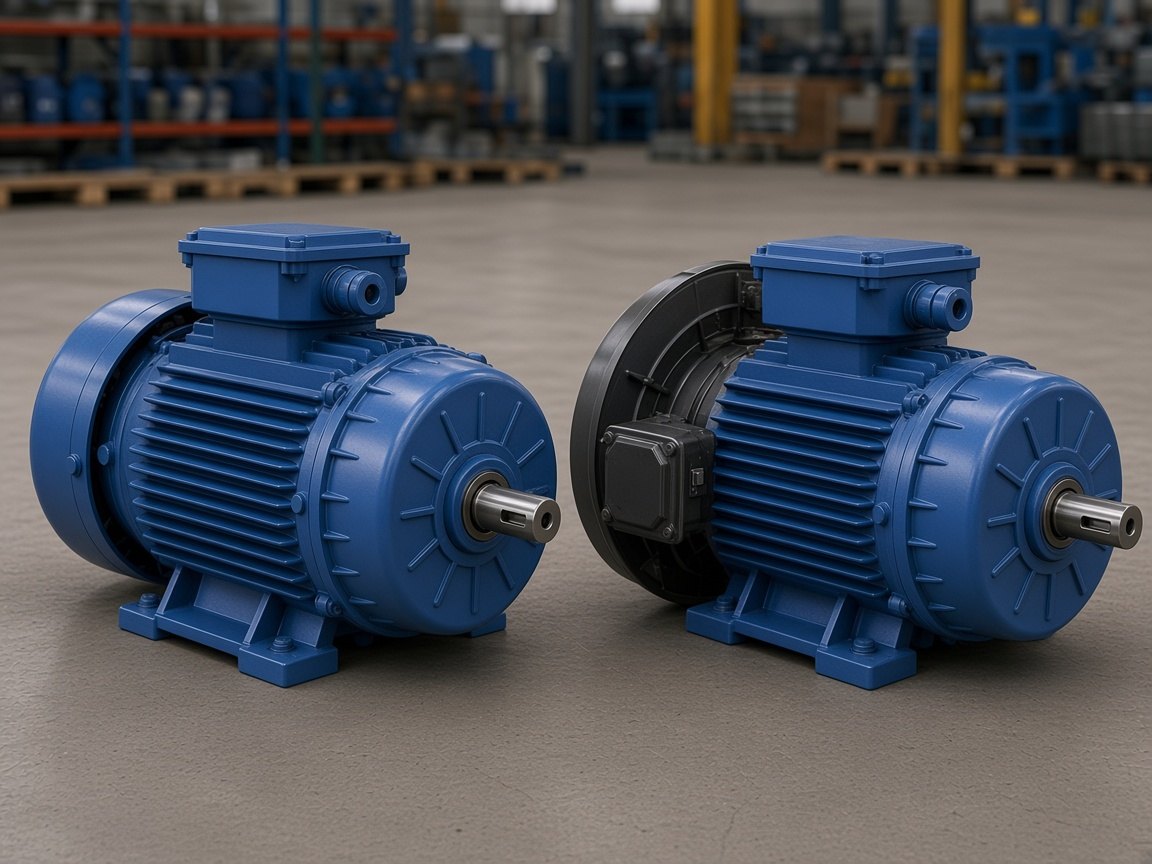
What each method gives you
At 50 Hz the synchronous speed is 3000 r/min with 2 poles, 1500 with 4, 1000 with 6 and 750 with 8. A pole-changing motor jumps between two or three of these. A converter moves anywhere between.
01
Pole change
Each speed has its own rating. A YD132M-4/2 gives 6.5 kW at 1450 r/min and 8 kW at 2880 r/min. No converter, shielded cable or filter in the circuit.
02
Frequency
Torque is held from 5 Hz to 50 Hz and power above 50 Hz. A YVF2-225M-4 gives 45 kW at 1480 r/min with 291 N·m, and holds that torque down to 5 Hz.
Choose by the duty
Start with how many speeds the machine really needs, and whether the load is a fan or pump.
Two fixed speeds, steady under load
Drill presses, milling machines, mixers and conveyors. Choose YD. See two speed motors.
Fan or pump, two or three steps
Cooling towers, ventilation and pump stations. Choose YDT. Halving the speed cuts power to about one eighth. See multi speed motors for fans and pumps.
A band of speeds, or long hours slow
Conveyors, extruders and lines that run below 50 Hz all day. Choose YVF2. See VFD motors.
Above base speed
Cutting and winding that run past 50 Hz at constant power. Choose YVF2 and check the top frequency in variable frequency motors.
A gear reducer lowers the output speed by a fixed ratio. It does not make the speed variable. For a motor that goes straight into an R, F, K or S reducer, see R/F/K/S series motors.
Pole-changing on contactors
When two or three speeds are enough, a pole-changing motor keeps the circuit simple.
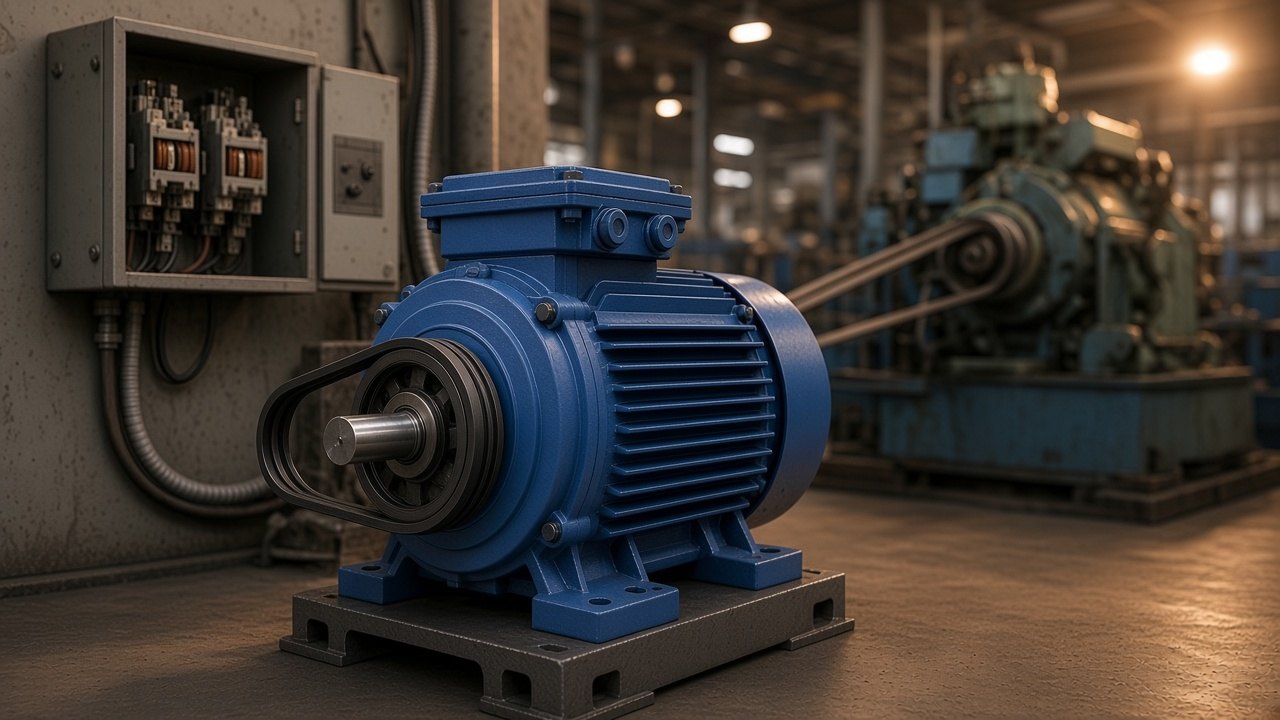
Pole-changing · three-phase
YD and YDT Multi Speed Motors
The stator winding, typically a Dahlander connection, is switched by contactors. After the change the speed stays locked to the supply frequency at the new pole count. YD keeps a stiff speed for machines. YDT follows the fan and pump curve.
2 or 3 fixed speeds · contactor control · copper and silicon steel
Where each one goes
Machines
YD on machine tools, mixers and conveyors, and on winches and drilling machines in marine and mining work.
Air and water
YDT on cooling towers, ventilation, HVAC and pump stations.
Lines and process
YVF2 on conveyors, hoisting, extruders, textiles, metallurgy and CNC.
Industry pages: HVAC and ventilation · Water and wastewater · Material handling
Send the speeds you need
Tell us the speeds, not only the kilowatts. That decides pole-change or converter.
- Each speed the machine runs at, or the frequency range
- Kilowatts at each speed, or the old nameplate
- Load: machine, fan, pump or conveyor
- Supply voltage and frequency
- Control you already have: contactors or a converter
- Mounting: B3, B5, B35 or V1. The factory also builds B14, B34, V3 and V5.
Jiangxi Jiawang Special Motor · +86 199 0684 4761 · [email protected]
Before the quote
What is a variable speed electric motor?
A motor whose speed can be changed in service. JWMotor offers two kinds: pole-changing motors (YD and YDT) with two or three fixed speeds, and variable frequency motors (YVF2) that run through a speed band on a converter.
Is a pole-changing motor cheaper to run than a VFD?
It needs only contactors, with no converter, shielded cable or filter. On fans and pumps, YDT puts the saving at about 30–50% against a single-speed motor on mechanical throttling. A converter gives finer control, if the duty needs more than two or three speeds.
Can a pole-changing motor run on a converter?
YD and YDT are made for contactor switching. For converter duty, choose YVF2, which has the separate IC416 fan and reinforced insulation with VPI.
Which one holds speed best under load?
YD has a stiff speed-torque curve, so rpm stays nearly constant as the load changes. That is why its series page names drill presses and milling machines.
How low can YVF2 run?
Constant torque from 5 Hz. The separately powered fan keeps the motor cool at low speed, and S1 continuous duty at low speed is stated for conveyors, extruders and automated lines.