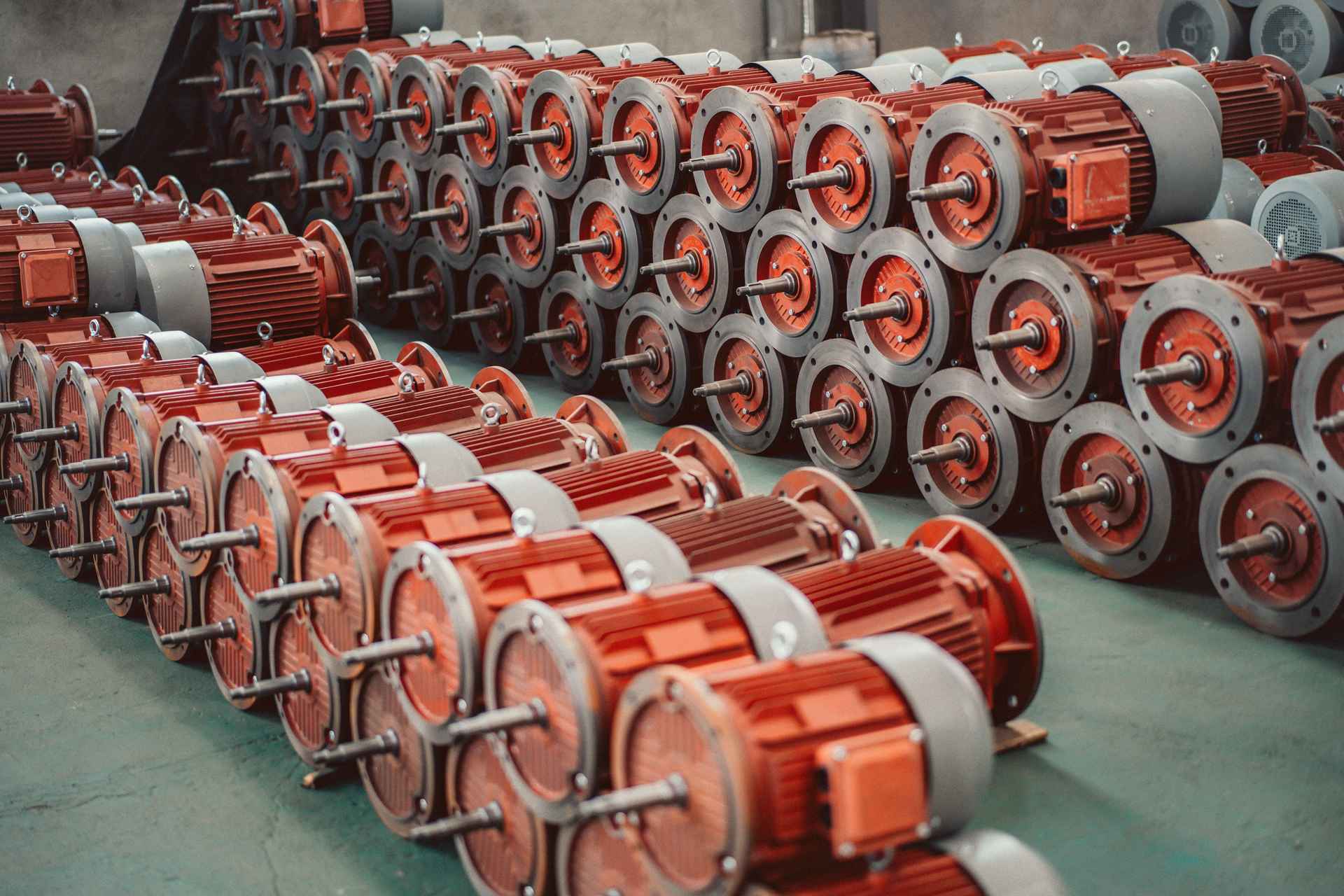
YD · YDT · YVF2 · YEJ
Special electric motors
Four three-phase lines. YD and YDT change poles for 2 or 3 fixed speeds. YVF2 follows a converter from 5 Hz to 100 Hz. YEJ locks the shaft when the supply drops.
What each line changes
The four lines are all three-phase. The difference is how speed is set, or how the shaft is stopped. Each name opens the series page.
| Line | How it works | Published range | Frame |
|---|---|---|---|
| YD | Stator connection changes the poles. Contactors select 2 or 3 speeds. Pairs are 2/4, 4/6, 4/8, 2/4/6 and 4/6/8. | 0.45–82 kW 220–690 V |
80–280 |
| YDT | Same pole pairs. Torque follows the square of speed, for centrifugal fans and pumps. | 0.45–82 kW 220–690 V |
80–280 |
| YVF2 | Frequency converter. Constant torque from 5 Hz to 50 Hz. Constant power from 50 Hz to 100 Hz. Independent fan, IC416. | 0.75–375 kW poles 2, 4, 6, 8, 10 |
80–355 |
| YEJ | DC brake in the terminal box. Spring locks the rotor when power drops. Typically 0.15–0.45 seconds. | 0.75–45 kW poles 2, 4, 6, 8 |
80–225 |
Each series page states altitude up to 1,000 m, with a power derating above that, and voltage within ±5%.
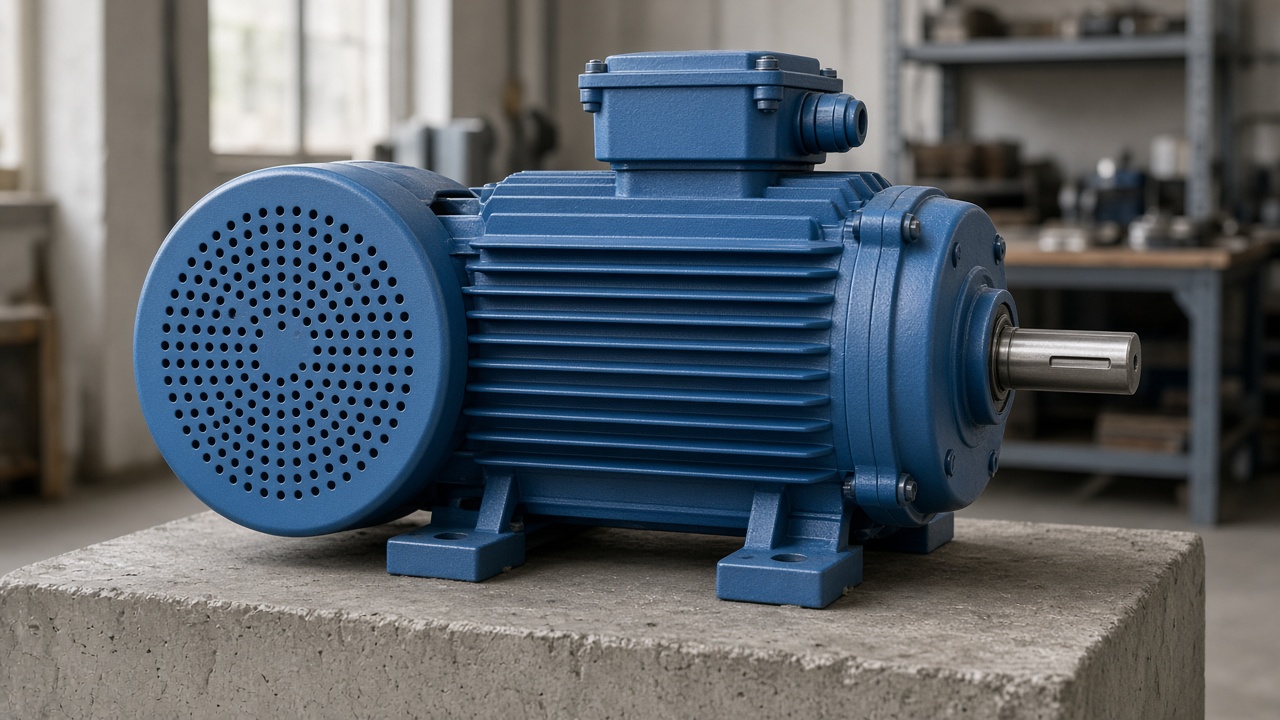
YD, pole change
Speed is changed by the stator winding, typically a Dahlander connection, through contactors. Once the poles are set, speed stays on the supply frequency. The series page uses 4 poles and 8 poles, 1500 rpm and 750 rpm, as the example.
Two-speed pairs are 2/4, 4/6 and 4/8. Three-speed pairs are 2/4/6 and 4/6/8. The speed-torque curve is stiff, so rpm stays nearly constant as the load changes. That is the duty named for drill presses, milling machines and lathes, and also for mixers, conveyors, winches and drilling machines in marine and mining work.
The motor is copper and silicon steel, described for dust and heavy vibration. It produces no high-frequency harmonics, which is why the series page also names laboratory equipment and auxiliary drives on precision machine tools. Class H insulation is available.
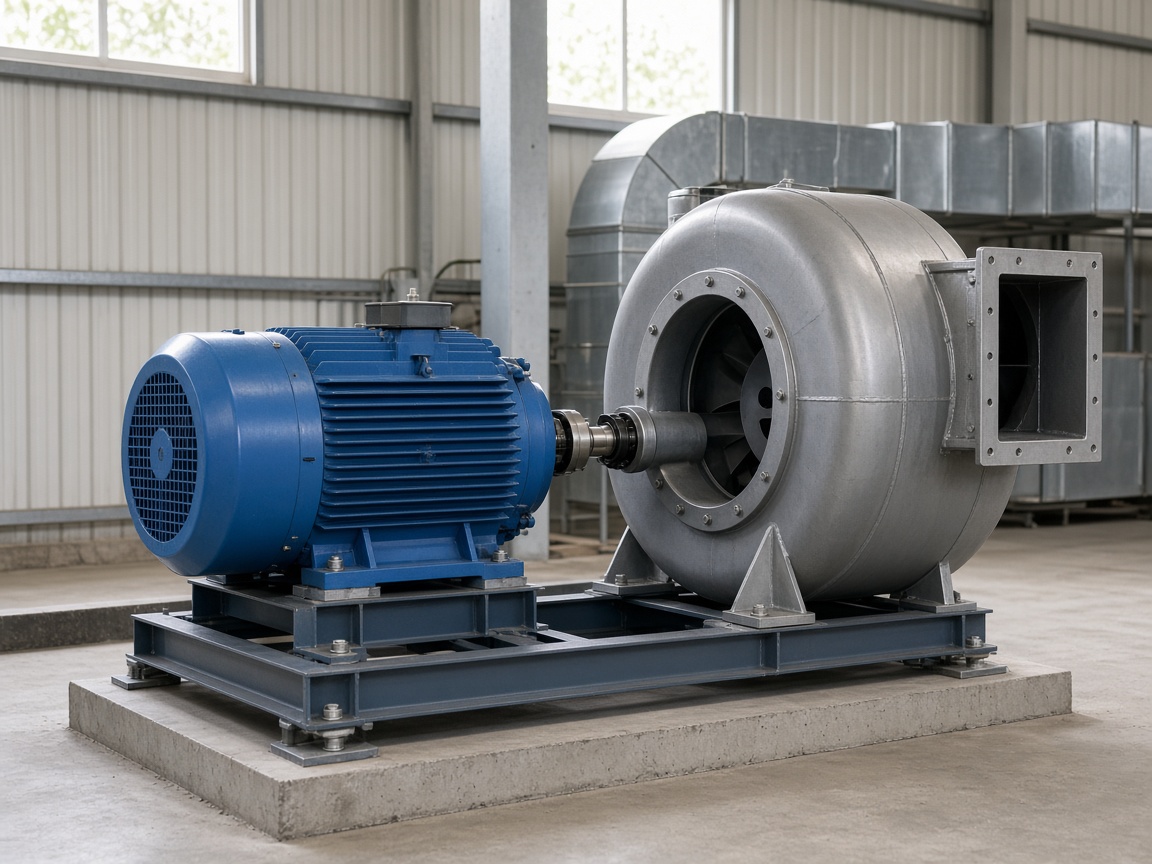
YDT, fans and pumps
YDT uses the same pole pairs, the same 0.45–82 kW and the same frames 80–280. The winding is the variable-torque one. Output torque follows the square of the speed, which is the curve of a centrifugal fan or pump.
The series page states the affinity result in plain numbers: cutting speed by half drops power to about one eighth. Against a single-speed motor held back by mechanical throttling, it puts the saving at about 30–50% when high speed is used at peak and low speed off peak. Flow is switched by contactors. Cooling towers, ventilation, HVAC and pump stations are the duties named there.
Large fan impellers are a high-inertia start. The series specifies copper windings and a reinforced rotor so that start stays smooth on belts, pulleys and couplings. Class H insulation is available.
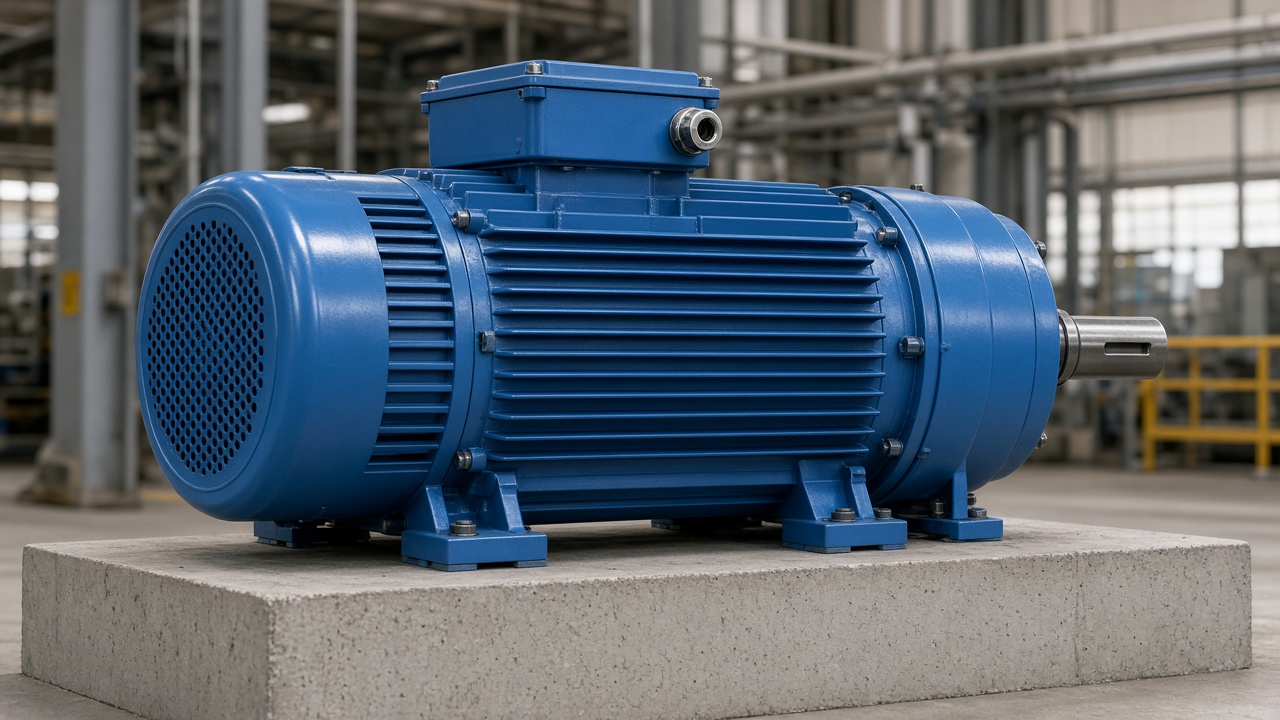
YVF2, on a converter
At low frequency a shaft-mounted fan moves less air. YVF2 carries a separately powered axial fan, IC416, so cooling stays up from a crawl to top speed. The insulation system is Class H, vacuum-pressure impregnated for the pulse voltage and harmonics of a converter, in line with NEMA MG1 Part 31.
From 5 Hz to 50 Hz the motor holds torque, for conveyors and hoisting. From 50 Hz to 100 Hz it holds power, for cutting and winding. S1 continuous duty at low speed is stated for conveyors, extruders and automated lines. The non-drive end can take a rotary encoder for a vector converter. The series page names ABB, Siemens and Schneider among converters in this band.
Power and frames on the series page are 0.75–375 kW and IEC 80–355, at 220–690 V. Poles in the model list are 2, 4, 6, 8 and 10.
YEJ, power-off brake
YEJ is a three-phase motor with a DC electromagnetic brake. While the motor is powered, the brake is released. When power drops, spring force locks the rotor. Lifted loads stay where they are. Automated equipment stops short of an overshoot.
The AC/DC rectifier sits in the terminal box, on the ordinary AC supply. With that module, power cut to standstill is about 0.2 seconds. Across frame sizes the series page gives 0.15 to 0.45 seconds. A manual lever frees the shaft during an outage, maintenance or commissioning. Brake torque is set on the pressure springs, with the air gap kept between 0.2 mm and 0.5 mm.
The duties named on the series page are vertical lifting, automated warehousing, emergency stops, elevators, packaging machinery, assembly lines and stacker cranes. Class H insulation is available.
Send the duty
The line follows the job. Two or three fixed speeds, a fan or pump curve, a frequency band, or a shaft that must stop.
- YD, YDT, YVF2 or YEJ
- Kilowatts, and for YD or YDT the kilowatts at each speed
- Pole pair, or pole count, or the frequency band
- Voltage and frequency
- IEC frame
- Mounting: B3, B5, B35 or V1. The factory also builds B14, B34, V3 and V5.
Jiangxi Jiawang Special Motor · +86 199 0684 4761 · [email protected]
Before the quote
What are the four special electric motors?
YD changes poles for 2 or 3 fixed speeds, 0.45–82 kW, frames 80–280. YDT is the same range with a variable-torque winding for fans and pumps. YVF2 runs from a converter, 5 Hz to 100 Hz, 0.75–375 kW, frames 80–355. YEJ locks the shaft on power loss, 0.75–45 kW, frames 80–225.
How do YD and YDT differ?
Both publish the pairs 2/4, 4/6, 4/8, 2/4/6 and 4/6/8. YD holds a stiff speed for machine tools, conveyors, winches and lathes. YDT torque follows the square of speed. Halving speed drops power to about one eighth.
When is the motor a YVF2?
When speed is a frequency band rather than two or three steps. Constant torque runs from 5 Hz to 50 Hz. Constant power runs from 50 Hz to 100 Hz. Cooling is an independent IC416 fan.
When is the motor a YEJ?
When the shaft has to stop and stay stopped if power drops. Braking is typically 0.15 to 0.45 seconds by frame size, and about 0.2 seconds with the rectifier in the terminal box.