
Single phasing is what happens when a three-phase motor loses one of its three supply lines while the other two stay live. It is one of the most common causes of burnt-out windings in three-phase motors. The motor often keeps running, so the fault can go unnoticed until the insulation fails. This guide explains what single phasing is, what causes it, how to recognize it, what it does to the windings, and how to protect motors against it.
What Is Single Phasing of a Motor?
A three-phase induction motor is designed to be fed by three balanced voltages. Single phasing (also called phase loss or open phase) is the condition where one line becomes open circuit, through a blown fuse, a burnt contactor pole or a broken conductor, so the motor is fed by only two lines. Those two lines form a single-phase supply.
This explains the classic exam question, “a serious problem common only to three phase motors is…”: the answer is single phasing. A single-phase motor cannot lose “one of three” phases, but a three-phase motor can, and it reacts in a particularly damaging way:
- If the motor is already running, it usually keeps turning. It still tries to deliver the torque the load demands, so the current in the two remaining lines rises sharply and the windings overheat.
- If the motor is at standstill, it generally cannot start. It sits stalled and hums, drawing close to locked-rotor current through two lines until a protective device trips or the winding burns.
Causes of Single Phasing in a 3-Phase Motor
Single phasing can start anywhere between the utility network and the motor terminals:
- Blown fuse in one phase: a fault, an incorrectly rated fuse or an aged fuse element can open one phase while the other two hold.
- Failed contactor or starter contact: worn, pitted or burnt contacts on one pole open or become high-resistance. This is one of the most frequent causes, especially on equipment that starts and stops often, such as compressors, pumps and fans.
- Loose or corroded terminals: a loose lug in the terminal box, at the starter or on a busbar heats up, oxidizes and can finally open. Vibration and thermal cycling make this worse.
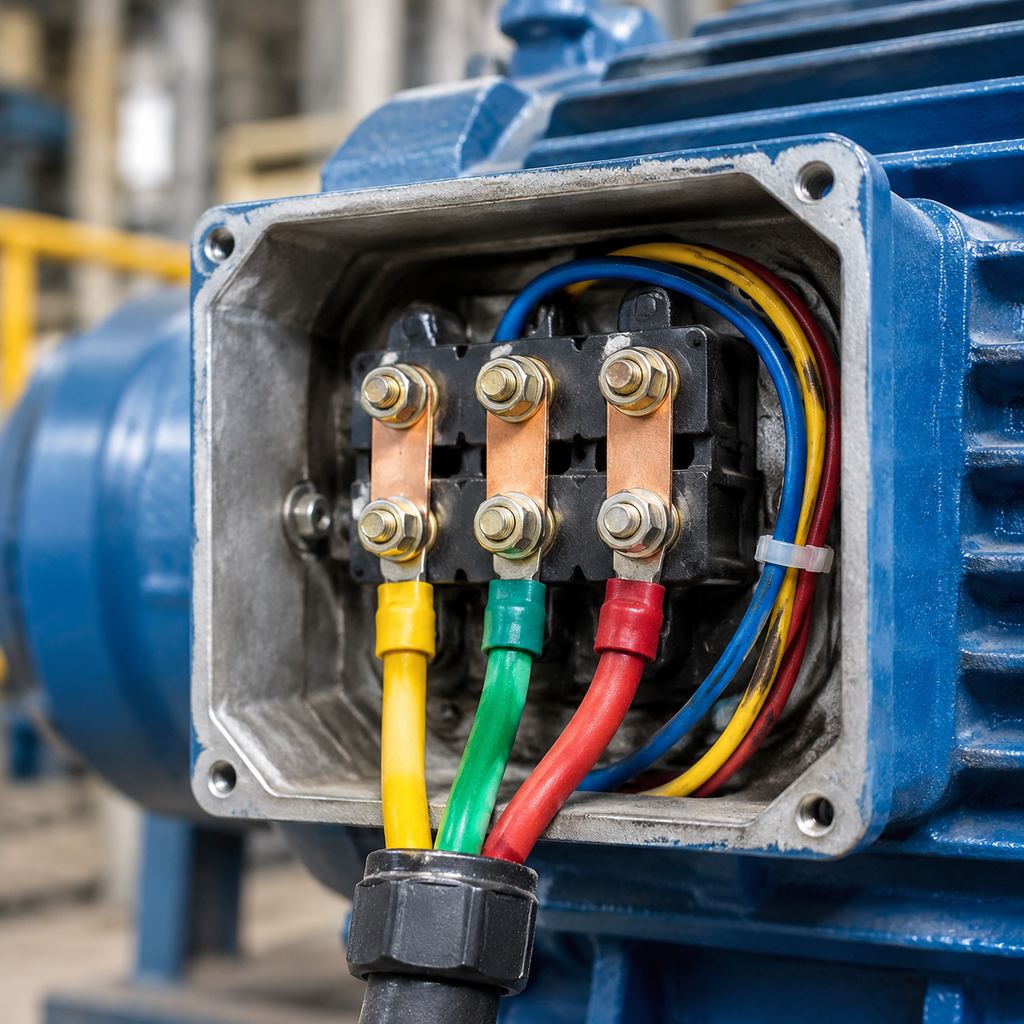
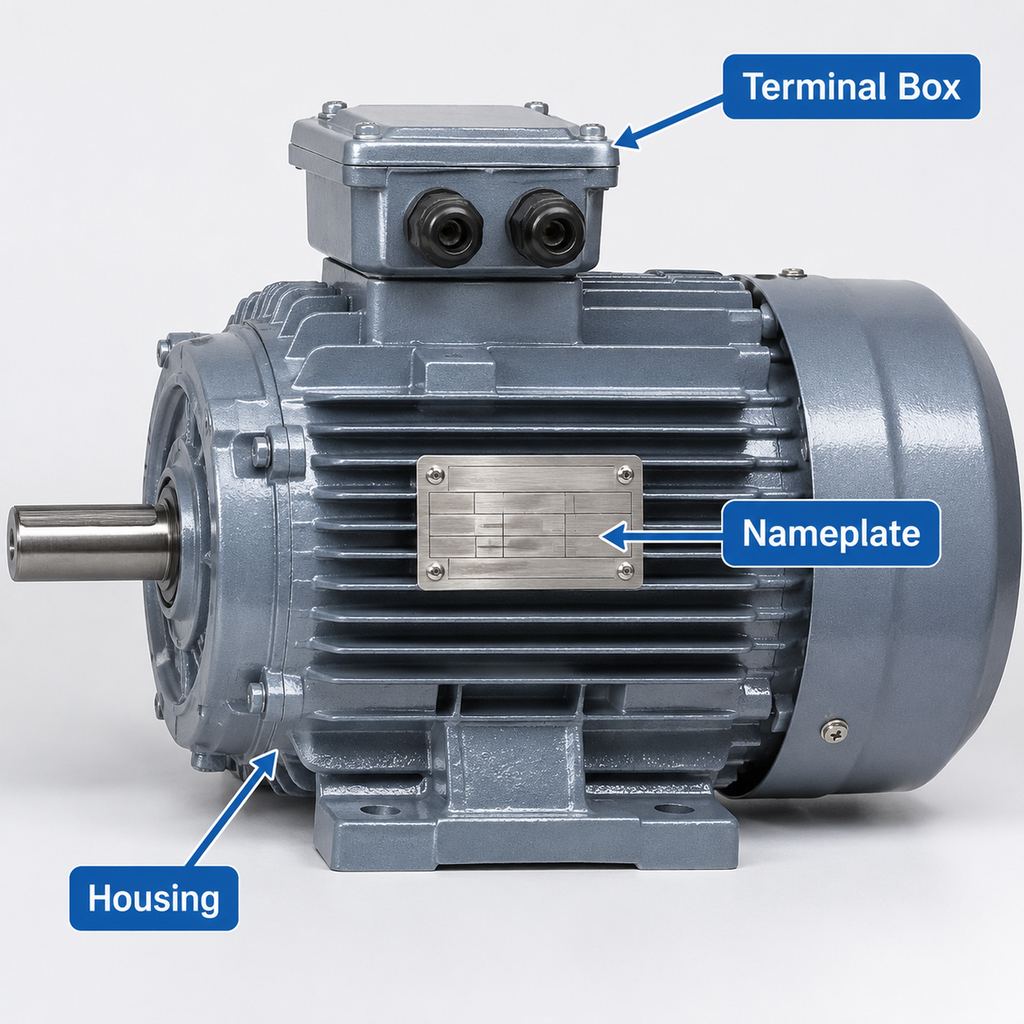
Loose or overheated connections in the terminal box are a common source of phase loss.
- Damaged cable: a conductor broken by mechanical damage, rodents, or a failed joint or cable gland.
- Breaker or isolator fault: one pole of a circuit breaker or switch fails to close or opens on its own.
- Utility-side phase loss: a blown fuse or broken conductor on the supply network or on the primary of the distribution transformer (often after storms or lightning) removes or severely distorts one phase for every motor fed from that transformer.
Symptoms of Single Phasing
- Loud humming or growling, with more vibration than normal.
- Motor will not start: it hums at standstill and may turn slowly or in either direction if pushed by hand.
- Reduced speed and torque: the motor slows under load and may stall on heavy loads.
- Current rise in the remaining lines: a clamp meter shows one line at or near zero and higher than normal current on the other two. The rise depends on load: around 1.7 times normal or more is commonly seen near full load, and it is higher still if the motor stalls.
- Overheating: the frame runs noticeably hotter, overloads or thermistor relays trip, and there may be a burning smell.
If you suspect single phasing, measure the voltage on all three lines at the motor and at the starter, and check line currents with a clamp meter. For full test methods, see how to test a 3 phase motor.
What Single Phasing Does to Motor Windings
Heat is the main damage mechanism. The extra current raises copper losses steeply, since losses increase with the square of the current, and the unbalanced field induces extra rotor currents and heating. Insulation life drops quickly as temperature climbs beyond the insulation class limit, so a motor left running for a long time on two lines can fail within a relatively short time.
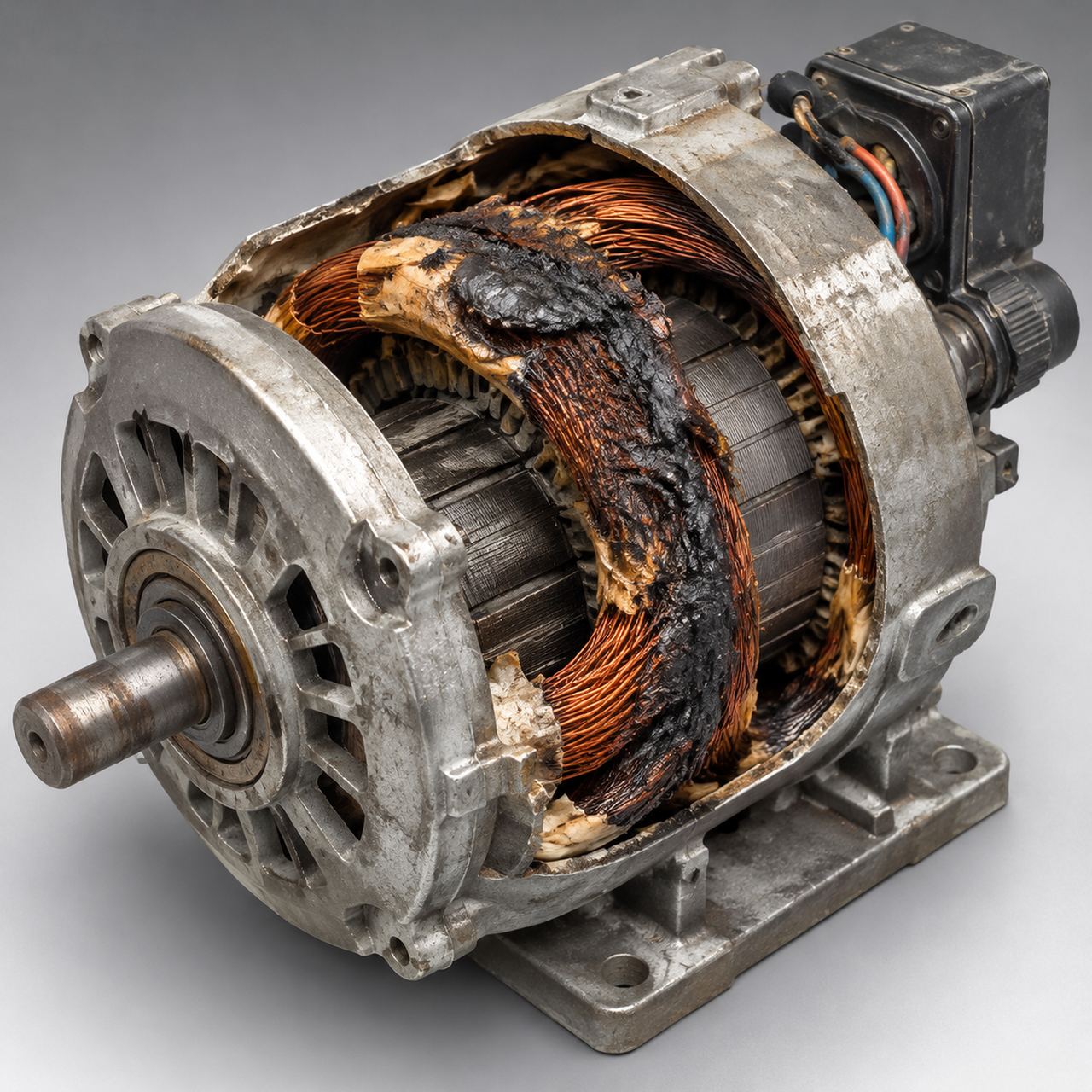
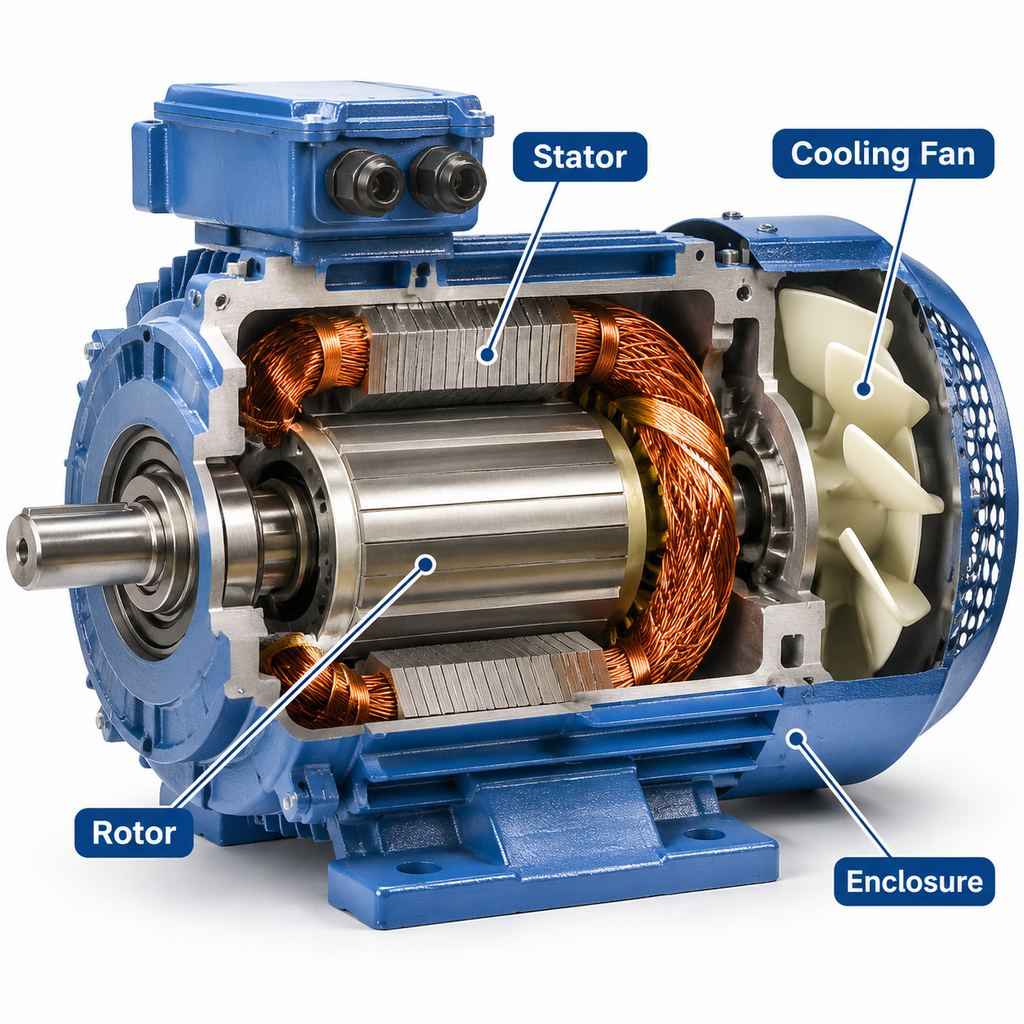
Single phasing typically leaves part of the winding burnt while the rest looks normal.
The pattern of damage usually points to single phasing:
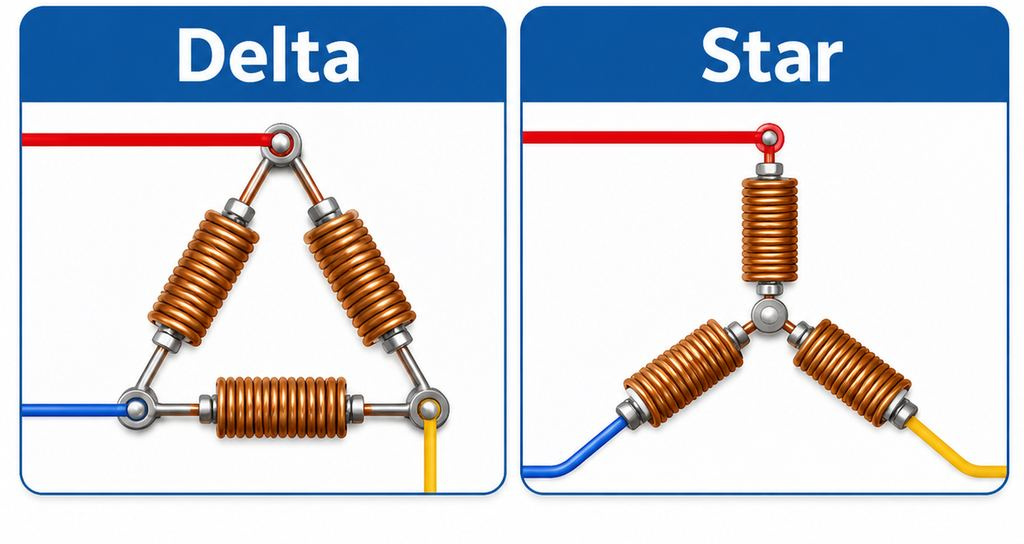
- Star (wye)-connected motors: typically two phase windings show heavy overheating and the third, the one on the open line, looks relatively undamaged.
- Delta-connected motors: typically one phase winding is severely overheated, because it carries a disproportionate share of the current, while the other two are less affected.
Repairers recognize this “one or two phases burnt, the rest intact” pattern as a sign of phase loss rather than a general overload, which usually discolors all three phases evenly. Bearings and lubricant may also suffer from the higher temperatures.
Single Phasing Protection
No single measure prevents every phase loss, but layered protection makes sure the motor is disconnected before the windings are damaged.
Phase-failure (phase-monitoring) relay
A phase-monitoring relay watches the supply voltages and opens the contactor control circuit if a phase is lost, voltages become badly unbalanced, or the phase sequence is reversed. It is inexpensive and fast. Its limitation is that a running motor can regenerate a voltage on the open line, so relays that monitor only voltage magnitude can miss the fault. Choose a model that detects unbalance or phase angle as well.
Motor protection circuit breaker (MPCB) or overload relay with phase-loss sensitivity
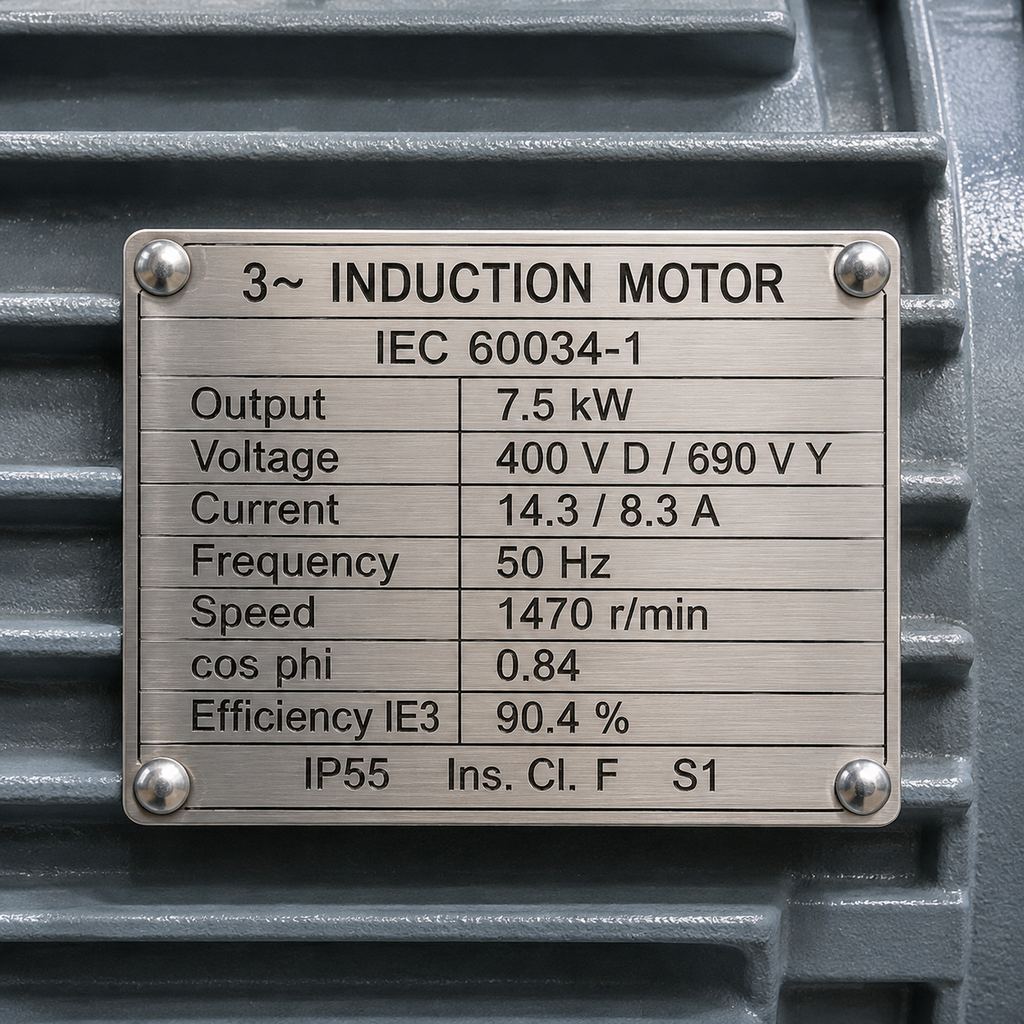
Many IEC thermal overload relays and motor protection circuit breakers have built-in phase-failure sensitivity, so they trip faster when one phase carries little or no current. Electronic overload relays usually detect phase loss and current unbalance directly. Set the overload to the motor’s actual nameplate current, and do not oversize it, or the current rise may stay below the trip point on a lightly loaded motor.
PTC thermistors in the winding
PTC thermistors embedded in the stator end windings measure winding temperature directly. Connected to a thermistor relay, they trip the motor on overheating from any cause: single phasing, unbalance, blocked cooling, high ambient temperature or frequent starts. They complement current-based protection rather than replacing it.
Routine inspection and maintenance
- Re-tighten terminals in starters and motor terminal boxes at planned intervals, as vibration loosens them over time.
- Inspect and replace worn contactor contacts.
- Use correctly rated fuses, and replace all three fuses after a fault if the others may have been stressed.
- Use thermographic (infrared) surveys to find hot connections before they open.
- Record line currents and voltages during routine checks so that unbalance is spotted early.
Motor Design Factors That Help
Motor design cannot prevent phase loss, but it affects how much thermal margin is available while protection acts. JWMotor’s YE3, YE4 and Y2 cast-iron three-phase motors use Class F insulation with a Class B temperature rise. In normal operation the winding runs well below its thermal limit, which leaves headroom for abnormal events such as short-term unbalance (see insulation class). This margin does not make a motor immune to single phasing; correct protection is still essential.
PTC winding thermistors can be specified as an option. They are especially worth having on continuous-duty motors running unattended, such as pumps in water and wastewater plants, fans in HVAC and ventilation systems, and conveyors in material handling or copper and mining operations. For special protection or accessory requirements, see customization.
Repair or Replace After Single Phasing Damage?
Once the cause has been found and fixed, decide what to do with the motor:
- Check before restarting. Measure insulation resistance and winding resistance on all three phases. If the motor tripped quickly and the readings are normal and balanced, it can often go back into service after the supply fault is corrected.
- Rewind when the winding is damaged and the motor is large, special or hard to source. A quality rewind restores operation, but check the stator core for hot spots and inspect the bearings at the same time.
- Replace when the motor is small or a standard frame size, when the repair cost approaches the price of a new motor, when the core is damaged, or when the motor has been rewound before. Replacing an old motor with an IE3 or IE4 model also lowers running cost.
- Upgrade protection either way. If the motor failed, the protection did not act in time. Add phase-loss detection or thermistor protection before restarting.
Replacement YE3, YE4 and Y2 motors in standard IEC frames are listed under all products.
Frequently Asked Questions
What is single phasing in a 3 phase motor?
It is the loss of one of the three supply lines, leaving the motor fed by two lines. A running motor may keep turning but draws excessive current and overheats; a stopped motor will not start.
What is a serious problem common only to three phase motors?
Single phasing. Only a motor fed by three phases can lose one of them and keep running on the other two in an overloaded, overheating condition.
What are the main causes of single phasing?
Blown fuses, failed contactor contacts, loose or corroded terminals, damaged cables, faulty breaker poles and phase loss on the utility supply.
How do I protect a motor against single phasing?
Use an overload relay or motor protection circuit breaker with phase-loss sensitivity, add a phase-monitoring relay, and fit PTC thermistors for direct winding temperature protection. Back these up with regular inspection of connections and contacts.
Can a motor be used again after single phasing?
Yes, if it was disconnected quickly and insulation and winding resistance tests are normal. If the windings are burnt, the motor must be rewound or replaced.


2 thoughts on “What Is Single Phasing of a Motor? Causes, Symptoms, Winding Damage and Protection”