VFD stands for variable frequency drive. A VFD drive is an electronic controller that changes the frequency (and usually the voltage) supplied to an AC motor so the motor can run at adjustable speed instead of only at fixed line frequency. In plant language you will also hear inverter, variable-speed drive (VSD) or adjustable-frequency drive—the idea is the same: match motor speed to process demand.
This article explains what a VFD is, how the main power stages work at block level, and why VFDs are widely used on HVAC fans and pumps. For how a VFD sits among DOL starters and soft starters, see what is a motor controller. For motor insulation and bearing-current issues under inverter supply, see what is an inverter-duty motor.
What Does VFD Stand For?
VFD = Variable Frequency Drive. The drive varies output frequency; because induction-motor speed follows frequency (with slip), shaft speed changes with the drive setpoint. Voltage is usually adjusted with frequency so the motor stays in a usable flux range (often discussed as a V/f relationship), but the defining control variable remains frequency.
How a VFD Works (Block View)
| Stage | Role |
|---|---|
| Rectifier | Converts incoming AC line power to DC |
| DC bus | Smooths and stores DC energy (capacitors; sometimes DC chokes) |
| Inverter | Switches DC into variable-frequency, variable-voltage AC for the motor (typically PWM with IGBTs) |
The motor never “sees” fixed 50/60 Hz directly when the drive is in control. The inverter synthesizes a lower or higher fundamental frequency so a fan or pump can run slower or faster within the engineered limits of the drive and motor package.
What Is a VFD in HVAC?
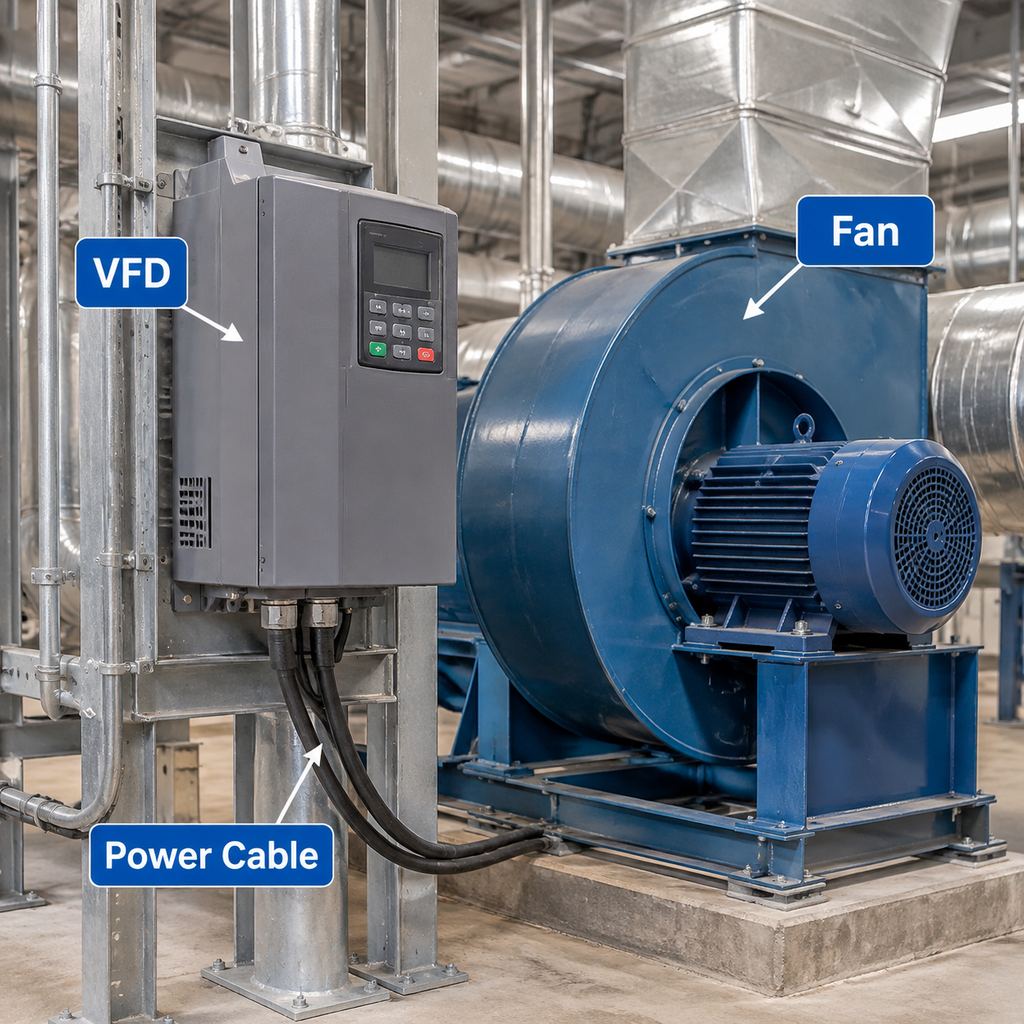
In HVAC and ventilation systems, VFDs commonly control supply, return, exhaust and condenser fans, and also chilled- or condenser-water pumps. Instead of running the motor at full speed and wasting energy across a damper or throttling valve, the drive reduces speed so airflow or water flow closer matches building demand.
Comfort systems rarely need peak flow all year. Part-load hours dominate, so speed control on fans and pumps is one of the highest-leverage efficiency measures in many commercial buildings—subject to a correct controls strategy and a motor that can tolerate the speed range.
Why Variable Speed Beats Dampers and Throttling (Affinity Laws, Qualitative)
For centrifugal fans and pumps, flow varies roughly with speed, pressure (or head) roughly with speed squared, and power roughly with speed cubed—the classic affinity relationships. The exact exponents depend on the system curve, but the direction is clear: a modest speed reduction usually cuts shaft power more than proportionally.
Dampers and discharge valves do the opposite of what you want for energy: the machine still spins near full speed while the restriction dissipates energy as pressure drop. A VFD reduces the work the machine is asked to do. Do not treat marketing “percentage saved” claims as project results—estimate savings from your load profile, hours and measured or design duty points.
The same idea applies on many water and wastewater pumping systems when flow varies and the pump is centrifugal. Positive-displacement pumps and constant-torque machines need a different torque/speed check; do not assume every pump is a cubic-power candidate.
Practical HVAC and Pump Points
Soft starting
A VFD can ramp frequency from a low value, limiting inrush compared with across-the-line starting and reducing mechanical shock on couplings and duct or pipe systems. That is a control benefit, not a substitute for correct mechanical design.
Minimum speed and motor cooling
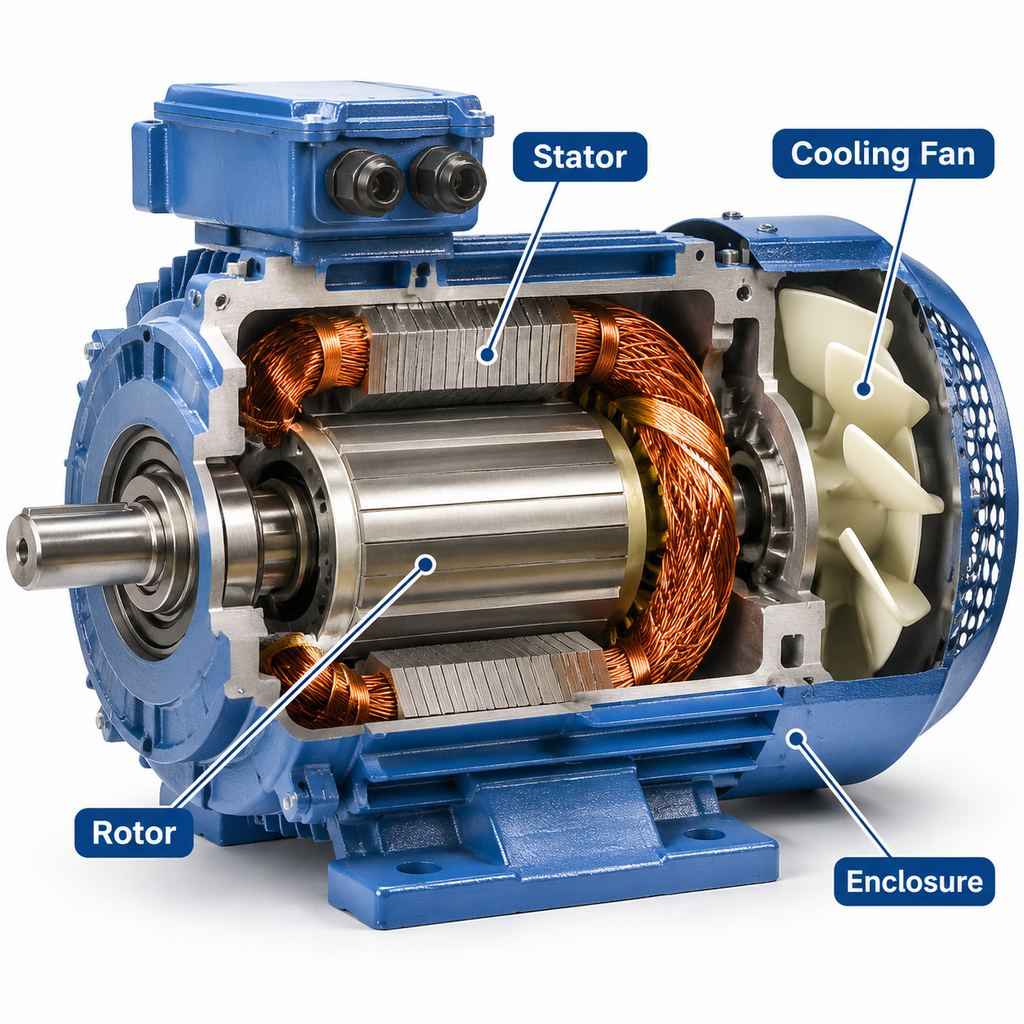
TEFC motors rely on their shaft-driven fan. At low speed, self-cooling falls off. Continuous low-speed torque duty may need a wider constant-torque speed range, an independently powered blower, or a motor built for inverter service such as the YVF2 series. Confirm the continuous speed/torque envelope with the supplier—do not assume “any YE3 on a VFD” is fine at arbitrarily low speed.
Harmonics and cable length
The rectifier draws non-linear current and can inject harmonics onto the supply; mitigation (reactors, filters, multi-pulse or active front ends) is a site design topic. On the motor side, long cables and fast PWM edges raise reflected-wave voltage stress on the winding and can contribute to bearing currents. Keep cable runs practical, follow the drive maker’s cable guidance, and coordinate motor insulation and bearing protection with the inverter-duty guidance linked above.
| Topic | What to specify or check |
|---|---|
| Control mode | Local keypad vs building-management setpoint; acceleration/deceleration times suited to duct or pipe water hammer limits |
| Bypass | Whether a contactor bypass is required for critical fans/pumps if the drive fails—and how motor protection changes in bypass |
| Environment | Drive enclosure rating, altitude, ambient temperature and separation from dusty or wet process areas |
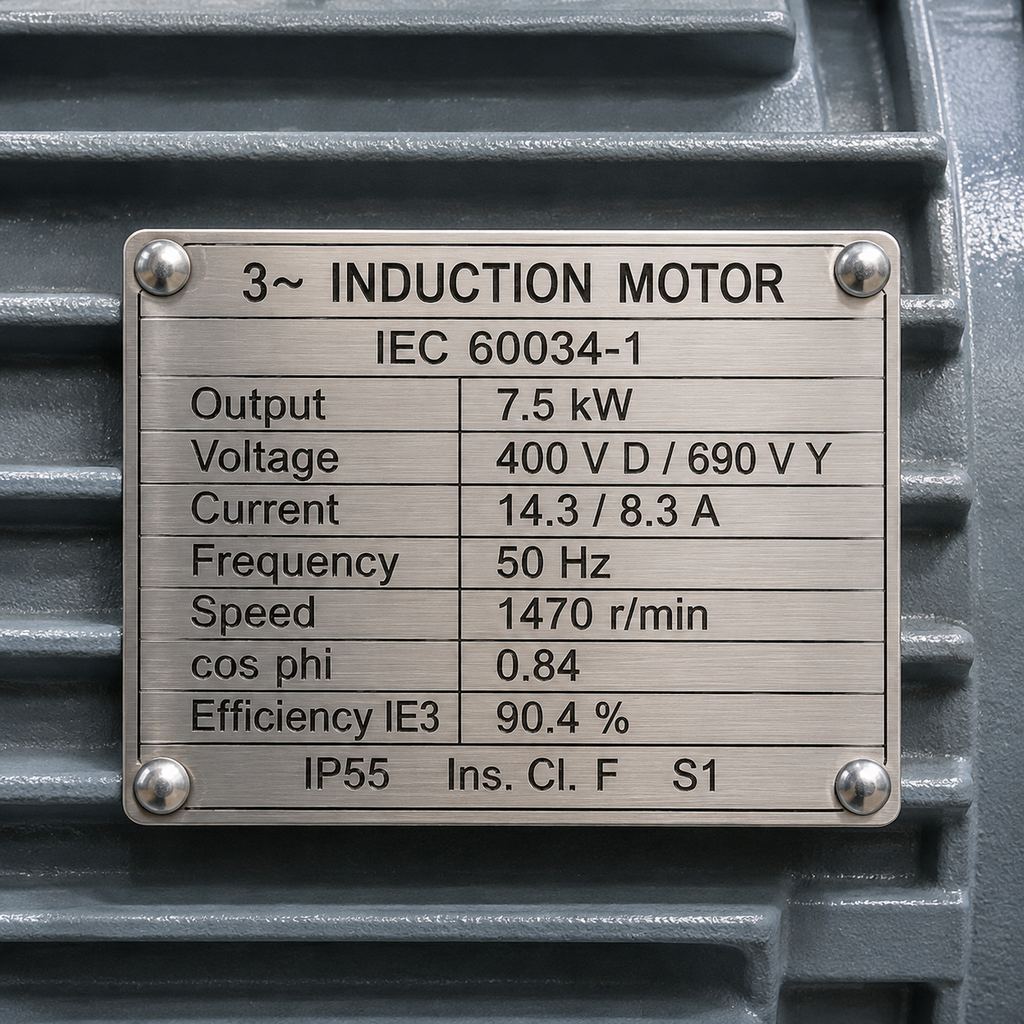
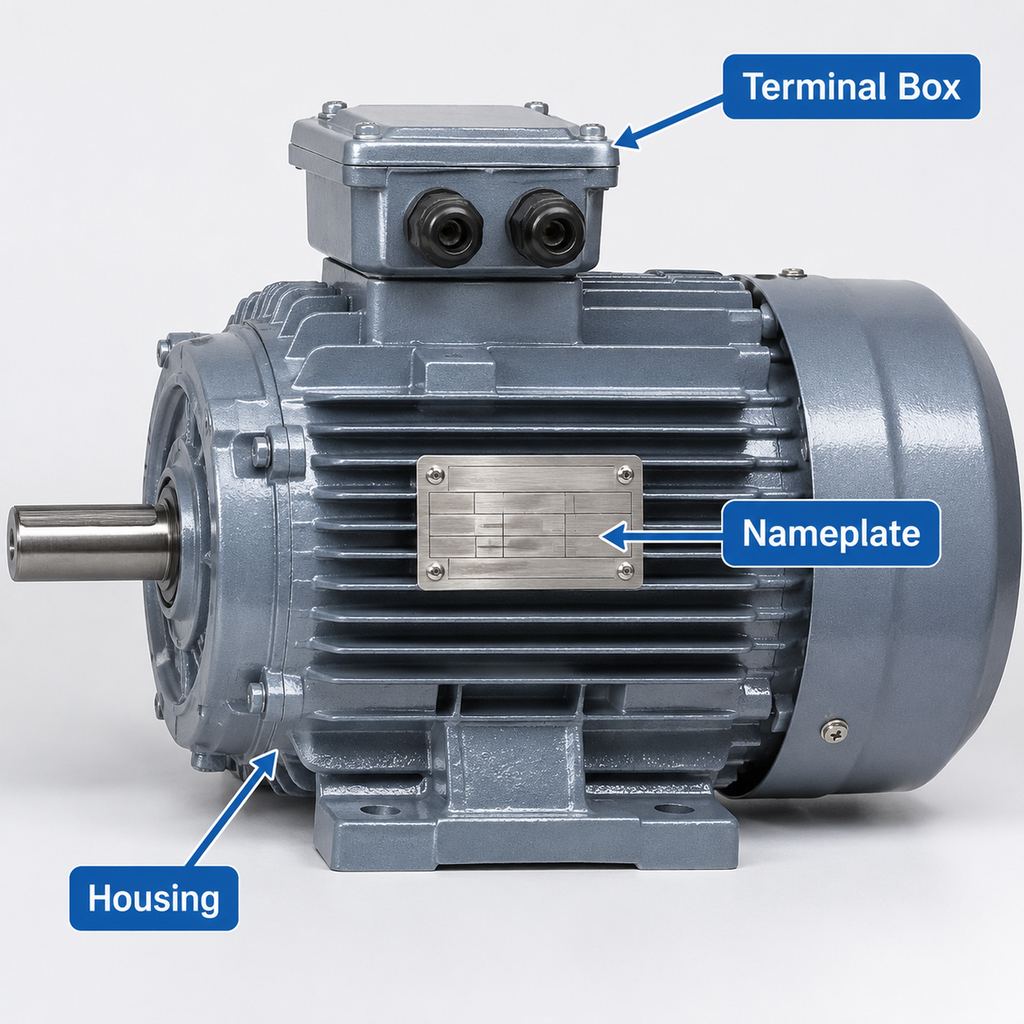
| Motor nameplate match | Voltage, FLA, base frequency and whether the motor is documented for inverter supply over the planned speed range |
None of these points replace a coordinated electrical design. They are the questions that prevent a “VFD was installed but the motor overheats at night setback speed” complaint after handover.
Motors Used With VFDs
- YVF2 — variable-frequency / inverter-oriented motors intended for adjustable-speed duty; review the series page for frequency range and construction notes: YVF2 series (also listed under special-purpose motors).
- YE3 / YE4 — high-efficiency general-purpose cast-iron motors often applied on VFDs for continuous pump and fan duty when the speed range, cable arrangement and thermal limits are confirmed. Browse general-purpose motors. Efficiency context: motor efficiency.
Always specify the intended frequency/speed range, load type (variable-torque fan/pump vs constant-torque), cable length and environment on the RFQ. Use the motor selection checklist, and request options such as blowers or sensors through customization when needed.
FAQ
What is a VFD drive?
An electronic controller that varies the frequency (and voltage) to an AC motor so speed can be adjusted to process demand.
What does VFD stand for?
Variable frequency drive.
What is a VFD in HVAC?
In HVAC, a VFD typically controls fan or pump motor speed so airflow or water flow tracks building load instead of running full speed against dampers or throttling valves.
Is a soft starter the same as a VFD?
No. A soft starter manages starting/stopping voltage; it does not provide continuous running-speed control. See the motor controller comparison linked above.
Can any three-phase motor run on a VFD?
Many can within limits, but insulation, bearings, cooling at low speed and cable arrangement must be checked. Prefer motors documented for inverter supply when the duty is continuous and wide-ranging.