
Synchronous speed is the speed of the rotating magnetic field in an AC motor. It depends only on the supply frequency and the number of poles, and it is the reference speed used when you select a motor for a pump, fan, conveyor or other driven machine. This guide explains the formula, gives the usual 50 Hz and 60 Hz pole–RPM table, shows how slip relates to the speed on the nameplate, and covers how to choose poles for common applications.
What Is Synchronous Speed?
Synchronous speed (Ns) is the speed, in revolutions per minute, at which the stator magnetic field of an AC machine rotates. For a three-phase induction motor it is set by two design quantities only:
- f — the supply frequency in hertz (Hz)
- p — the number of poles in the stator winding
It does not depend on load, voltage or motor size. An induction motor never quite reaches this speed; the rotor always runs a little slower. That difference is called slip and is covered briefly below.
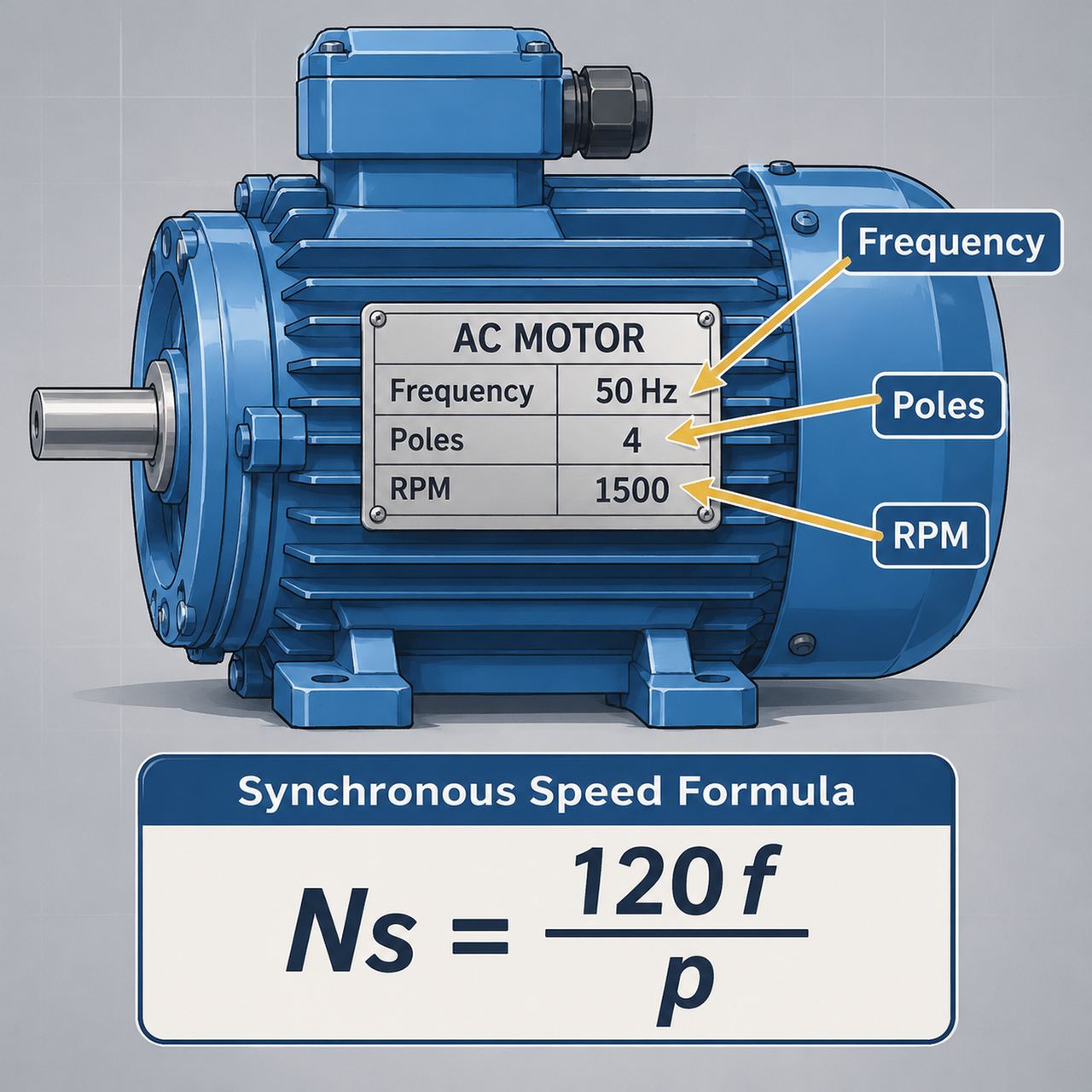
Synchronous speed depends on frequency and the number of poles: Ns = 120f / p.
How to Calculate Synchronous Speed
The standard formula is:
Ns = 120 × f / p
where:
- Ns = synchronous speed in RPM
- f = supply frequency in Hz
- p = number of poles (always an even number: 2, 4, 6, 8, …)
Worked examples
- 4-pole motor on 50 Hz: Ns = 120 × 50 / 4 = 1500 RPM
- 4-pole motor on 60 Hz: Ns = 120 × 60 / 4 = 1800 RPM
- 6-pole motor on 50 Hz: Ns = 120 × 50 / 6 = 1000 RPM
- 2-pole motor on 60 Hz: Ns = 120 × 60 / 2 = 3600 RPM
The constant 120 comes from converting electrical cycles per second into mechanical revolutions per minute for a machine with p poles (two poles make one full mechanical revolution per electrical cycle, and there are 60 seconds in a minute).
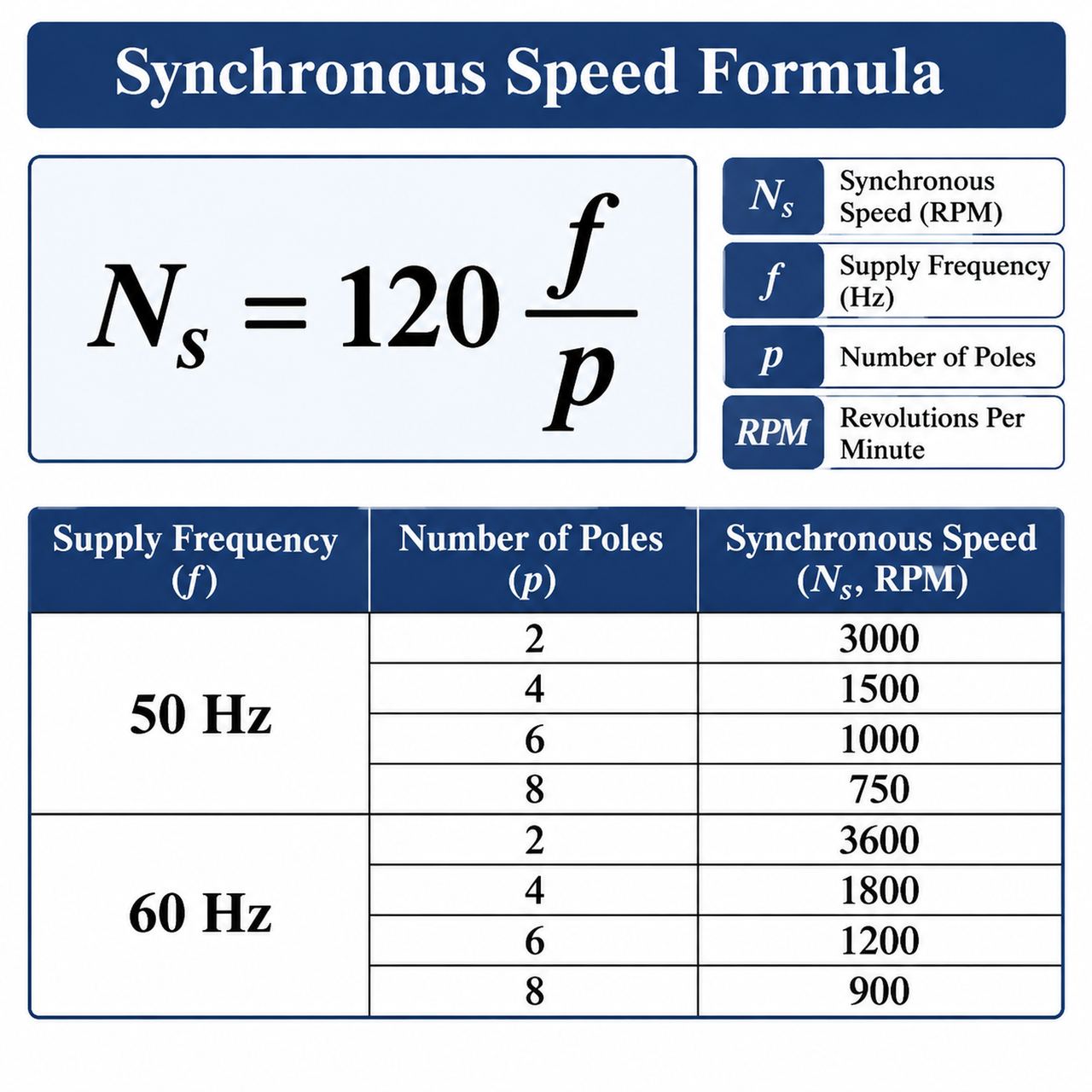
Formula Ns = 120f / p with common speeds at 50 Hz and 60 Hz.
Synchronous Speed Table (50 Hz and 60 Hz)
| Poles | Synchronous speed at 50 Hz (RPM) | Synchronous speed at 60 Hz (RPM) |
|---|---|---|
| 2 | 3000 | 3600 |
| 4 | 1500 | 1800 |
| 6 | 1000 | 1200 |
| 8 | 750 | 900 |
| 10 | 600 | 720 |
| 12 | 500 | 600 |
These are the speeds of the rotating field. The full-load shaft speed on a nameplate is a few percent lower because of slip.
Slip and Actual Motor RPM
An induction motor needs a small difference between field speed and rotor speed to induce current in the rotor and produce torque. That difference is slip:
slip (%) = (Ns − Nr) / Ns × 100
where Nr is the actual rotor (shaft) speed in RPM.
Typical full-load slip for general-purpose three-phase motors is about 1% to 5%, depending on size and design. Examples:
- A 4-pole, 50 Hz motor: Ns = 1500 RPM; full-load speed often about 1440–1470 RPM
- A 4-pole, 60 Hz motor: Ns = 1800 RPM; full-load speed often about 1720–1770 RPM
- A 2-pole, 50 Hz motor: Ns = 3000 RPM; full-load speed often about 2880–2950 RPM
No-load speed is close to Ns; under heavier load, slip increases and shaft speed falls a little. Designers use Ns as the reference; purchasers buy the motor by the nameplate RPM that matches the driven machine.
Choosing Motor Poles for Pumps, Fans and Conveyors
Because Ns is fixed once frequency and poles are chosen, selecting the number of poles is the main way to set the motor speed on a fixed-frequency supply.
| Poles (at 50 Hz) | Sync. speed | Typical full-load RPM | Common applications |
|---|---|---|---|
| 2 | 3000 | ~2900 | High-speed pumps, compressors, some spindles |
| 4 | 1500 | ~1450 | General pumps, fans, conveyors, most process equipment |
| 6 | 1000 | ~960 | Larger fans, slower pumps, mixers |
| 8 | 750 | ~720 | Low-speed fans, agitators, some conveyors |
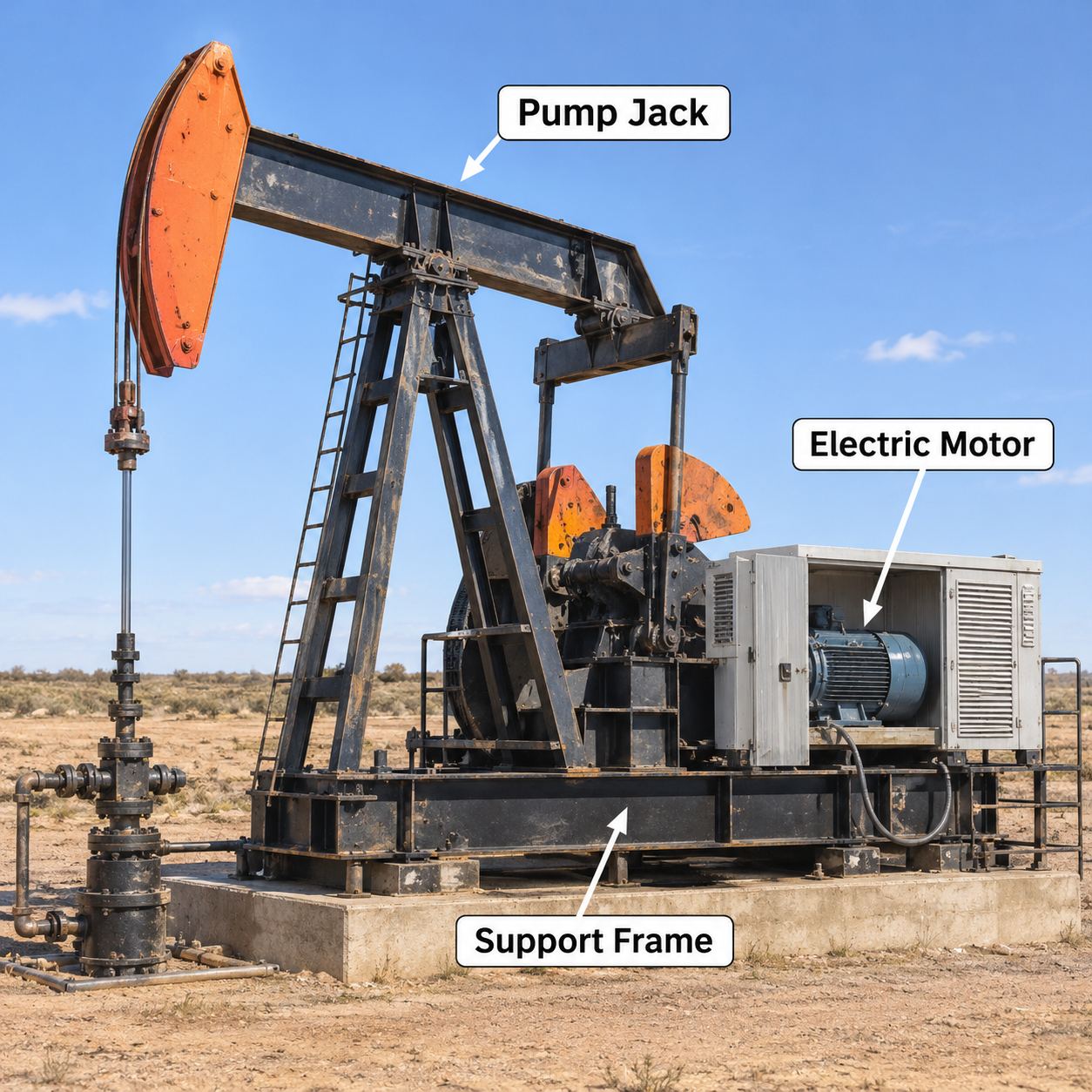
- Water and wastewater pumps: 2-pole or 4-pole for many centrifugal pumps; 6-pole when a lower speed or a larger impeller is preferred.
- HVAC and ventilation fans: often 4-pole or 6-pole; 8-pole for large, low-speed axial fans.
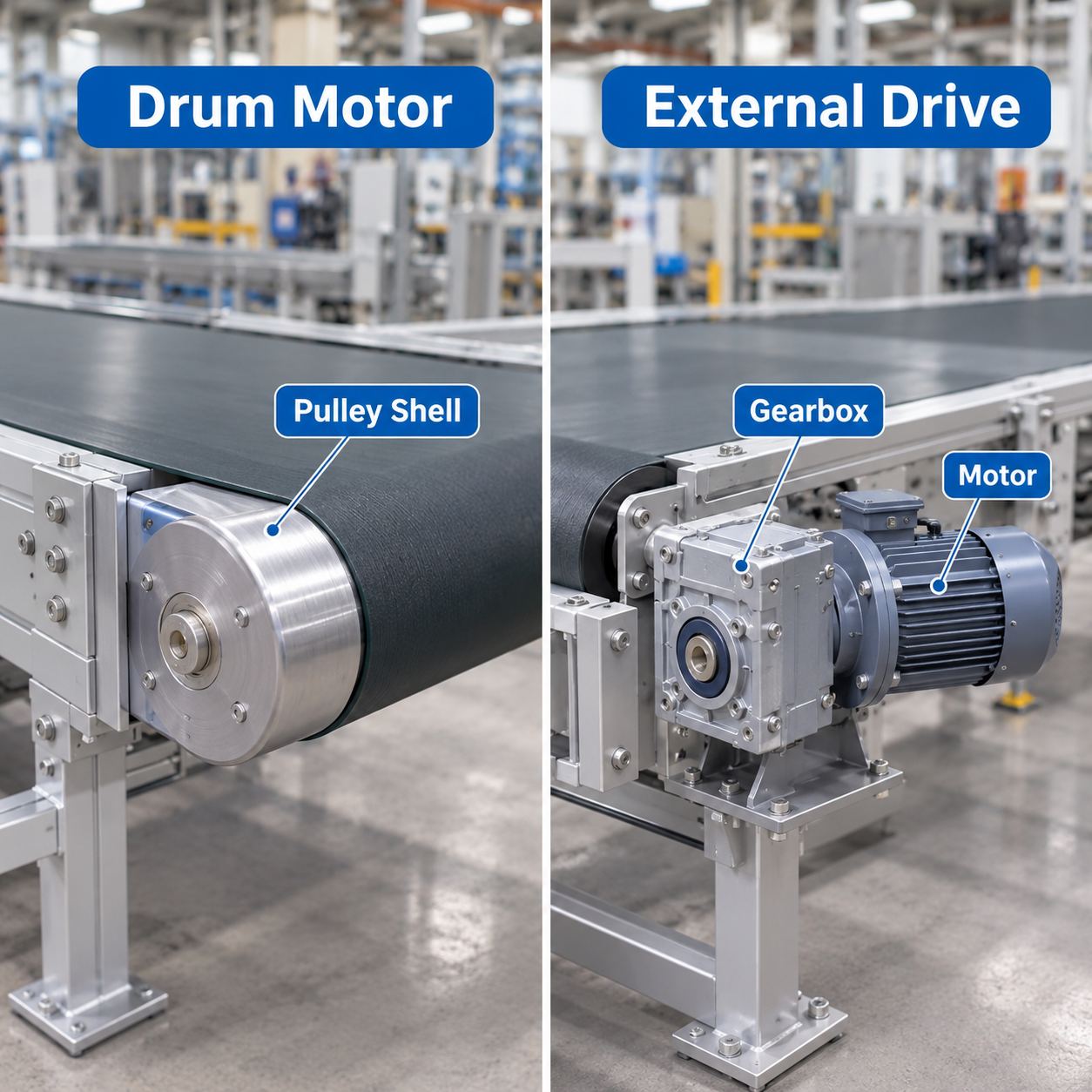
- Material handling conveyors: usually 4-pole motors with a gearbox to get the belt speed.
- Agriculture (irrigation pumps, grain handling): 2-pole and 4-pole are the most common.
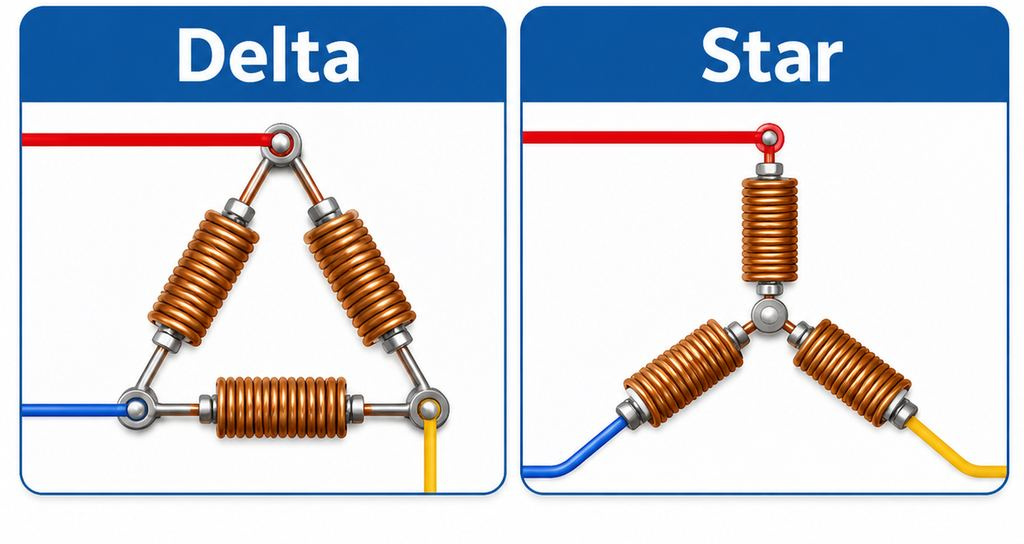
JWMotor YE3, YE4 and Y2 general-purpose three-phase motors are available in these pole counts. Where several discrete speeds are needed without a VFD, a multi-speed winding (for example Dahlander / YD or YDT) can be specified as a selection option; that is a motor design choice, not covered as a wiring tutorial here. For non-standard speeds or frames, see customization.
Reading Poles and RPM on the Nameplate
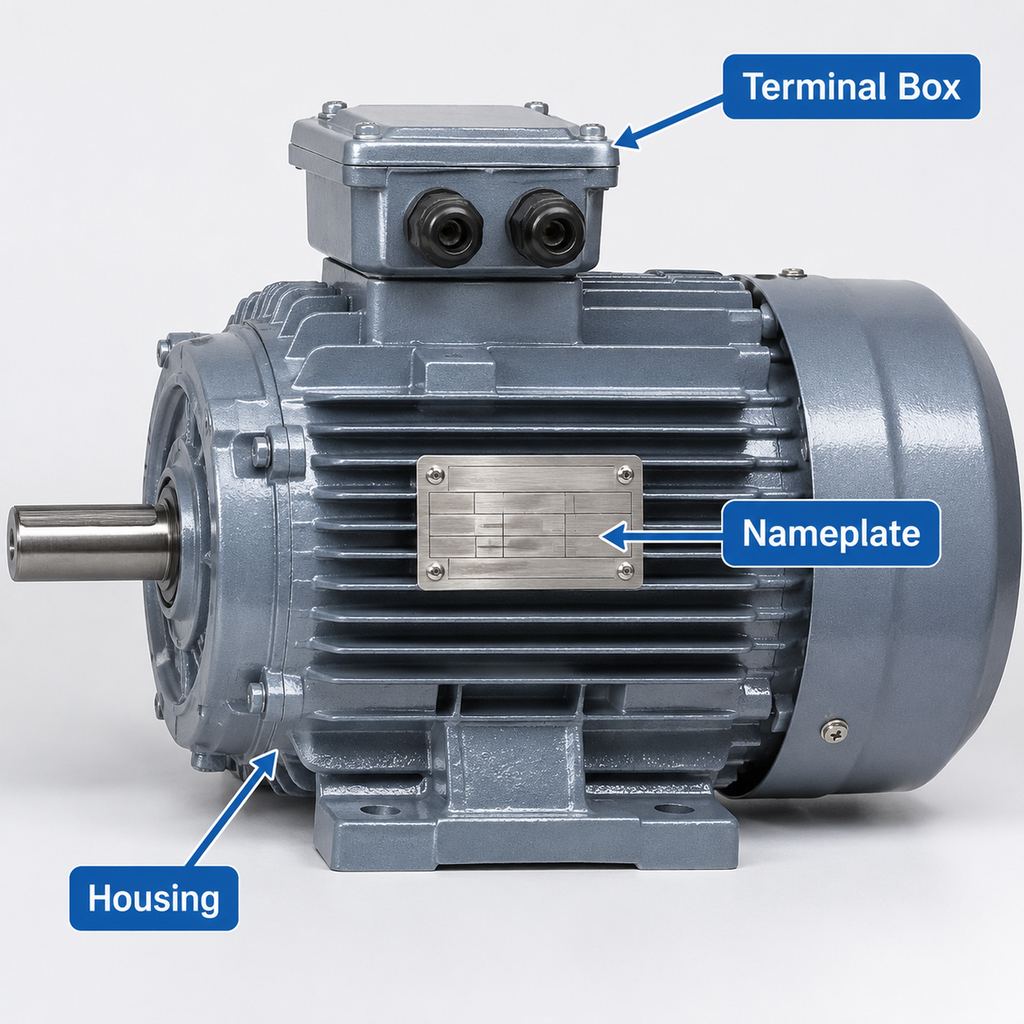
The nameplate usually shows:
- Frequency (Hz)
- Speed or RPM — this is the approximate full-load shaft speed, not Ns
- Sometimes poles, or you can infer poles from frequency and RPM
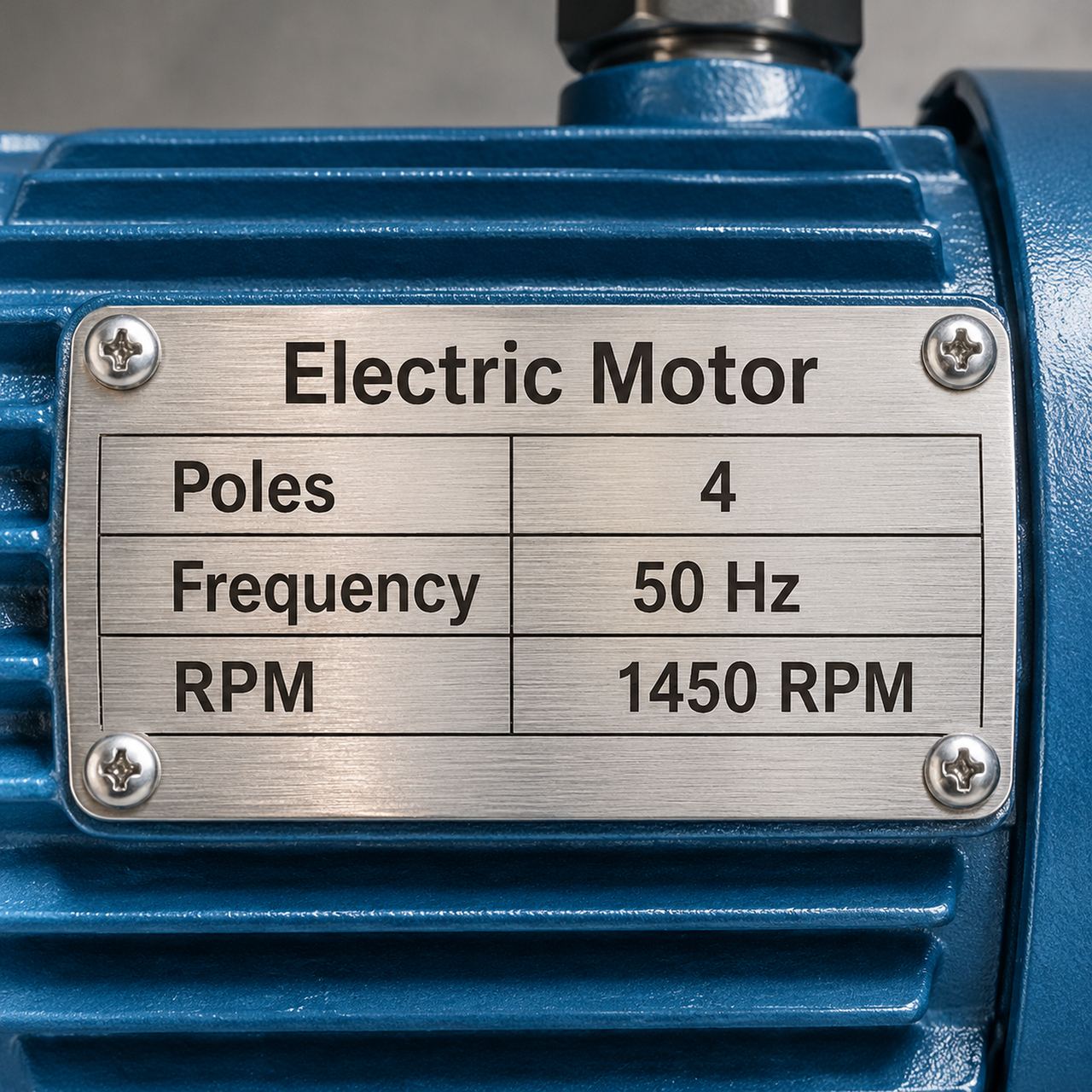
Example nameplate: 4 poles, 50 Hz, 1450 RPM (full-load speed; synchronous speed is 1500 RPM).
Example: a nameplate reading 50 Hz, 1450 RPM almost always means a 4-pole motor (Ns = 1500 RPM, about 3.3% slip). A nameplate reading 60 Hz, 1750 RPM is likewise a 4-pole motor (Ns = 1800 RPM).
For a full walk-through of nameplate fields, see how to read an electric motor nameplate.
Frequency, Load Type and VFDs
- Supply frequency: Motors built for 50 Hz and 60 Hz have different Ns for the same pole count. Do not assume a 50 Hz nameplate speed applies on a 60 Hz supply (or the reverse) without checking voltage, cooling and mechanical limits.
- Load type: Centrifugal pumps and fans are easy loads that usually run near their design slip. Constant-torque loads such as conveyors and positive-displacement machines need the motor’s full-load torque and the correct gearbox ratio; the pole choice still sets the motor shaft speed.
- Variable frequency drives: A VFD changes the frequency supplied to the motor. Synchronous speed still follows Ns = 120f / p, but f is now the drive’s output frequency. At 25 Hz a 4-pole motor has Ns = 750 RPM; at 75 Hz, Ns = 2250 RPM (within the motor’s mechanical and thermal limits). For continuous variable-speed duty, an inverter-duty motor such as YVF2, listed under special-purpose motors, is the usual choice.
Browse the full range under all products.
Frequently Asked Questions
What is the synchronous speed of an induction motor?
It is the speed of the stator’s rotating magnetic field, Ns = 120f / p. The rotor of an induction motor runs slightly below this speed.
How do I calculate synchronous speed?
Multiply the supply frequency in Hz by 120, then divide by the number of poles. Example: 50 Hz and 4 poles → 1500 RPM.
What is the difference between synchronous speed and actual RPM?
Synchronous speed is the field speed. Actual RPM is the shaft speed, which is lower by the amount of slip needed to produce torque.
How many poles does my motor have?
Check the nameplate. If poles are not printed, estimate them from frequency and full-load RPM: a speed near 1500 RPM on 50 Hz (or 1800 on 60 Hz) means 4 poles; near 1000 / 1200 means 6 poles; near 3000 / 3600 means 2 poles.
Does a VFD change synchronous speed?
Yes. The VFD changes the frequency, so Ns changes with the drive’s output frequency using the same formula.


1 thought on “What Is Synchronous Speed? Formula Ns=120f/p, Pole–RPM Table and Motor Selection”