
Introduction to Induction Electric Motors
Induction electric motors, also known as asynchronous motors, have become one of the most commonly used motor types in industrial applications worldwide. Their widespread adoption is attributed to their simple design, rugged construction, reliability, and cost-effectiveness compared to other motor technologies. Unlike traditional motors that rely on direct electrical connections to function, induction motors operate based on the principle of electromagnetic induction. This fundamental mechanism allows them to convert electrical energy into mechanical energy without requiring electrical connections to the rotor.
Induction motors are classified into single-phase and three-phase types, depending on the power supply used. While single-phase units are generally employed in residential or small-scale applications, three-phase induction motors dominate the industrial sector, powering heavy machinery like pumps, compressors, conveyors, and HVAC systems. They are favored for their ability to deliver consistent performance under varying load conditions while minimizing maintenance and operational complexities.
Induction motors are a cornerstone of modern industry, serving as the backbone for numerous sectors, including manufacturing, material handling, agriculture, and utilities. Their high efficiency and scalability make them ideal for applications ranging from small fans to massive industrial machinery. As global industries shift toward energy-efficient technologies, advanced induction motor models designed using the latest standards, such as IE3 and IE4, are becoming increasingly critical for achieving reduced power consumption and lower operational costs.
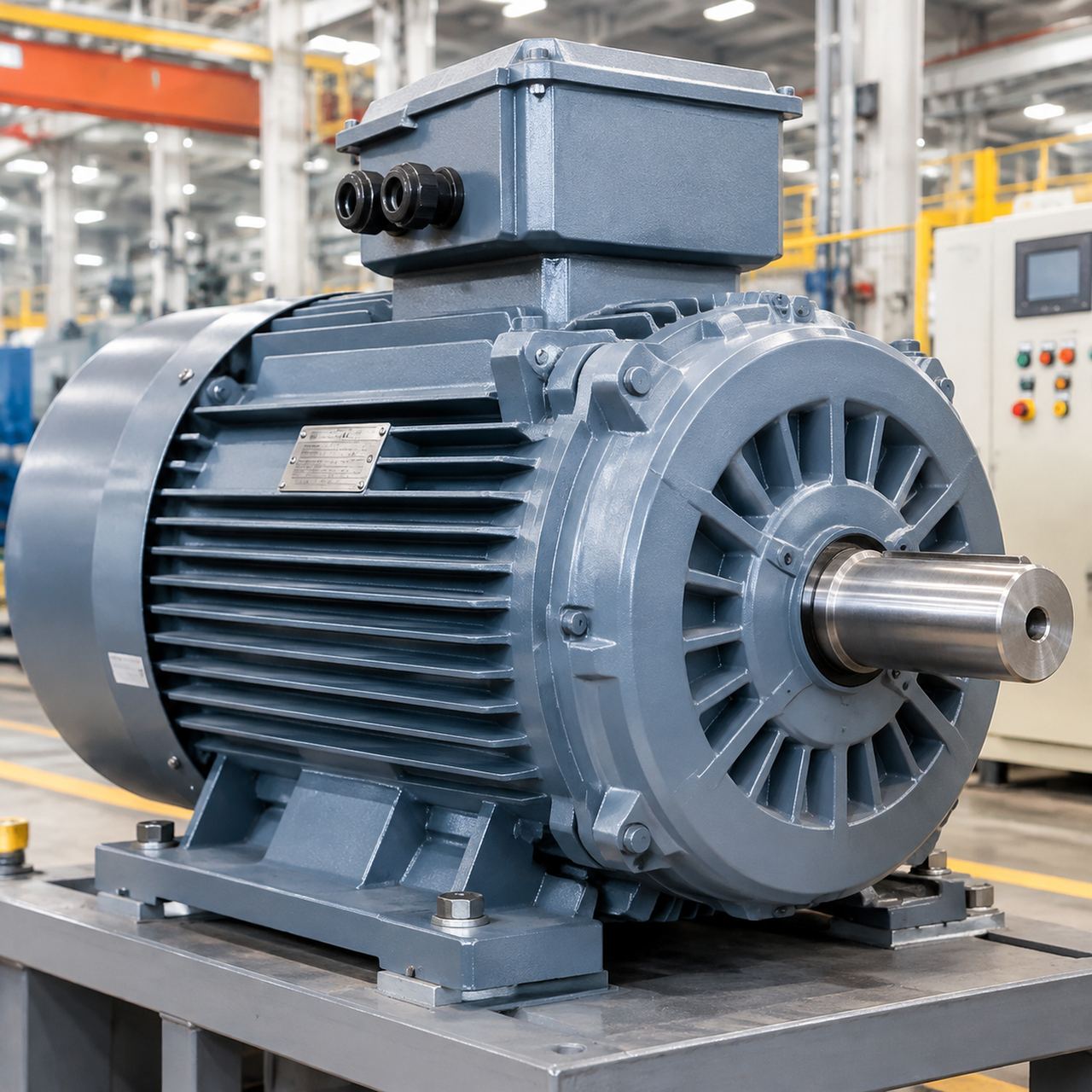
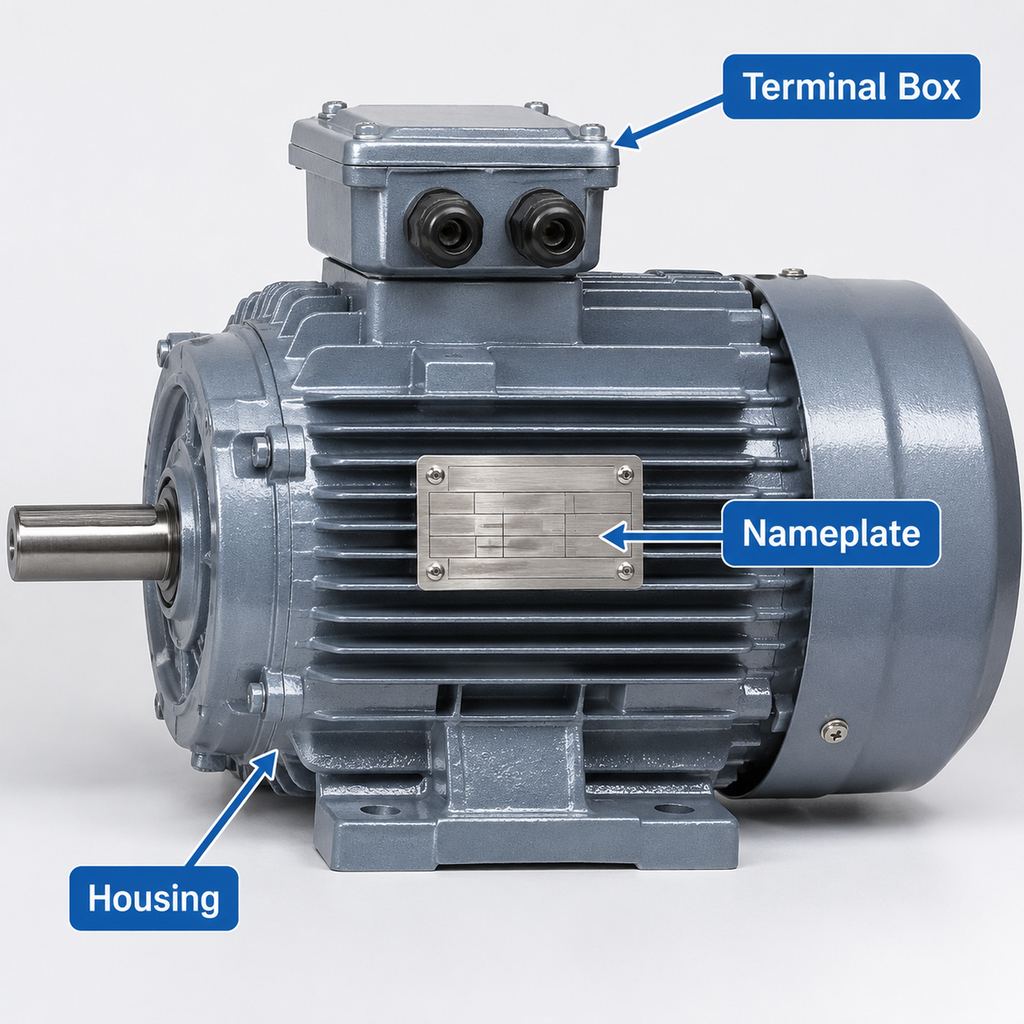
Close-up of an industrial induction electric motor in a factory setting
How Induction Electric Motors Work
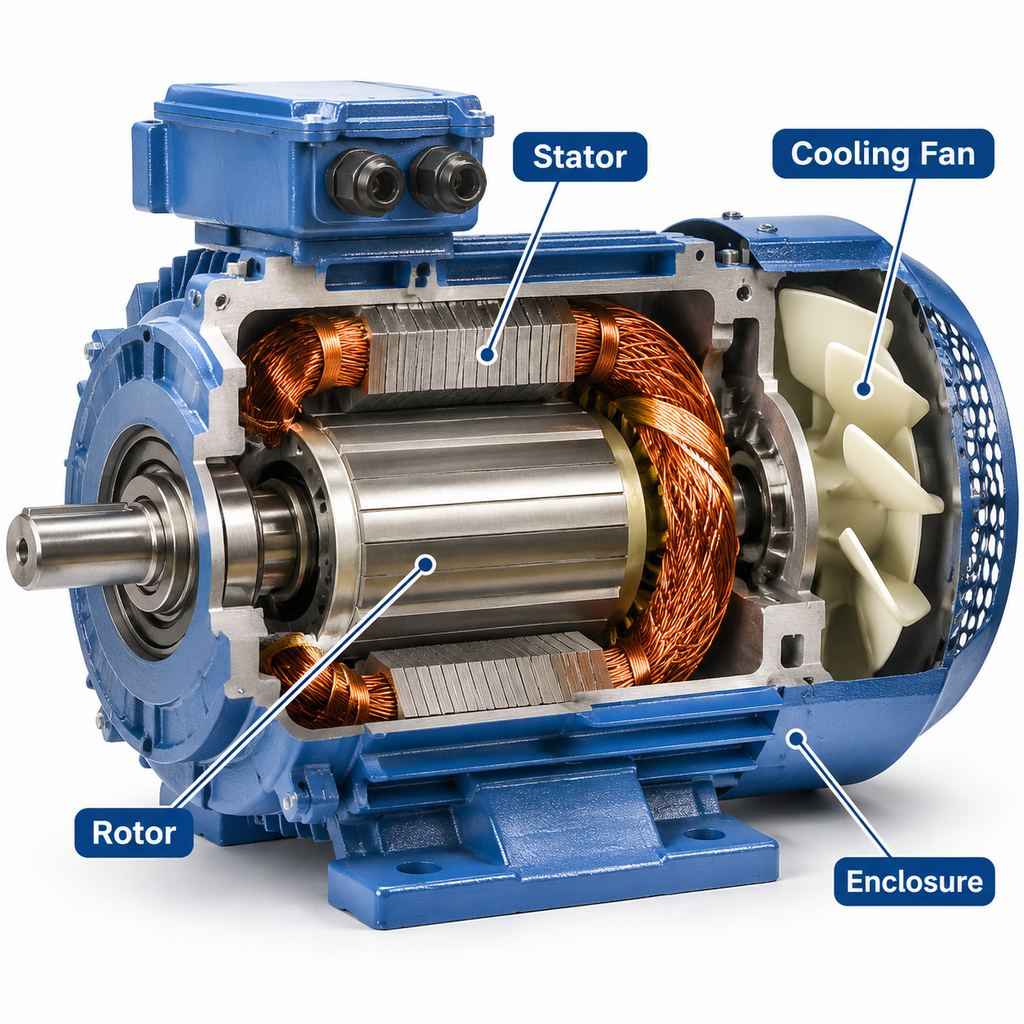
Induction electric motors operate on the principle of electromagnetic induction, a concept first discovered by Michael Faraday in the 1830s. The core of an induction motor consists of a stationary stator and a rotating rotor, with a small air gap between them. The stator includes a series of coils connected to an alternating current (AC) power supply. When the AC flows through the stator coils, it generates a rotating magnetic field.
The rotor, typically made of conductive materials such as aluminum or copper and arranged in a cylindrical core, interacts with this rotating magnetic field. According to Faraday’s Law, the changing magnetic field produced by the stator induces electromotive forces (EMF) in the rotor. This induced EMF leads to the generation of currents in the rotor, which create their own magnetic field. The interaction between the rotor’s magnetic field and the stator’s rotating field produces torque, causing the rotor to spin.
One distinctive feature of an induction motor is that it operates asynchronously, meaning the rotor always lags slightly behind the rotating magnetic field of the stator. This lag, termed “slip,” is crucial for the motor’s operation, as it allows the continuous induction of current in the rotor. In three-phase induction motors, the stator creates a three-phase rotating magnetic field that enhances efficiency and power output, making them ideal for industrial applications involving high loads and demanding performance.
The absence of brushes or permanent magnets in an induction motor translates to lower maintenance requirements and a robust design capable of withstanding harsh operating conditions. This makes induction motors a preferred option for a wide range of industrial applications, from powering fans and pumps to driving conveyors and elevators.
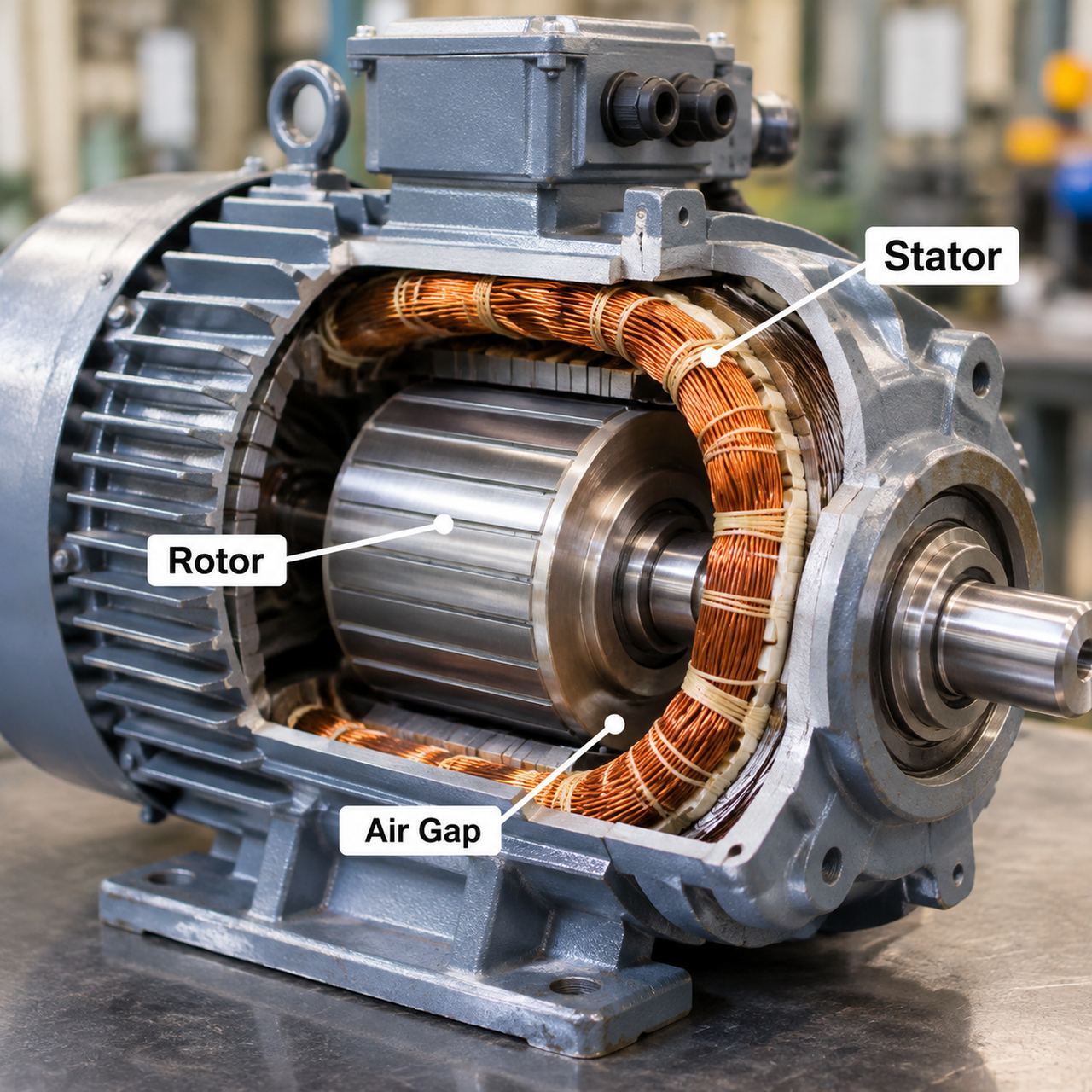
Detailed view of an induction motor with key components visible
Types of Induction Motors
1. Single-Phase Induction Motors
These motors operate on single-phase AC power and are commonly used in domestic and small-scale applications such as fans, refrigerators, washing machines, and small pumps. Single-phase induction motors are straightforward in design, making them cost-effective and easy to maintain. However, they typically produce less starting torque and are not as efficient as their three-phase counterparts. They often require additional components like starting capacitors or shaded poles to get the rotor moving.
2. Three-Phase Induction Motors
Three-phase induction motors are the workhorses of industrial applications, delivering higher efficiency and consistent performance under heavy loads. They operate on three-phase AC power, creating a rotating magnetic field that synchronizes more effectively with the rotor. Common uses include powering large equipment such as conveyors, pumps, compressors, and HVAC systems. These motors are further divided into two types: wound rotor and squirrel cage, with the latter being more prevalent due to its rugged design and low maintenance requirements.
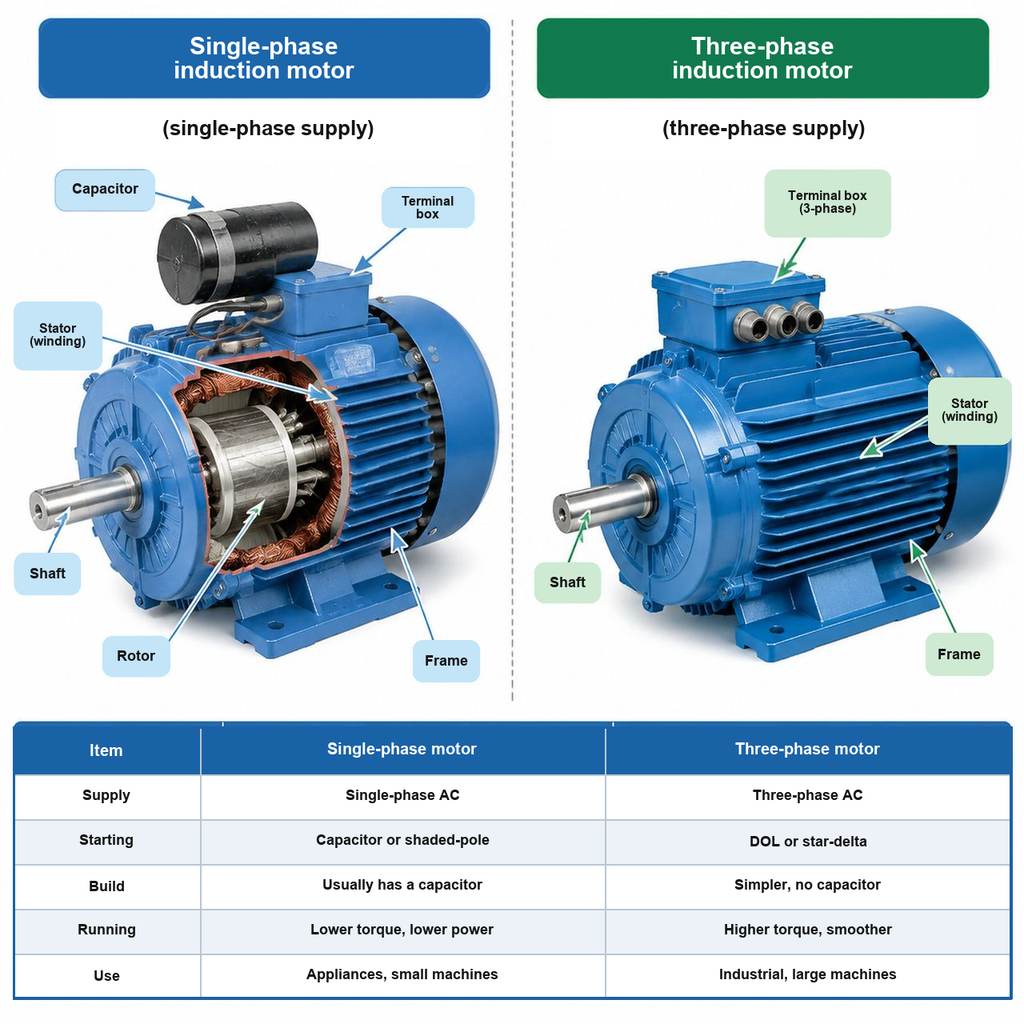
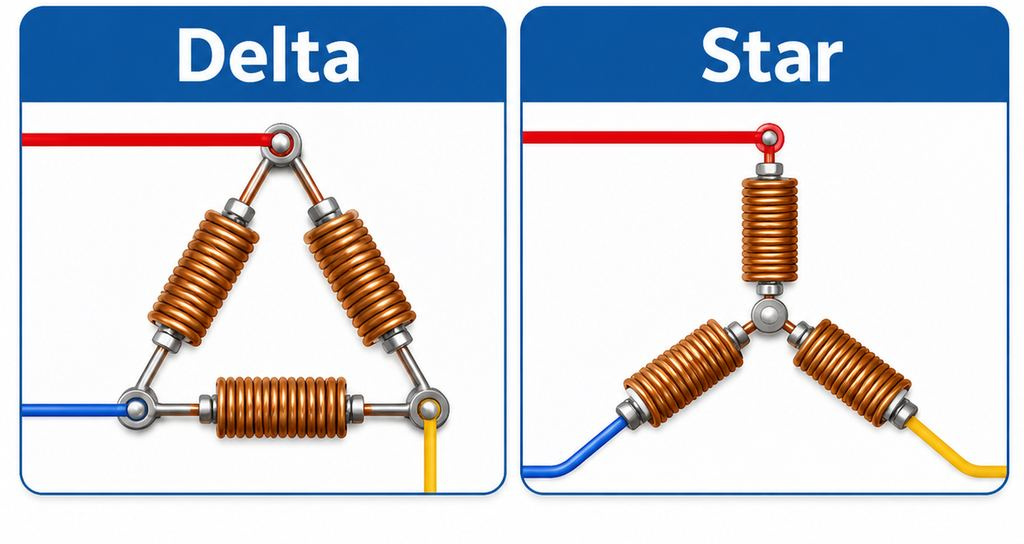
Diagram comparing a single-phase and three-phase induction motor
Applications of Induction Electric Motors
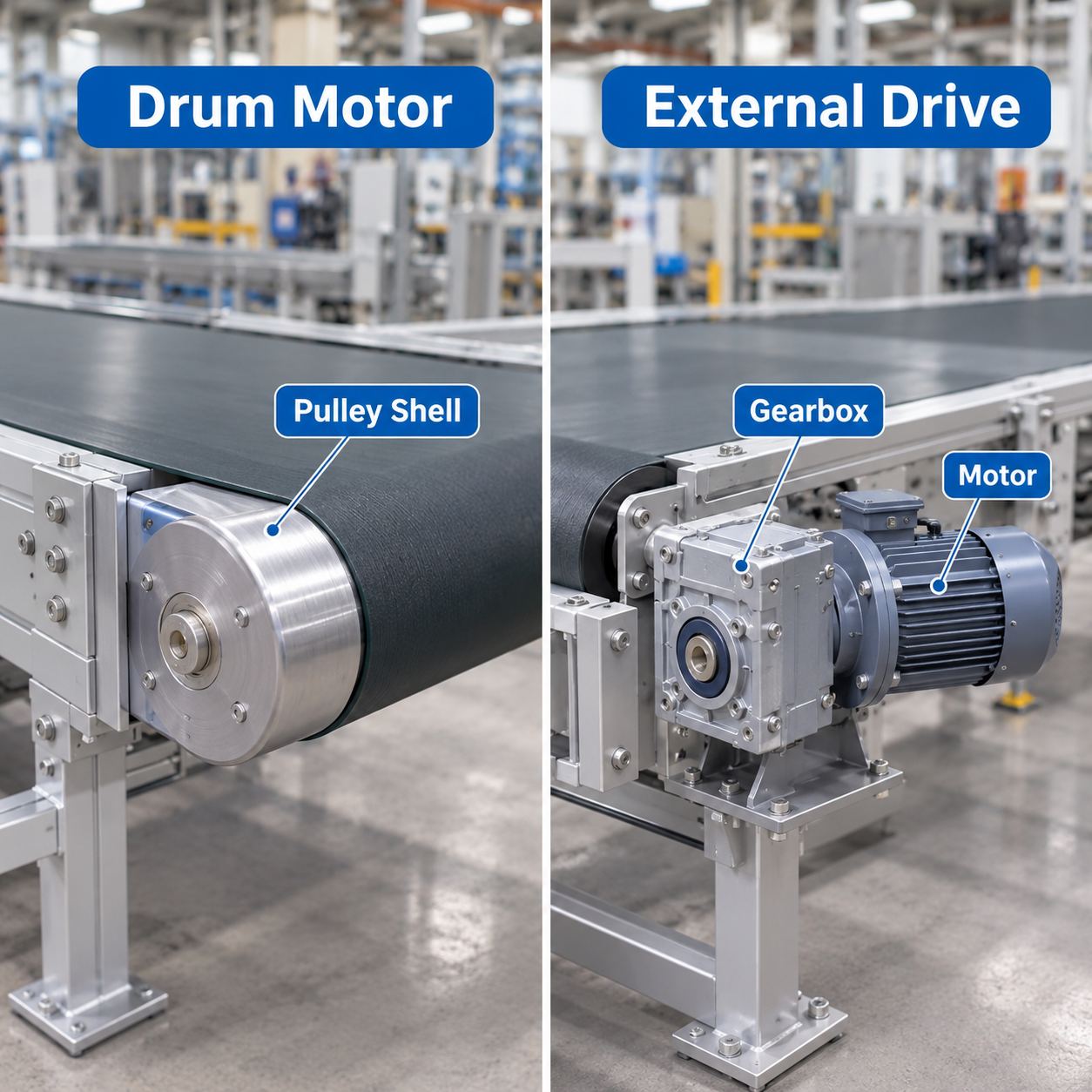
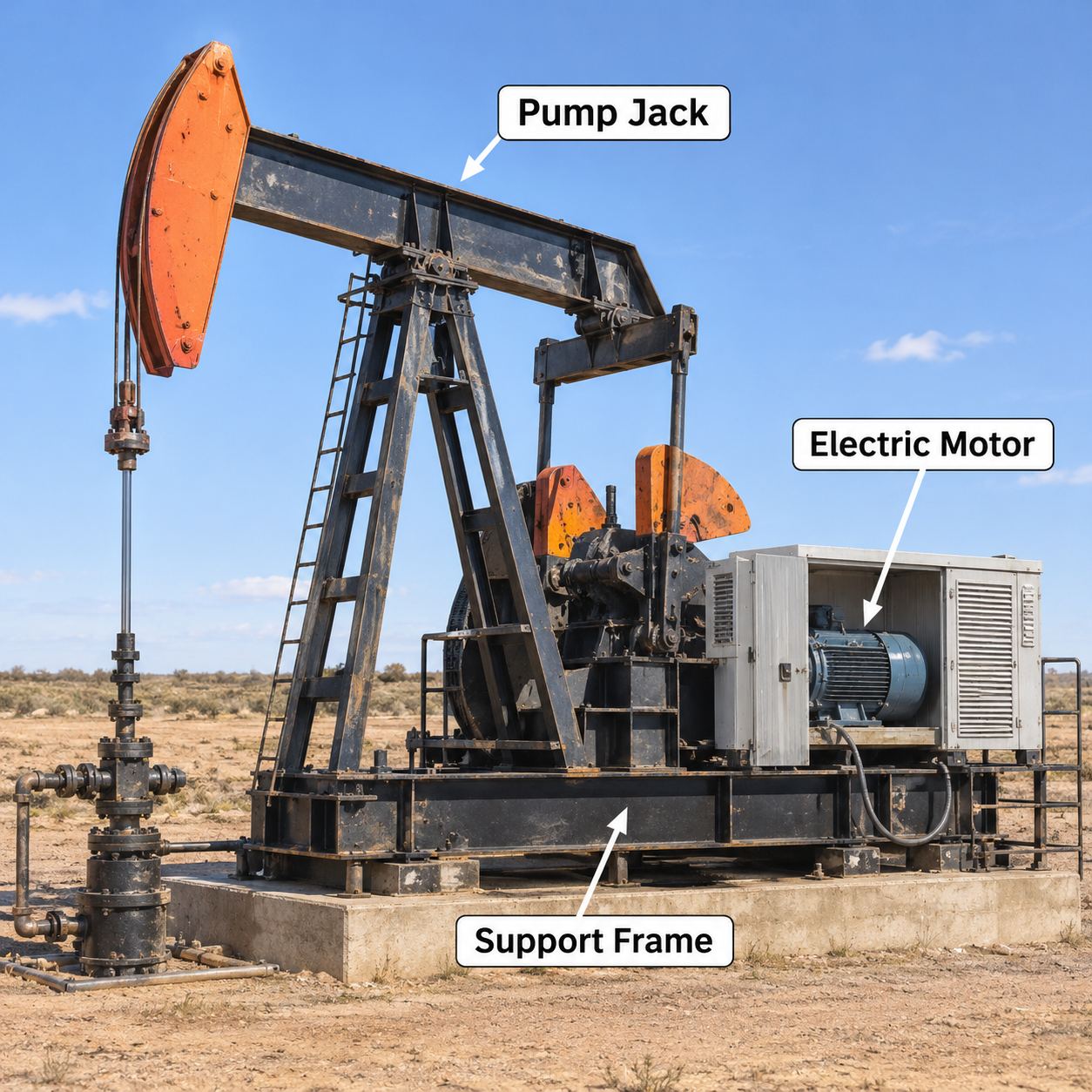
- Industrial Machinery: Induction motors are commonly used to drive pumps, compressors, blowers, and conveyors in sectors such as manufacturing, mining, and petrochemical processing.
- HVAC Systems: These motors power fans, air handlers, and refrigeration compressors due to their reliable operation and energy efficiency.
- Electric Vehicles (EVs): Although traditionally used in industrial applications, induction motors are also employed in EV drivetrains for smooth, controlled motion.
- Marine Applications: Induction motors are utilized in winches, shipboard pumps, and propulsion systems because of their durability and low maintenance.
- Material Handling: Automated conveyor belts and robotic systems in warehouses and logistics settings frequently use induction motors for precise and consistent operation.
Advantages of Induction Electric Motors
- Simple and Robust Design: Induction electric motors are known for their simplicity, with fewer moving parts compared to other motor types. This design enhances their reliability, minimizes maintenance requirements, and results in a longer operational lifespan.
- Cost-Effectiveness: Due to their straightforward construction and lack of complex components such as brushes or commutators, induction motors tend to have lower manufacturing and maintenance costs, making them an economical choice for industrial and commercial applications.
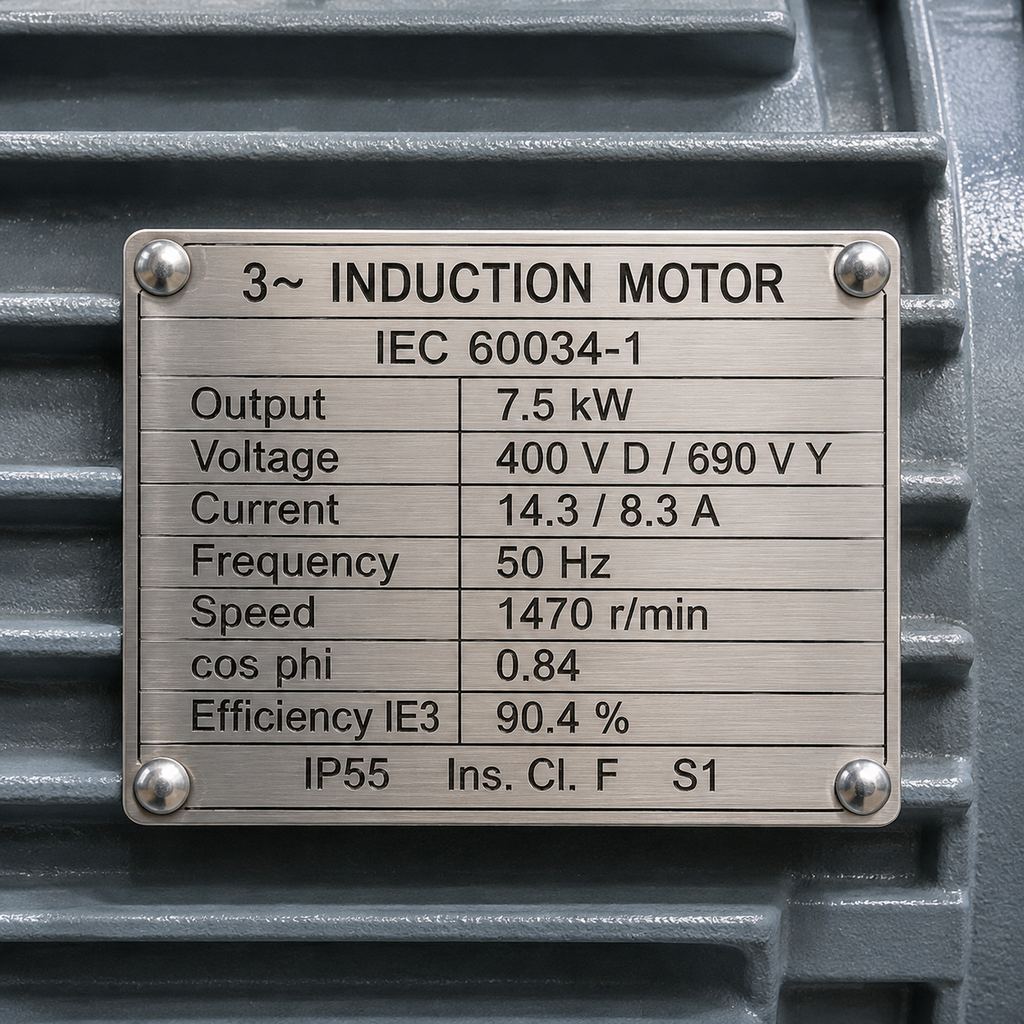
- High Efficiency for Industrial Applications: Modern induction motors, particularly those classified as IE3 or IE4, adhere to international energy efficiency standards. These motors minimize energy losses, translating into significant cost savings over time, especially in applications with continuous or high-load operation.
- Wide Application Versatility: Induction motors are suitable for a diverse range of applications, including conveyor belts, pumps, compressors, fans, and HVAC systems. Their ability to handle varying load conditions with high reliability makes them invaluable across different industries such as manufacturing, mining, and utilities.
- Scalability and Compatibility: Built to comply with IEC standards, induction motors are easily adaptable and interchangeable with existing systems in industrial setups. This makes them a practical choice for both new installations and retrofitting projects.
Frequently Asked Questions about Induction Electric Motors
How does an induction motor function?
An induction motor operates based on the principle of electromagnetic induction. When alternating current flows through the stator windings, it creates a rotating magnetic field. This field induces an electromotive force in the rotor, producing currents that generate a magnetic field. The interaction between these fields results in the rotation of the rotor and generates mechanical energy.
What are the main differences between single-phase and three-phase induction motors?
Single-phase induction motors are designed for use with single-phase AC power and are primarily used in small-scale applications like household appliances. They’re simpler in construction but less efficient and produce lower starting torque. In contrast, three-phase induction motors operate on three-phase AC power, are more efficient, provide higher torque, and are widely used in industrial applications.
Why are induction motors so widely used in industries?
Induction motors are widely used because of their robust construction, high efficiency, reliability, and low maintenance costs. They can handle sustained heavy loads, making them suitable for a wide range of industrial applications such as pumps, conveyors, compressors, and fans.
What is slip in an induction motor?
Slip refers to the difference between the speed of the rotating magnetic field (synchronous speed) in the stator and the actual speed of the rotor. It is expressed as a percentage of synchronous speed and is essential for generating the current needed to create torque in the motor.
Are induction motors considered energy efficient?
Induction motors, especially modern models classified as IE3 or IE4, are highly energy efficient due to reduced energy losses. They are designed to meet strict international efficiency standards, making them an economical choice for continuous or high-load industrial operations where energy savings are critical.
What are the typical maintenance requirements for induction motors?
Induction motors are generally low-maintenance because of their simple design and absence of brushes or commutators. Routine maintenance tasks include cleaning, inspecting and replacing bearings, lubricating moving parts, checking electrical connections, and monitoring operating parameters to ensure efficiency and prevent potential failures.
Safety and Operational Considerations
When working with induction electric motors, safety and operational best practices are essential to ensure proper functioning and to avoid potential hazards. As with all electrical equipment, adherence to safety guidelines and routine maintenance is critical.
Electrical Safety: Induction motors operate on alternating current (AC), often at high voltage levels. Always ensure proper grounding and disconnect power during installation or maintenance to prevent electric shock. Use insulated tools and wear personal protective equipment (PPE) such as insulated gloves and safety goggles when handling electrical connections.
Temperature and Ventilation: These motors can generate heat during operation, particularly under heavy loads or prolonged use. Ensure adequate ventilation for cooling and avoid placing the motor in cramped areas that can restrict airflow. For applications in high-temperature environments, consider motors with higher insulation classes and better thermal management features.
Overload Protection: Overloading can cause overheating and potential damage to the motor windings. Use appropriately rated overload relays and circuit breakers to protect the motor from electrical surges or excessive loads. Efficient motors with higher energy ratings (e.g., IE3 or IE4) often mitigate this risk thanks to reduced energy losses.
Regular Maintenance: To ensure longevity and prevent unexpected downtime, perform routine inspections on the motor’s components, including bearings, windings, and terminal connections. Replace worn components such as bearing grease and monitor vibration levels, which could indicate alignment or mechanical issues over time.
Lockout/Tagout Procedures: Before any servicing, adhere to lockout/tagout protocols to prevent accidental startups. Clearly communicate with team members during service interruptions.
By following these safety measures and operational guidelines, users can optimize the performance and lifecycle of their induction motors while minimizing potential risks.


1 thought on “Understanding the Induction Electric Motor: Principles and Applications”