Understanding Electric Motors
Electric motors are versatile machines that convert electrical energy into mechanical energy, driving a vast array of industrial and commercial applications. Whether it’s rotating a factory conveyor belt, powering a ventilation fan, or operating a large-scale industrial pump, electric motors are the backbone of modern industries. They achieve this energy conversion through the fundamental principle of electromagnetism: an electric current passing through a coil generates a magnetic field, which interacts with a surrounding magnetic field to produce force and motion. By transforming electrical energy into rotational or linear motion, electric motors offer an efficient and reliable power source for automation, manufacturing, HVAC systems, and transportation.
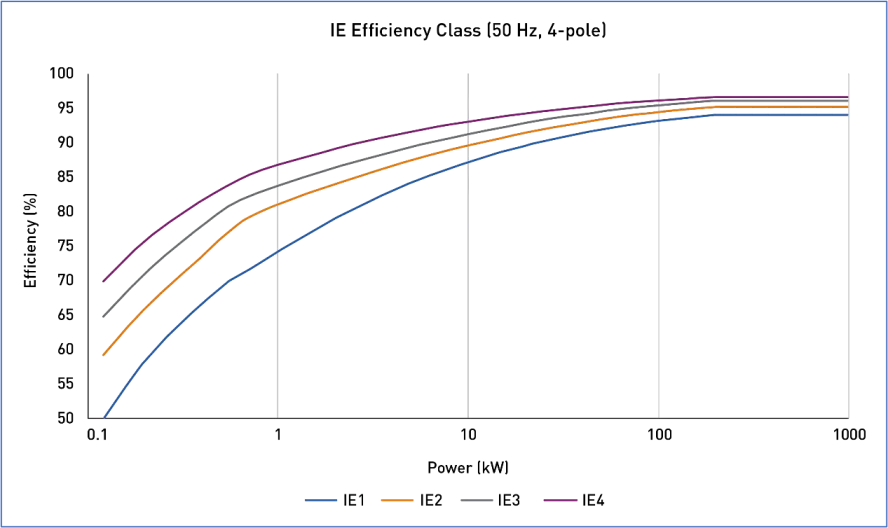
In the context of industrial motors, efficiency and reliability are paramount. For example, motors adhering to the IE3 and higher efficiency classes not only reduce energy consumption but also contribute to long-term operational cost savings. JWMotor offers a wide range of IEC-compliant motors—including IE3 and IE4 efficiency classes—designed for seamless integration into existing systems. Whether you’re upgrading an outdated system or sourcing a motor for a specific application, considering aligned IEC standards can simplify procurement and installation.
Basic Principles of Electric Motors
- Electric motors operate on the principle of electromagnetism. When an electric current flows through a wire, it generates a magnetic field around the conductor. This phenomenon is the foundation of how motors create motion from electricity.
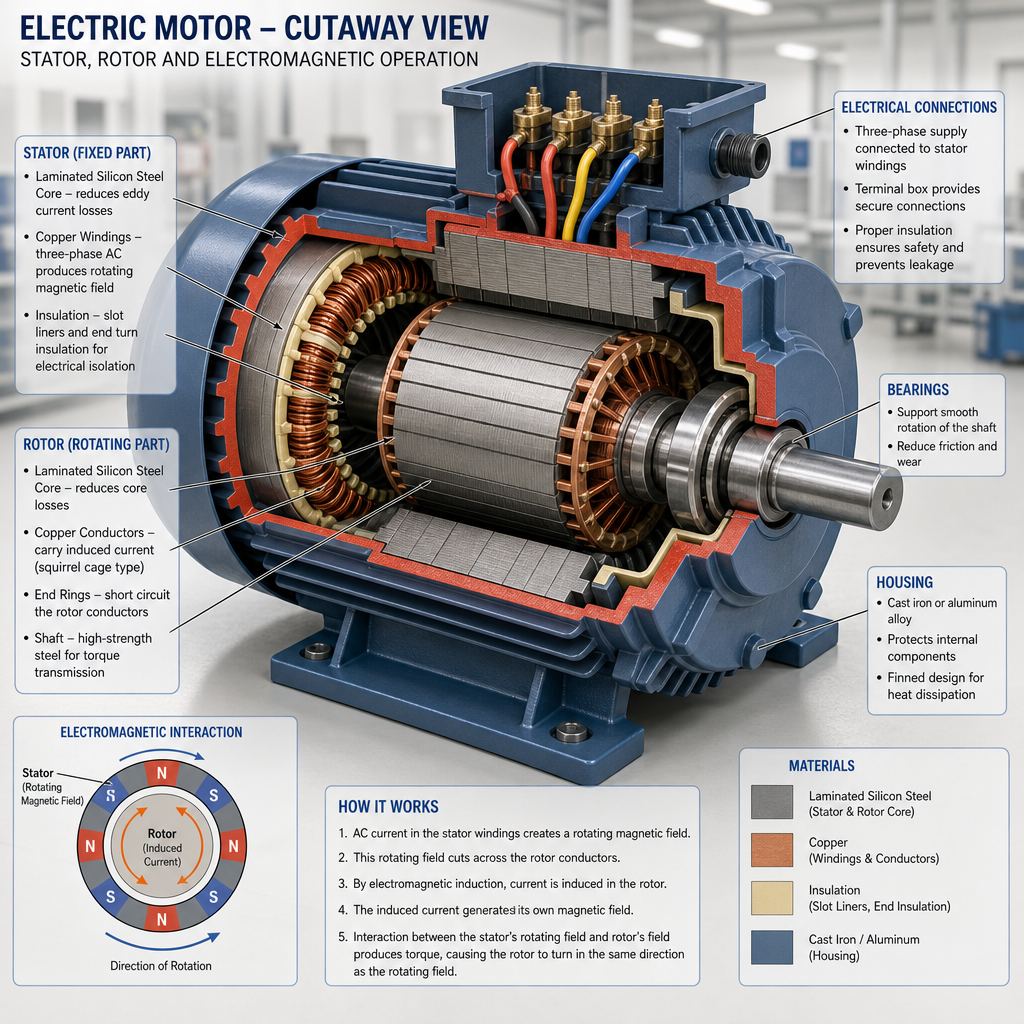
- A motor’s key components include the stator (the stationary part) and the rotor (the rotating part). The interaction of magnetic fields between these components produces torque, which drives rotational motion.
- In AC motors, alternating current generates a constantly changing magnetic field in the stator, inducing movement in the rotor. By contrast, DC motors use direct current, and their operation depends on commutators and brushes to maintain motion.
- An electric motor’s performance and efficiency rely heavily on the precision of its design—such as optimal windings, high-quality magnetic materials, and specific configurations to reduce energy losses. For instance, upgrading to IE3 or IE4 motors can significantly reduce operating costs due to improved energy efficiency.

How Electric Motors Work: A Step-by-Step Explanation
- Electric motors start with an electrical input source that supplies power, which is typically either alternating current (AC) or direct current (DC). The choice of power type influences motor design and application. For industrial settings, AC motors are more common due to their compatibility with standard grids and high efficiency.
- In the stator—the stationary part of the motor—electric current flows through windings, creating a magnetic field. This magnetic field interacts with the rotor, the moving part situated inside or near the stator. The rotor may feature either permanent magnets (in certain synchronous motors) or conductors for induction in the case of induction motors.
- The magnetic field generated in the stator induces electromagnetic forces on the rotor due to electromagnetic induction. In AC motors, the change in polarity of the alternating current creates a rotating magnetic field which pulls the rotor, causing it to spin.
- The rotational motion of the rotor produces mechanical energy. This energy is directed to perform tasks like driving compressors, operating conveyor belts, or running fans, depending on the specific motor application.
- Finally, the motor’s efficiency and reliability depend on critical design factors such as optimal material selection, precision-engineered windings, enclosure type (e.g., Totally Enclosed Fan Cooled for industrial environments), and careful alignment of components. For instance, motors from JWMotor adhering to IE3 and IE4 efficiency standards are designed to ensure minimal energy loss, guaranteeing cost savings throughout their lifecycle.
Types of Electric Motors and Their Applications
1. AC Motors
Known for their reliability and simplicity, alternating current (AC) motors are widely used in industrial and commercial applications. Induction motors, a subset of AC motors, are particularly efficient and robust, making them ideal for tasks such as driving compressors, pumps, and material handling equipment. For higher precision tasks, synchronous motors are often preferred. JWMotor offers a comprehensive range of AC motors, including high-efficiency IE3 and IE4 series, designed to meet demanding energy efficiency standards.
2. DC Motors
Direct current (DC) motors are valued for their ability to provide precise control over speed and torque, which is essential in applications like robotics, conveyors, and adjustable-speed machinery. These motors employ brushes and commutators to maintain the directional current needed for consistent rotation. For custom-built motors tailored to unique projects, JWMotor provides options that align with diverse operational needs.
3. Servo Motors
Servo motors offer high precision and dynamic motion control, making them indispensable in applications like CNC machines, robotics, and automated production lines. Their ability to achieve accurate positioning is due to integrated sensors and controllers. Engineers looking for dependable servo solutions can explore tailored options available through JWMotor’s custom manufacturing services.
4. Stepper Motors
Stepper motors are vital for applications requiring incremental movement, such as 3D printers, precision dosing machines, and laboratory instruments. These motors divide rotations into a large number of steps, allowing fine control of motion. Their popularity is boosted by their simple control system, eliminating the need for feedback devices. JWMotor can assist in expert selection or customization for projects needing specialized stepper motor solutions.
Frequently Asked Questions About Electric Motors
Are electric motors AC or DC?
Electric motors can operate on either AC (alternating current) or DC (direct current). AC motors, such as induction and synchronous motors, are commonly used in industrial applications due to their efficiency and ease of connection to standard power grids. DC motors, on the other hand, are favored for applications requiring precision speed and torque control, such as robotics and conveyors.
What makes an electric motor spin?
An electric motor spins due to the interaction of magnetic fields. When electrical current flows through the stator’s windings, it creates a magnetic field that interacts with the magnetic field in the rotor. This interaction produces electromagnetic forces, causing the rotor to spin and convert electrical energy into mechanical energy.
Can you explain how an electric motor works in a simple way?
Sure. Electric motors work using electromagnetism. Essentially, they convert electrical energy into motion. The motor’s stationary part, called the stator, creates a magnetic field when electricity flows through it. This magnetic field interacts with the moving part, called the rotor, causing it to spin and produce mechanical energy.
How fast do electric motors go?
The speed of an electric motor depends on its design and purpose. In AC motors, the speed is determined by the frequency of the electric supply and the number of poles in the motor. For example, a 4-pole motor operating at 50 Hz typically rotates at 1,500 RPM, while at 60 Hz, it would rotate at 1,800 RPM. Motors can be customized for specific speed requirements, with JWMotor offering tailored solutions for unique operational needs.
Comparison of Electric Motor Types
Electric motors can be categorized into several types, each suited to specific applications and operational requirements. AC motors excel in industrial use due to their durability and cost-effectiveness, particularly when paired with high efficiency classes like IE3 or IE4. DC motors are chosen for applications demanding precise speed and torque control, such as robotics. On the other hand, servo motors stand out for their ability to deliver high-accuracy motion control, ideal for advanced automation systems. Reviewing the table above will help engineers and buyers weigh the differences and select the appropriate motor type for their needs. At JWMotor, we offer a variety of motors tailored to meet specific project requirements, ensuring optimal performance and energy efficiency.
| Feature | AC Motor | DC Motor | Servo Motor |
|---|---|---|---|
| Power Source | Alternating Current (AC) with sinusoidal waveforms; includes induction and synchronous types | Direct Current (DC); includes brushed, brushless, and permanent magnet motors | Can use either AC or DC power for high precision applications |
| Efficiency | High-efficiency models available up to IE4, suitable for fixed-speed applications | Typically lower efficiency due to resistive losses in brushes | High efficiency, optimized for precise motion control |
| Speed Control | Limited, often adjusted using frequency drives | Excellent speed control; simple regulation via voltage variation | Precision speed and position control via encoder feedback mechanisms |
| Common Applications | Ideal for industrial machinery, HVAC systems, conveyors, pumps | Used in robotics, conveyor systems, and fans requiring variable speed | Best for CNC machines, robotics, and automated equipment requiring accuracy |
| Maintenance Requirements | Low-maintenance, especially in TEFC (Totally Enclosed Fan-Cooled) designs | Higher due to wear on brushes and commutators | Low wear and effective self-diagnosis capabilities enhance reliability |
| Available Models at JWMotor | Wide range of IE3 and IE4 series for industrial and commercial use | Custom-design options available for specific demands and applications | Tailored builds for high-precision performance in unique applications |