
Understanding Electric Motors Under IEC Standards
Electric motors under IEC standards are machines designed and manufactured according to globally recognized specifications set by the International Electrotechnical Commission (IEC). These standards ensure consistency in dimensions, performance, safety, and energy efficiency, making IEC motors interchangeable and compatible across industries worldwide. Covering aspects such as frame sizes, mounting configurations, and energy classification (e.g., IE2, IE3, IE4 efficiency levels), IEC standards cater to a range of industrial applications—from pumps and fans to conveyors and compressors. Adherence to these standards ensures that motors meet strict requirements for reliable operation, ease of replacement, and compliance with international energy efficiency directives. For engineers and purchasers, choosing an IEC motor simplifies procurement, reduces downtime during replacements, and guarantees consistent performance in diverse operating conditions.
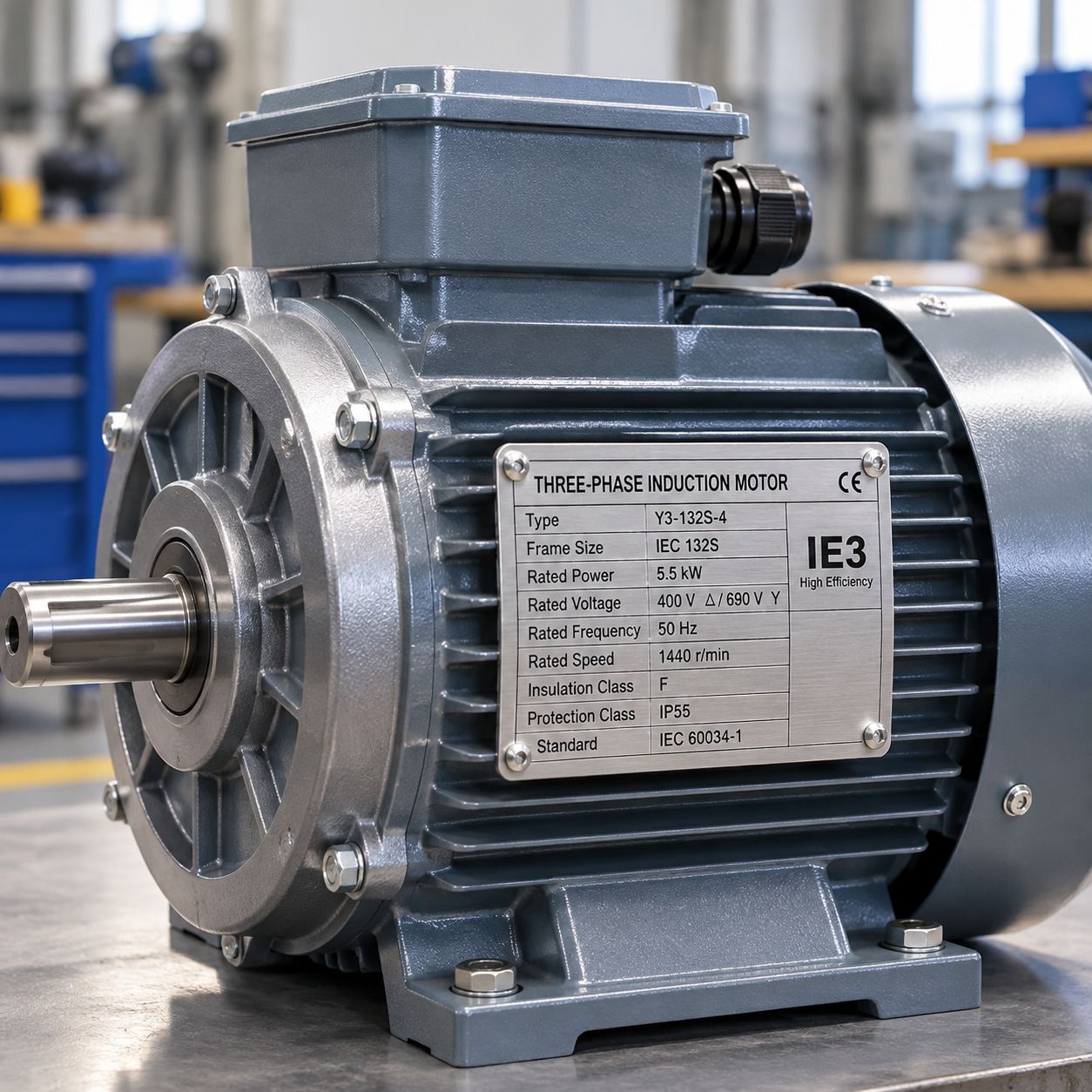
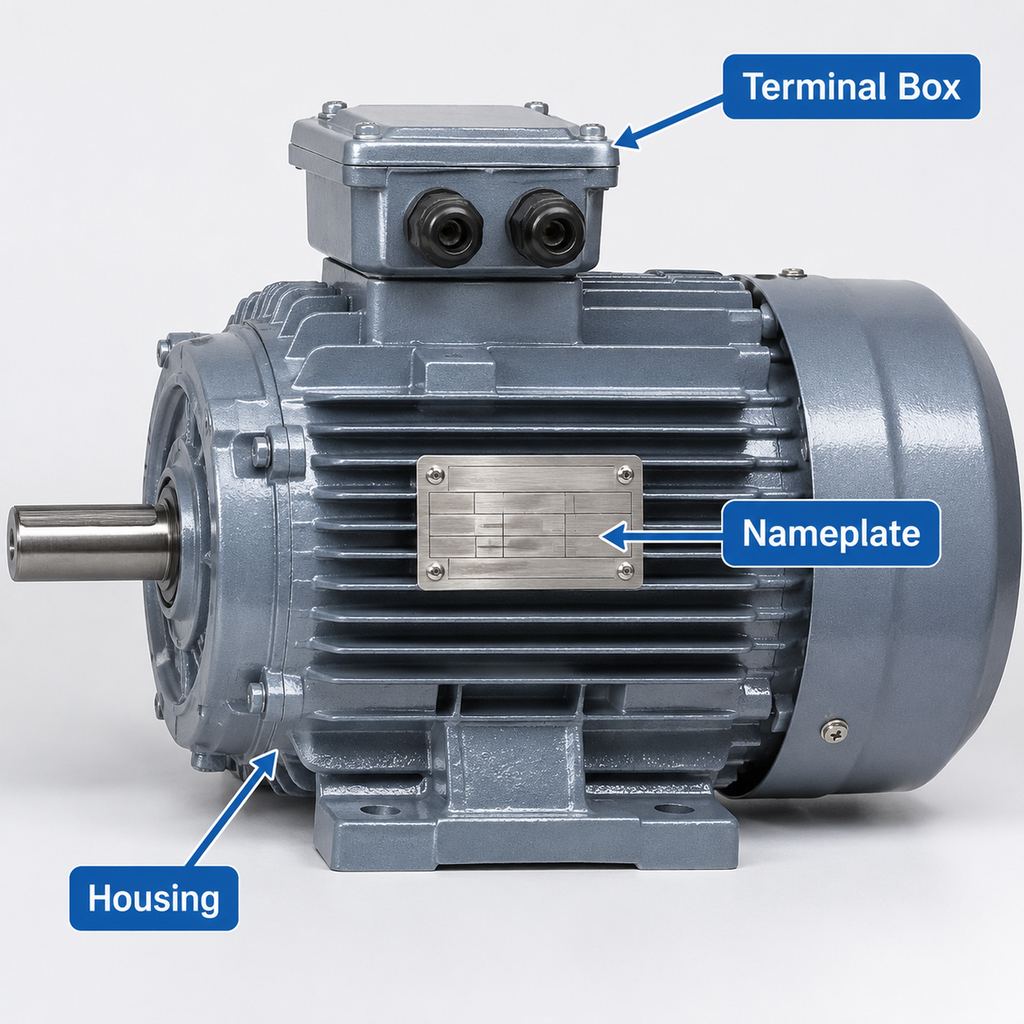
Close-up of an electric motor showcasing IEC standards with technical details.
What Are IEC Standards?
IEC (International Electrotechnical Commission) standards are globally recognized specifications that govern the design, testing, and performance criteria for electrical and electronic equipment, including electric motors. Established to ensure uniformity and compatibility, these standards facilitate international trade by providing a common framework that manufacturers and users can rely on. This eliminates the need for custom engineering when replacing or sourcing products across regions.
For electric motors, IEC standards define critical parameters such as frame dimensions, mounting configurations, efficiency classifications (e.g., IE2, IE3, IE4), and degrees of protection (like IP codes). These guidelines ensure that motors meet specific performance benchmarks, align with regulatory requirements, and maintain consistency in quality and safety. For example, a motor that adheres to IEC 60034 standards guarantees compliance with performance and energy efficiency requirements, ensuring that it can operate reliably in demanding industrial environments.
The importance of IEC standards extends beyond technical specifications. They streamline integration and replacement of equipment, especially in global manufacturing systems where consistency in parts and design is essential. For businesses, adopting IEC-standardized motors simplifies the procurement process, ensures easier maintenance, and minimizes operational downtime during part replacements. In short, IEC standards provide the backbone for a harmonized and efficient global market in electrical equipment, fostering trust and interoperability between manufacturers and end-users.
Key Features of IEC Electric Motors
- IEC electric motors are designed with standardized frame sizes and mounting configurations, as outlined in IEC 60072-1, ensuring seamless compatibility for replacements or installations across different manufacturers.
- These motors adhere to the IEC 60034 standard, which governs critical performance parameters, including efficiency classifications (IE2, IE3, IE4), thermal performance, and power ratings.
- IEC motors feature globally recognized degrees of protection, such as IP codes (e.g., IP55), which define the enclosure’s ability to resist dust and water, making them suitable for various industrial environments.
- The motors offer interchangeability in mechanical dimensions, like shaft center heights and flange sizes, allowing straightforward retrofitting without modifying existing equipment.
- Energy efficiency is classified into distinct IE (International Efficiency) levels, with IE3 and IE4 models significantly reducing operational costs in long-term, high-duty applications.
- Many IEC electric motors are built to support versatile applications, operating seamlessly at common supply frequencies (50 Hz and 60 Hz) and voltage ranges as required across global markets.
Comparison of IEC and NEMA Motor Standards
A comparison between IEC and NEMA electric motor standards reveals key differences that purchasers and engineers must consider based on their market and application requirements. IEC standards, governed by the International Electrotechnical Commission, cater to a global audience using metric-based frame sizes and 50 Hz power supplies—although many models include compatibility with 60 Hz for international deployment. Meanwhile, NEMA standards, developed by the National Electrical Manufacturers Association, are tailored primarily for North American markets, where motors rely on imperial frame sizes and operate at 60 Hz frequencies.
Efficiency classifications also differ. Under IEC, motors are labeled according to IE efficiency classes (IE1, IE2, IE3, IE4), with higher ratings offering increased energy savings. In contrast, NEMA motors feature energy efficiency grades like “NEMA Premium,” promoting operational energy gains within U.S. power grid constraints. Protection ratings follow similar principles but use distinct designations: IEC employs IP codes (e.g., IP55), while NEMA applies enclosure-type classifications (e.g., TEFC, ODP).
When assessing interchangeability, IEC motors generally offer seamless integration for global OEM systems due to strict adherence to universal mounting dimensions defined in IEC 60072-1. NEMA motors, however, align with regional machine designs, making them less directly interchangeable with IEC standards. Ultimately, engineers must evaluate these differences based on both technical needs and geographic location when choosing between IEC and NEMA specifications.
| Feature | Option A | Option B |
|---|---|---|
| Standardization Body | IEC (International Electrotechnical Commission) | NEMA (National Electrical Manufacturers Association) |
| Primary Market | Global (Europe, Asia, and other international markets) | United States and Canada |
| Power Supply Frequency | 50 Hz (with some models accommodating 60 Hz for global compatibility) | 60 Hz (primarily for use in North American systems) |
| Frame Dimensions | Metric-based sizes (e.g., frame 90, 132M) | Imperial-based sizes (e.g., frame 56, 284T) |
| Efficiency Classification | IE Classes: IE1 (Standard), IE2 (High), IE3 (Premium), IE4 (Super-Premium) | Energy Efficiency: Standard and NEMA Premium |
| Protection Rating | IP Codes (e.g., IP55 for dust and water protection) | Enclosure Types (e.g., Totally Enclosed Fan Cooled [TEFC], Open Drip Proof [ODP]) |
| Mounting Compatibility | Standardized metric mounts under IEC 60072-1 | Imperial mounts specific to NEMA guidelines |
| Application Scope | Used globally in pumps, fans, conveyors, and compressors | Common in North American infrastructure and machinery |
Frequently Asked Questions about IEC Electric Motors
What are IEC electric motors?
IEC electric motors are motors designed under the standards of the International Electrotechnical Commission (IEC). These standards specify dimensions, performance criteria, efficiency classes (e.g., IE2, IE3, IE4), and protection ratings, ensuring high interoperability and reliability for industrial and commercial applications worldwide.
What differentiates IEC from NEMA motor standards?
IEC standards use metric-based frame sizes and typically cater to 50 Hz power systems, common in Europe and many parts of the world, with an option to operate at 60 Hz for international compatibility. NEMA, on the other hand, uses imperial measurements and is optimized for 60 Hz systems, largely for the North American market.
What do IE2, IE3, and IE4 efficiency classes signify?
The IE2, IE3, and IE4 classes represent different levels of motor energy efficiency as defined by IEC 60034-30-1. IE2 is “high efficiency,” IE3 is “premium efficiency,” and IE4 is “super premium efficiency.” Higher efficiency levels reduce energy losses, offering long-term cost savings in energy-intensive applications.
The Importance of IEC Standards in Global Engineering
Adhering to IEC standards is indispensable for global engineering and manufacturing, especially in today’s interconnected markets. These standards, established by the International Electrotechnical Commission, go beyond mere technical specifications—they act as a universal language for ensuring compatibility, safety, and performance across borders. For engineers and manufacturers, this means designing, using, or replacing equipment without risking mismatches or inefficiencies.
A major advantage of IEC compliance is its facilitation of seamless product interchangeability. By standardizing dimensions, mounts, and frame sizes, IEC ensures that motors from different manufacturers can often replace one another without requiring costly modifications to installed systems. For instance, a facility upgrading from IE2 to IE3 efficiency-class motors can do so without changing base plates or shaft alignments, effectively reducing downtime and installation headaches.
Another critical aspect is regulatory alignment. IEC standards help manufacturers meet energy efficiency mandates in regions like the EU, where IE3 and IE4 classes are increasingly required under ecodesign regulations. For buyers, this guarantees investments in motors that meet not only operational needs but also long-term legal and environmental compliance.
Failing to follow IEC standards can result in compatibility problems, higher maintenance costs, and even operational failure in the field—issues that are expensive and impractical to mitigate. Ultimately, embracing IEC’s framework is not a mere recommendation; it is a strategic necessity to ensure reliability, minimize risk, and optimize international scalability.
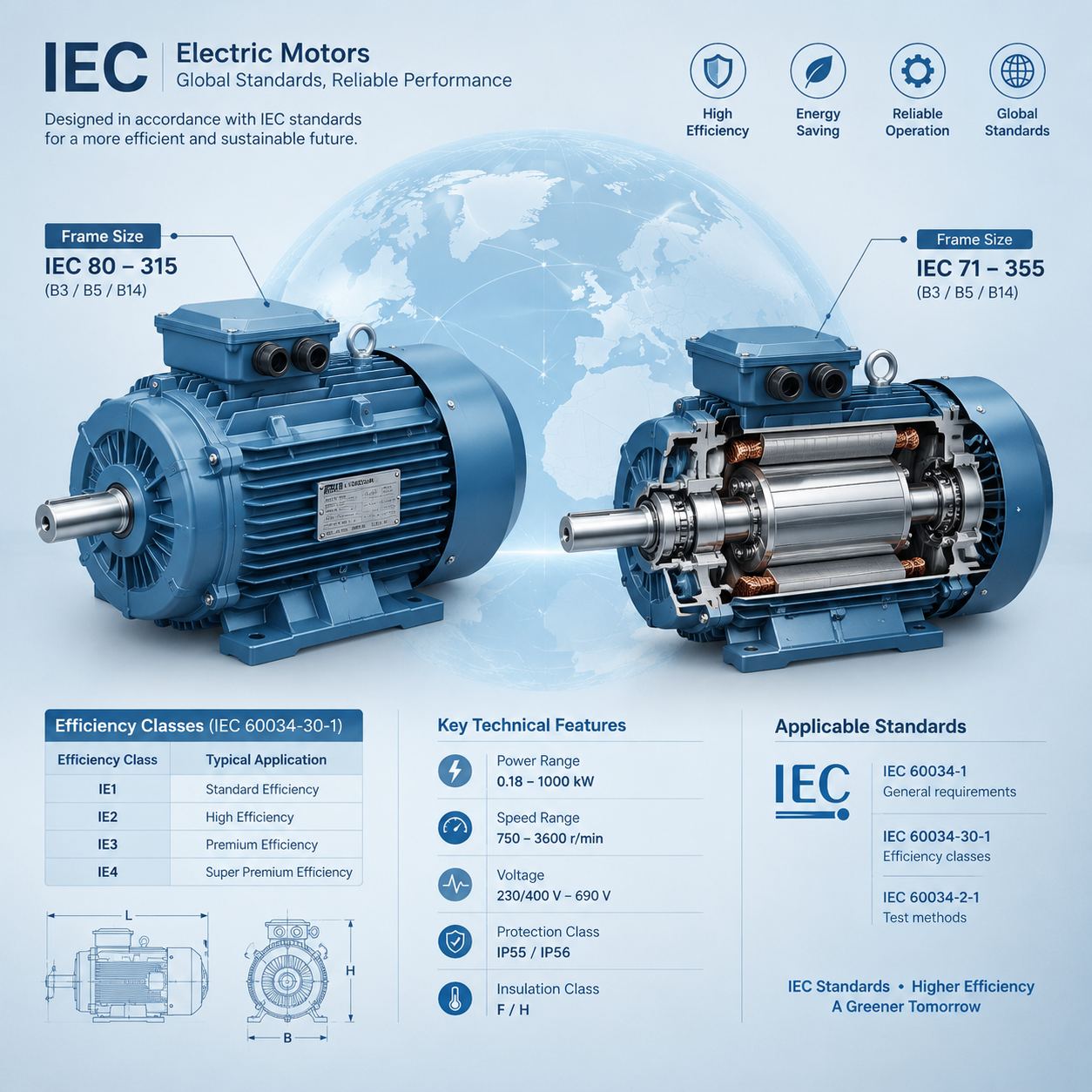
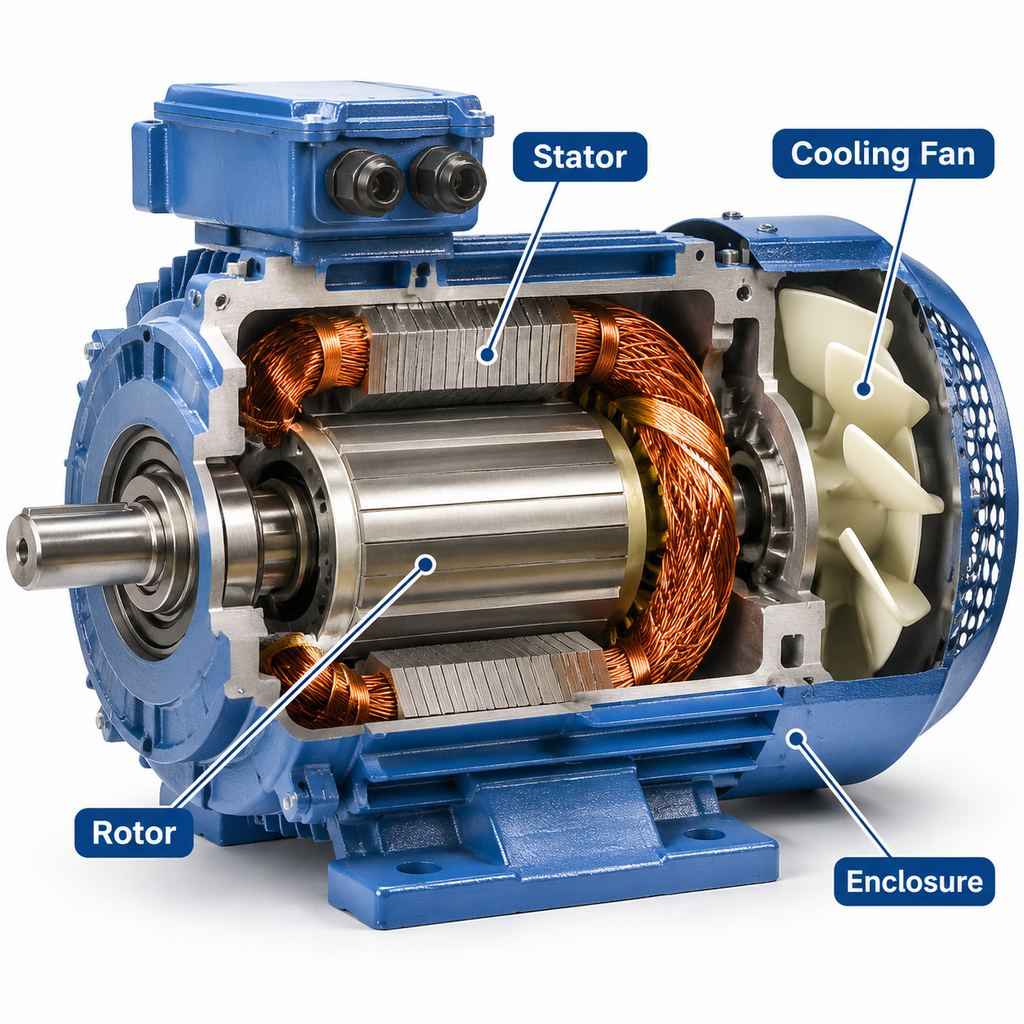
Diagrammatic representation of IEC standards for electric motors.
Conclusion
In conclusion, IEC electric motors offer a globally standardized solution for industrial and commercial applications, emphasizing compatibility, reliability, and efficiency. By adhering to IEC specifications, including frame sizes, mounting dimensions, and efficiency classifications such as IE2, IE3, and IE4, these motors ensure seamless interchangeability and compliance with international energy performance directives. Choosing IEC motors can simplify procurement, reduce operational costs, and facilitate straightforward replacement processes across diverse markets. For engineers and purchasers, understanding the distinctions between IEC and alternative systems, such as NEMA standards, underscores the importance of selecting the right motor to meet both regional requirements and application-specific needs. Ultimately, IEC standards serve as a cornerstone for successful global engineering, making them a compelling choice for stakeholders focused on performance, sustainability, and international interoperability.


1 thought on “Understanding IEC Electric Motors: Standards and Specifications”