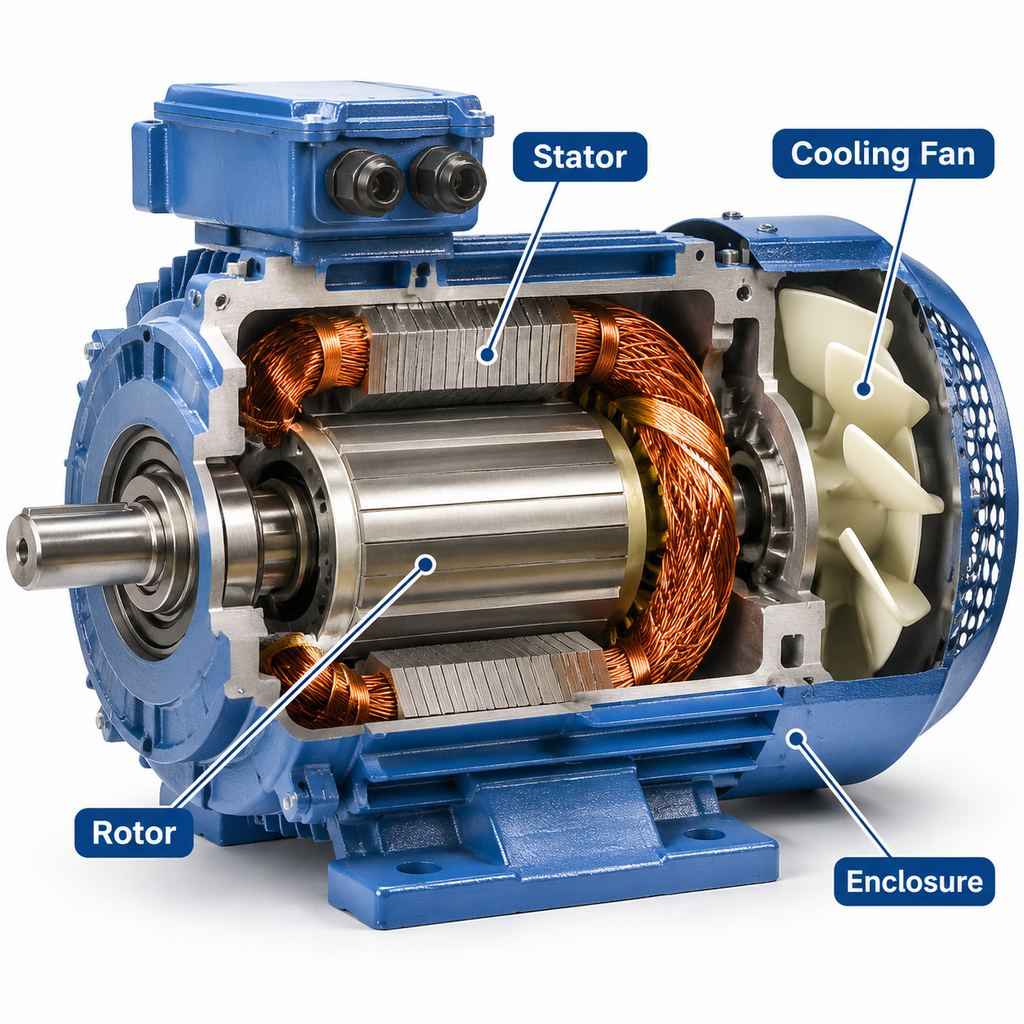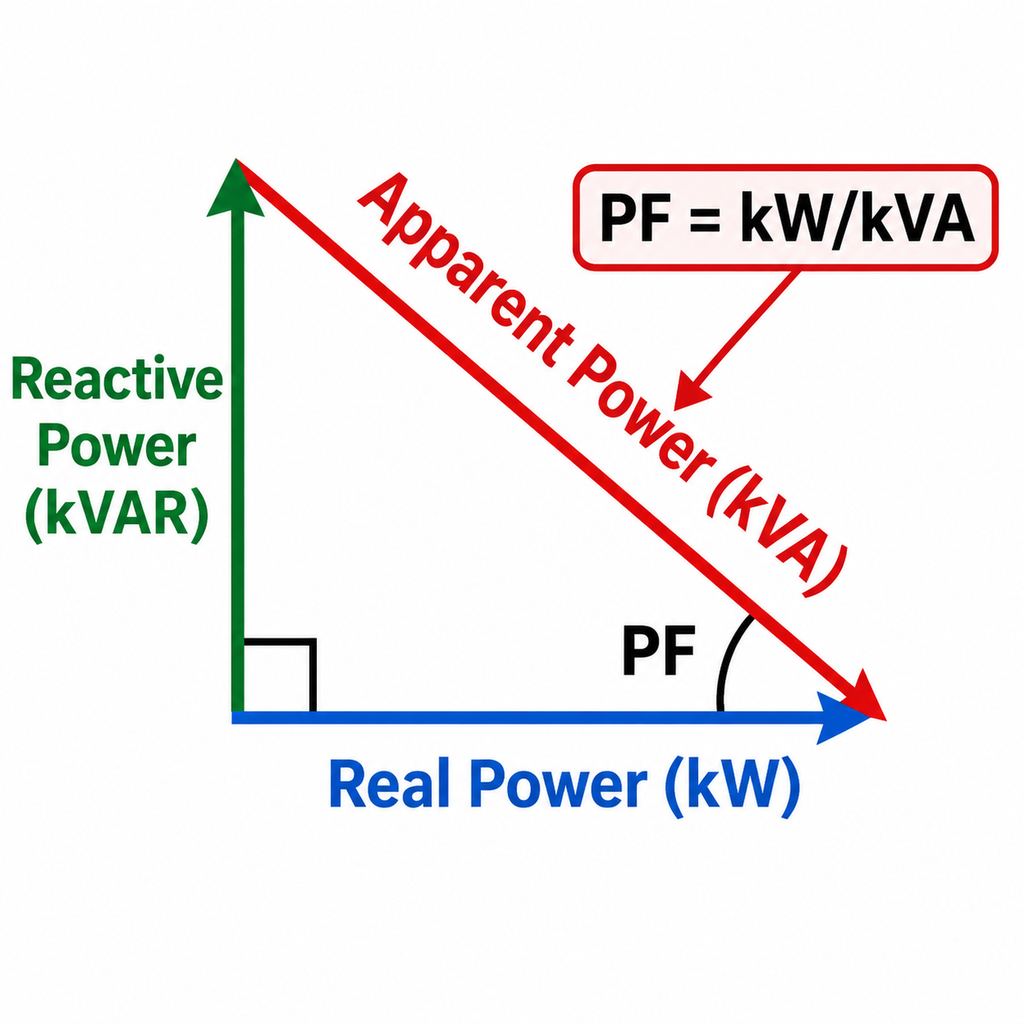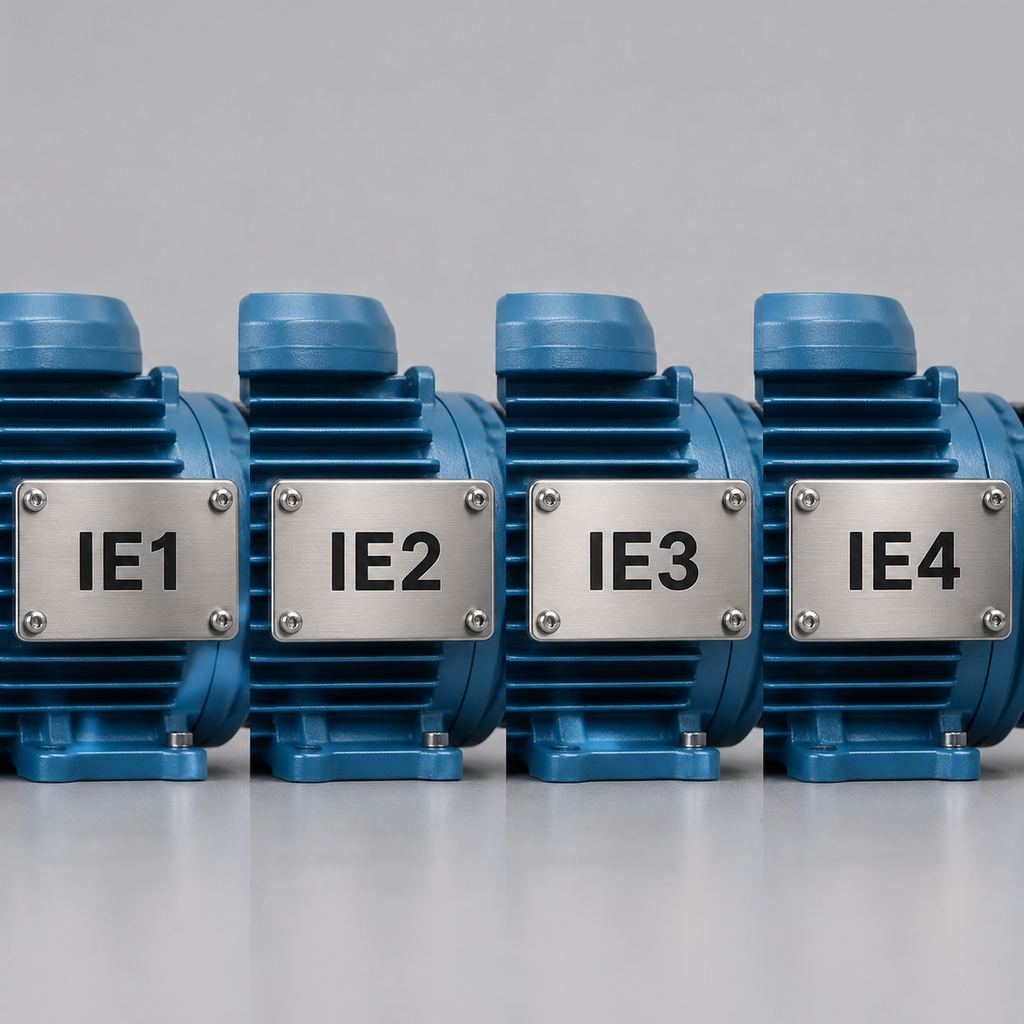
In oil production, “oil well pump motors” usually means the surface motor that drives a beam pumping unit (a pumpjack). The unit strokes a sucker-rod string; the rods are not the motor or the surface unit. That cyclic load is why many beam-pump specifications call for a high-slip, high starting-torque motor, often a NEMA Design D machine. It is not the same duty as a general-purpose IEC motor on a relatively steady centrifugal pump, and it is not a downhole electric submersible pump (ESP) motor. Not every motor on an oil well is Design D: the pumping-unit OEM, the application, and the nameplate decide.
This is an educational comparison, not a JWMotors catalog or supply offer. The public JWMotors range does not include a NEMA Design D oil-well pump motor line or an ESP / downhole motor line. General-purpose IEC machines such as YE3, Y2 or YDT should not be specified as oil-well pump motors, and this page does not claim API, hazardous-location, or other oilfield certifications.
Overview of Oil Well Pump Motors
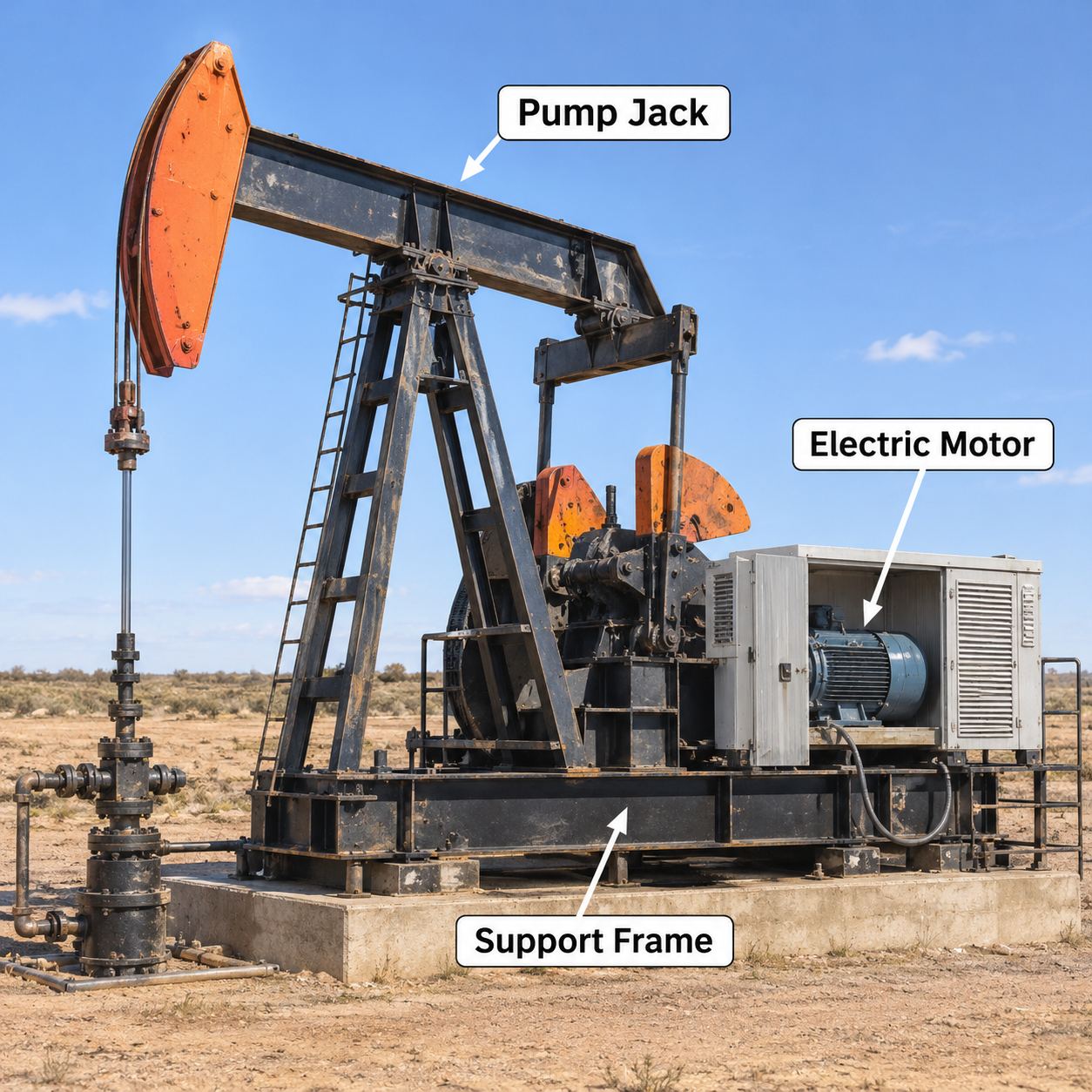
A beam pumping unit lifts fluid with a reciprocating sucker-rod string. The surface motor sees a load that rises and falls through each stroke, including peaks when the rod string and fluid column are lifted and when the counterweight is lifted. A stiff, low-slip general-purpose motor tends to hold speed and pass those peaks into current and into the mechanical train. A high-slip motor is allowed to slow under a peak, which is why Design D is commonly specified for this surface duty. Some installations use another design, or a motor with a variable-frequency drive, if the OEM and the well conditions support that choice.
By contrast, many plant and pump-station motors are general-purpose IEC machines selected for continuous duty (S1) and a relatively steady load, as described for wastewater and similar pumping on the wastewater pump motors page. Downhole ESP motors are a third class: they sit in the wellbore and drive a multi-stage centrifugal pump, and they are not surface beam-pump motors.
Key Characteristics of Oil Well Pump Motors
- Starting torque. A beam unit may have to break away a loaded mechanism from standstill. Many beam-pump motor specifications therefore ask for a high locked-rotor (starting) torque, which is one reason Design D appears in this duty.
- Slip and cyclic torque. Once running, the motor typically stays energized while torque—and therefore speed—varies through each stroke. Higher rated slip lets the rotor give up some speed at a torque peak instead of holding speed and drawing a sharper current peak. That is a load-matching characteristic, not a claim of lower losses or longer life in every case.
- Thermal duty. The cyclic current makes heating different from a steady S1 centrifugal-pump load. The motor must be sized and thermally rated for that duty; do not assume a general-purpose continuous rating is automatically enough, and do not invent a special cooling system from this page.
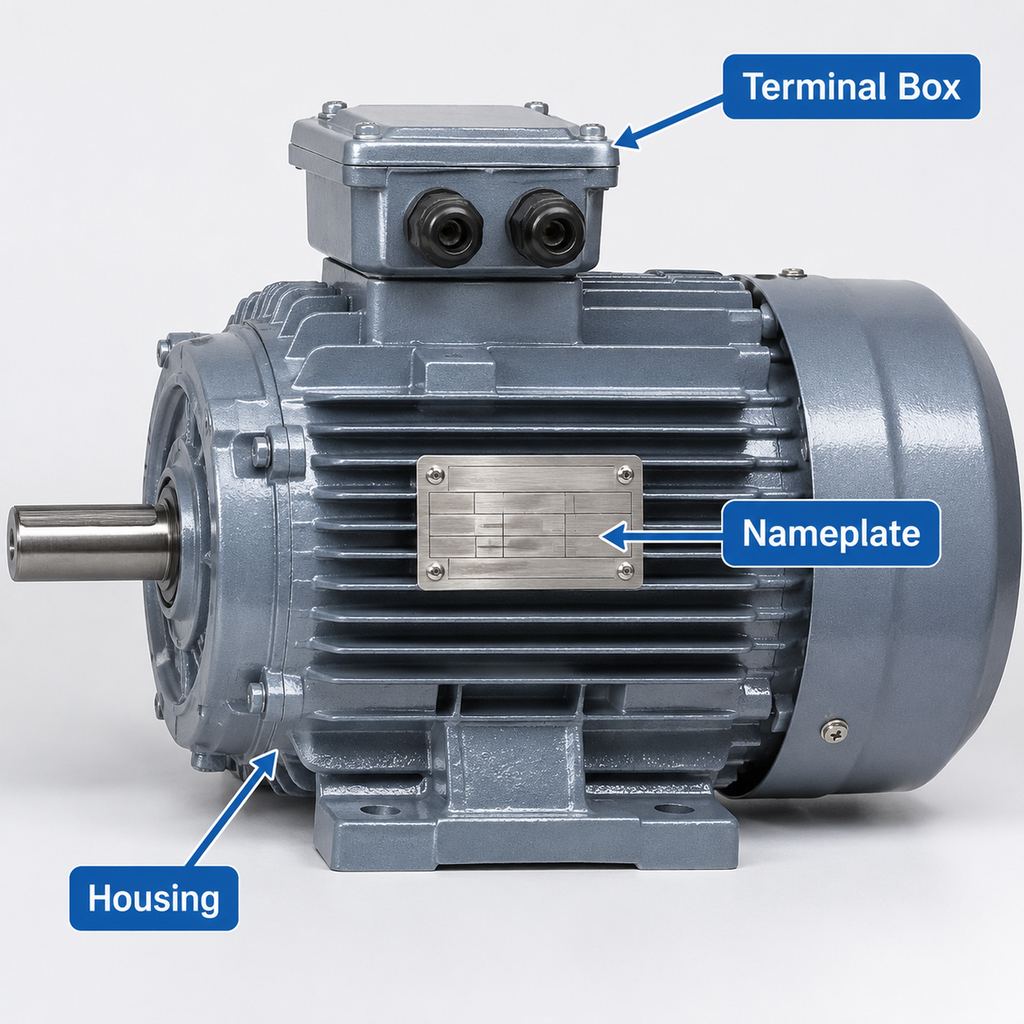
- Construction. Catalog surface oil-well motors are often supplied as TEFC or open drip-proof machines for outdoor beam-unit service. Enclosure, insulation and mounting must follow the nameplate and the pumping-unit OEM. This page does not assign a universal IP rating or a hazardous-area certificate.
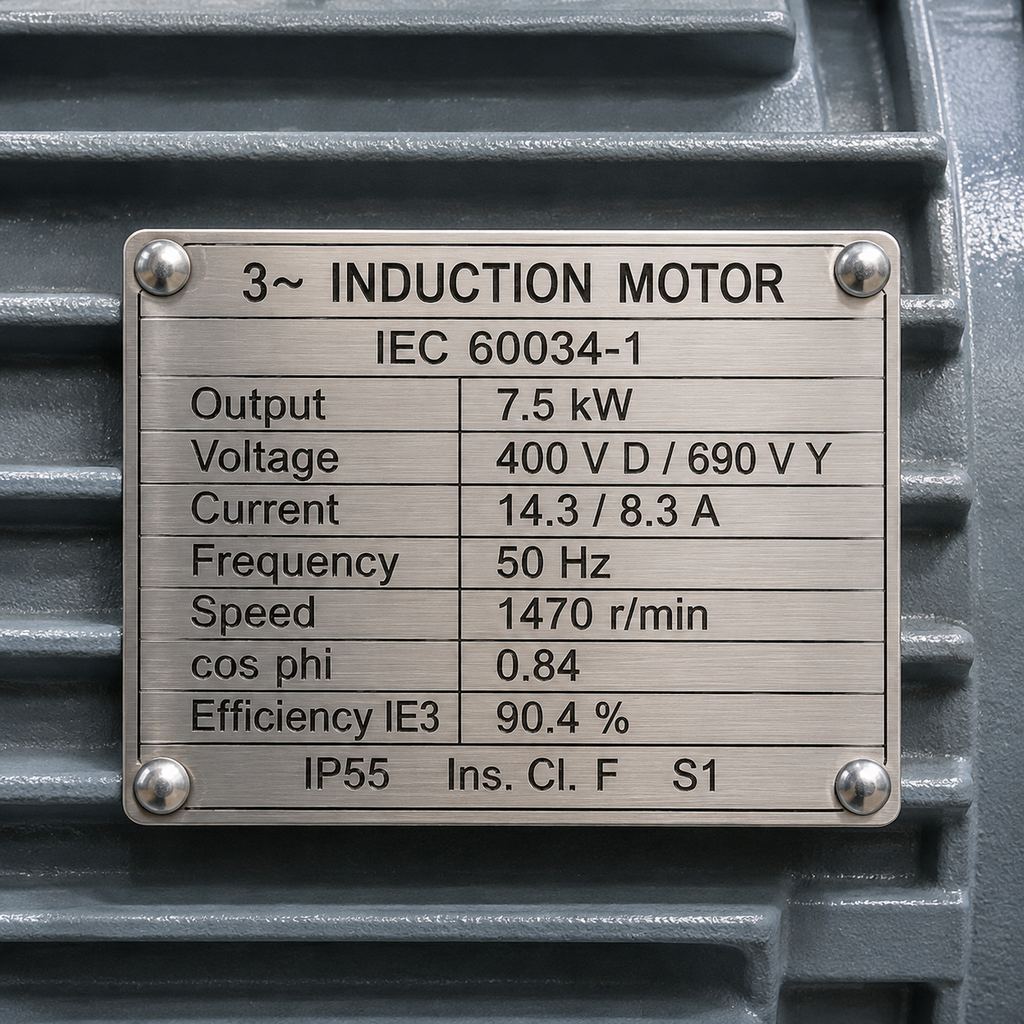
- Nameplate and OEM matching. Slip, torque, service factor, voltage, speed and enclosure are application-specific. Read the nameplate and the pumping-unit requirements; do not assume every oil-well motor is the same Design D rating.
Understanding NEMA Design D and Its Role in Beam Pumping
NEMA MG 1 classifies polyphase squirrel-cage medium motors by design letter. In the published definition, a Design D motor is built to withstand full-voltage starting, develops high locked-rotor torque, keeps locked-rotor current within the standard limits, and has a slip at rated load of 5 percent or more. Designs A, B and C are defined with a slip at rated load of less than 5 percent (with a limited exception in the standard for some many-pole machines).
For locked-rotor torque, NEMA MG 1 states that Design D, 50 and 60 Hz, 4-, 6- and 8-pole, single-speed polyphase squirrel-cage medium motors rated 150 horsepower and smaller, at rated voltage and frequency, shall have locked-rotor torque of not less than 275 percent of full-load torque. That figure is a minimum for those ratings, not a typical or maximum value, and not a JWMotors rating.
Those two rules explain the usual beam-pump interest in Design D. High locked-rotor torque helps start a loaded unit. High slip lets speed drop under a peak in the stroking cycle. Catalogs for oil-well / beam-pump motors often describe Design D as a high-slip, high-torque electrical design for this duty. Some of those catalogs quote a typical slip band such as about 5–8 percent; application notes sometimes cite a higher band. Use the nameplate full-load speed (and therefore slip) for the actual motor; do not treat a catalog band as a universal number.
Design D is common on many beam pumping units, but it is not mandatory for every oil well, and it is not the only surface-motor option. A drive, a different design letter, or a completely different lift method may be specified. Confirm the requirement from the unit OEM and the motor nameplate.
Distinguishing Oil Well Pump Motors from Other Motor Types
Beam-pumping surface motors and general IEC pump motors. A general-purpose IEC motor used on a centrifugal pump is typically selected for continuous duty (S1) and a relatively steady load. Its slip is usually low, in the same sense as a NEMA Design B machine (less than 5 percent at rated load). That is a good fit for many plant and pump-station applications, including the wastewater and similar duties discussed on the wastewater pump motors page. It is not a drop-in substitute where a beam-pump specification requires Design D or another high-slip characteristic. Conversely, a general-purpose IEC motor may still be appropriate on an oil site for a steady surface pump that is not a beam unit. Match the motor to the driven machine, not to the well name alone.
Surface beam-pump motors and downhole ESP motors. An ESP motor is a different product. It is typically a two-pole, three-phase squirrel-cage induction motor, not a synchronous machine, installed in the wellbore and filled with dielectric oil for insulation, bearing lubrication and heat transfer. Produced fluid flowing past the housing provides cooling. These motors are slender so they can fit in the casing, often run near 3,500 r/min on 60 Hz, and drive a multi-stage centrifugal pump downhole. Maintenance usually means pulling the completion. None of that is the same problem as sizing a surface motor for a pumpjack’s cyclic torque. JWMotors does not offer ESP or other downhole submersible motors in its public catalog, and this article is not an ESP selection or installation guide.
Selection. Choose the motor from the lift method, the load, the nameplate and the OEM documents. Do not specify a JWMotors general-purpose IEC motor as a Design D beam-pump motor, and do not treat an ESP as a surface spare.
Frequently Asked Questions about Oil Well Pump Motors
What are the distinct features of motors used for beam-pumping units?
Many specifications ask for high locked-rotor torque and high slip so the motor can start the unit and absorb torque peaks during the stroking cycle. NEMA Design D is a common way to meet that requirement, but only when the nameplate and the pumping-unit OEM actually call for it.
Can a general-purpose IEC motor be used as an oil well pump motor?
Not as a substitute for a specified Design D (or other high-slip) beam-pump motor. General-purpose IEC motors are typically built for relatively steady S1 duty and low slip. They remain appropriate for many other pumps, including some surface pumps at a well site that are not beam units. Follow the driven-equipment specification.
What is the role of NEMA Design D in this application?
NEMA MG 1 defines Design D by a rated-load slip of 5 percent or more and, for the medium ratings listed in the standard, a high minimum locked-rotor torque. That combination is widely used on beam pumping units. It does not, by itself, guarantee a particular efficiency, service factor, or certification.
Are all oil well pump motors NEMA Design D?
No. Design D is common for many surface beam-pump drives, but some installations use another design or a drive, and downhole ESP motors are a different class altogether. Always use the nameplate and the application documents.
Comparison of Motor Types for Oil Well Applications
The three classes below are not interchangeable. The table is a comparison of typical roles, not a JWMotors product offering.
| Motor type | Where it sits | Load character | What usually distinguishes it |
|---|---|---|---|
| Beam-pump surface motor | At grade, driving the pumpjack | Cyclic torque through each stroke | Often specified as high-slip NEMA Design D (rated-load slip of 5% or more, with a high locked-rotor-torque minimum in the standard for typical medium ratings). Not every beam-pump motor is Design D. |
| General-purpose IEC pump motor | Beside or on a surface pump, in a plant or pump station | Relatively steady continuous duty (S1) | Typically low slip, comparable to NEMA Design B (less than 5% at rated load). Suitable for many centrifugal and similar pumps; not a drop-in for a specified Design D beam-pump drive. |
| Downhole ESP motor | In the wellbore, below the pump or seal section | Continuous drive of a multi-stage centrifugal pump | Usually a slender, two-pole, oil-filled induction motor, cooled by well fluid. A different product from any surface motor. |