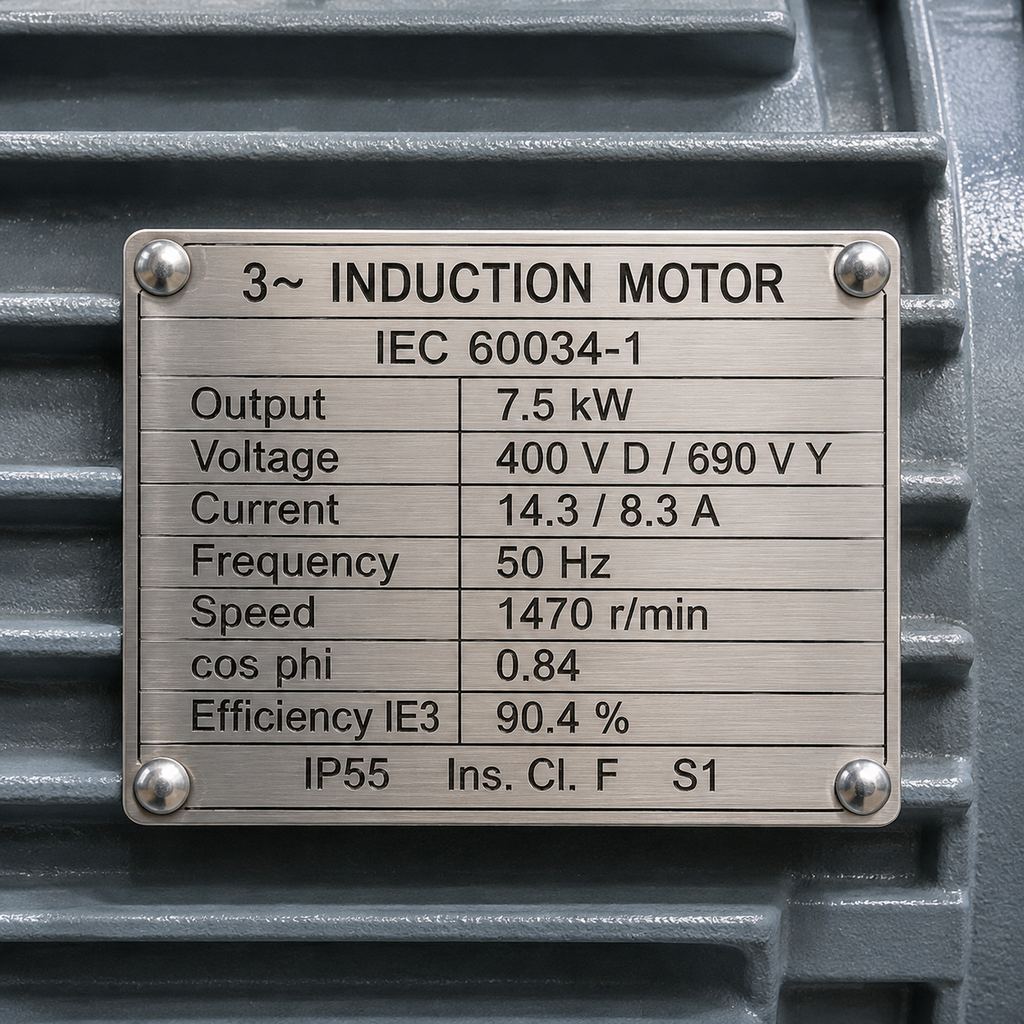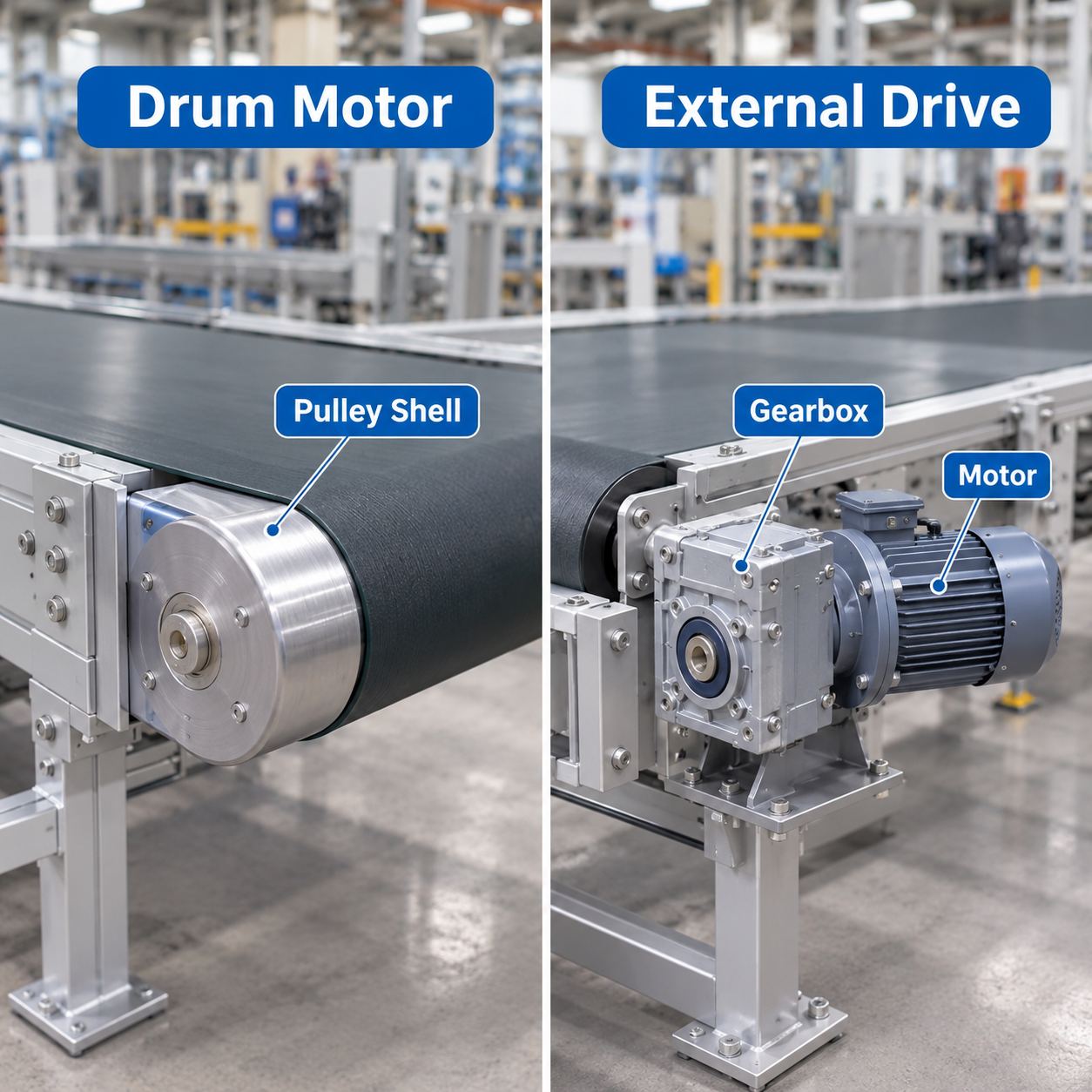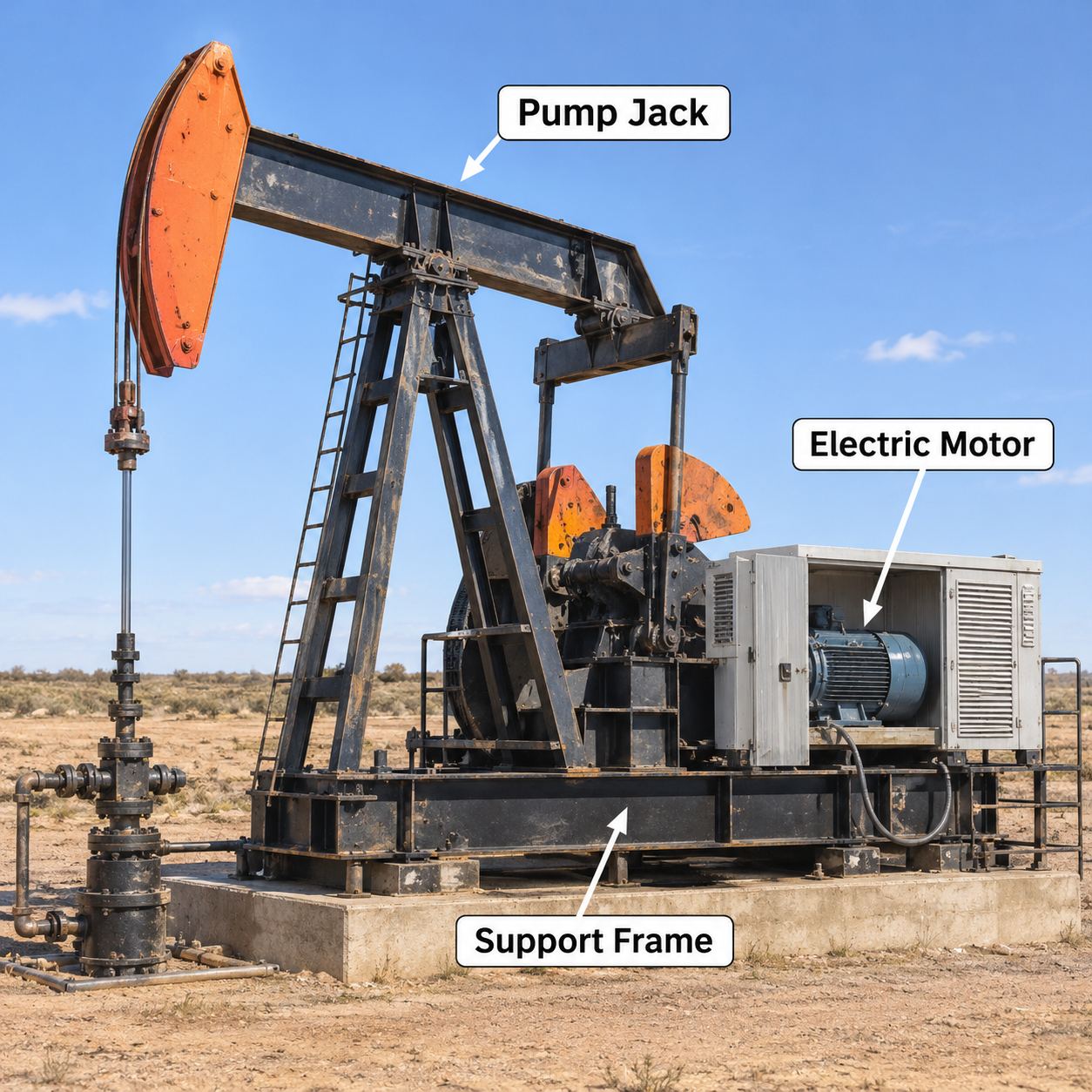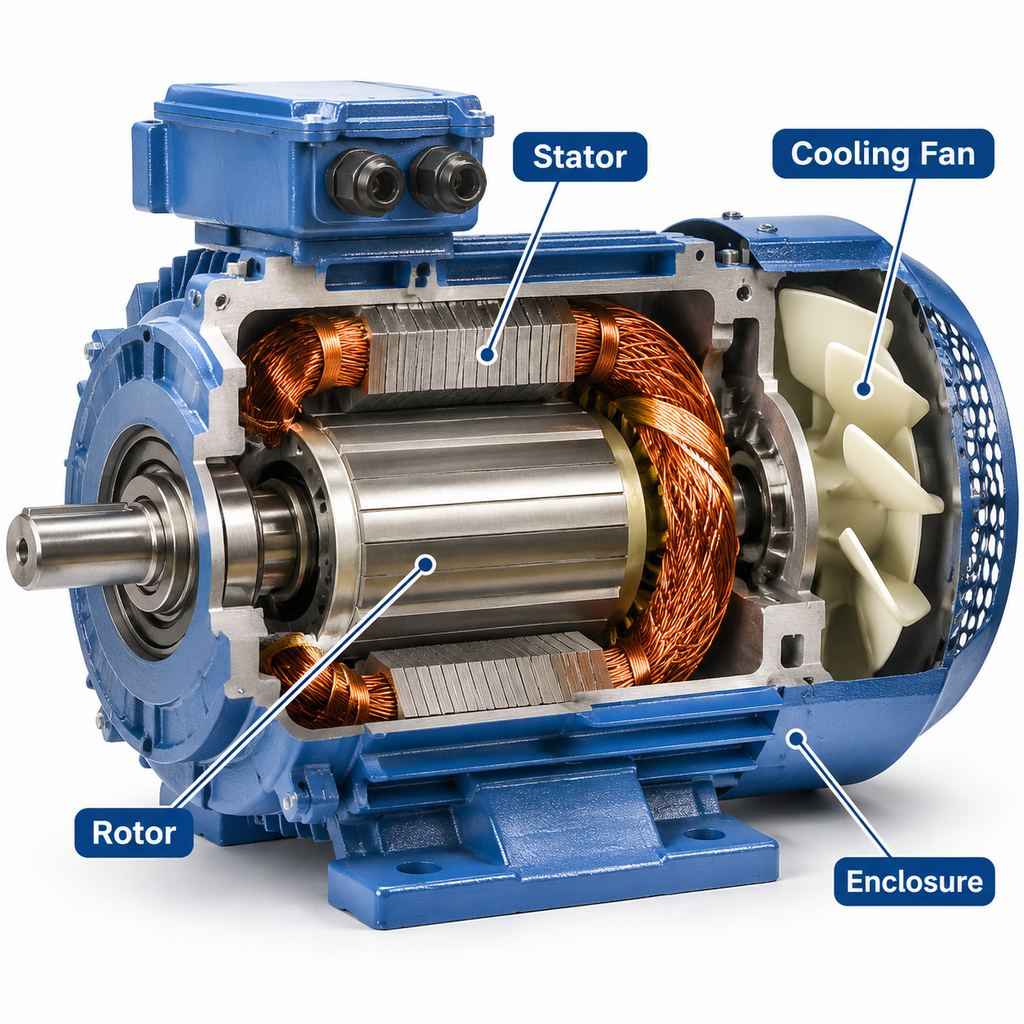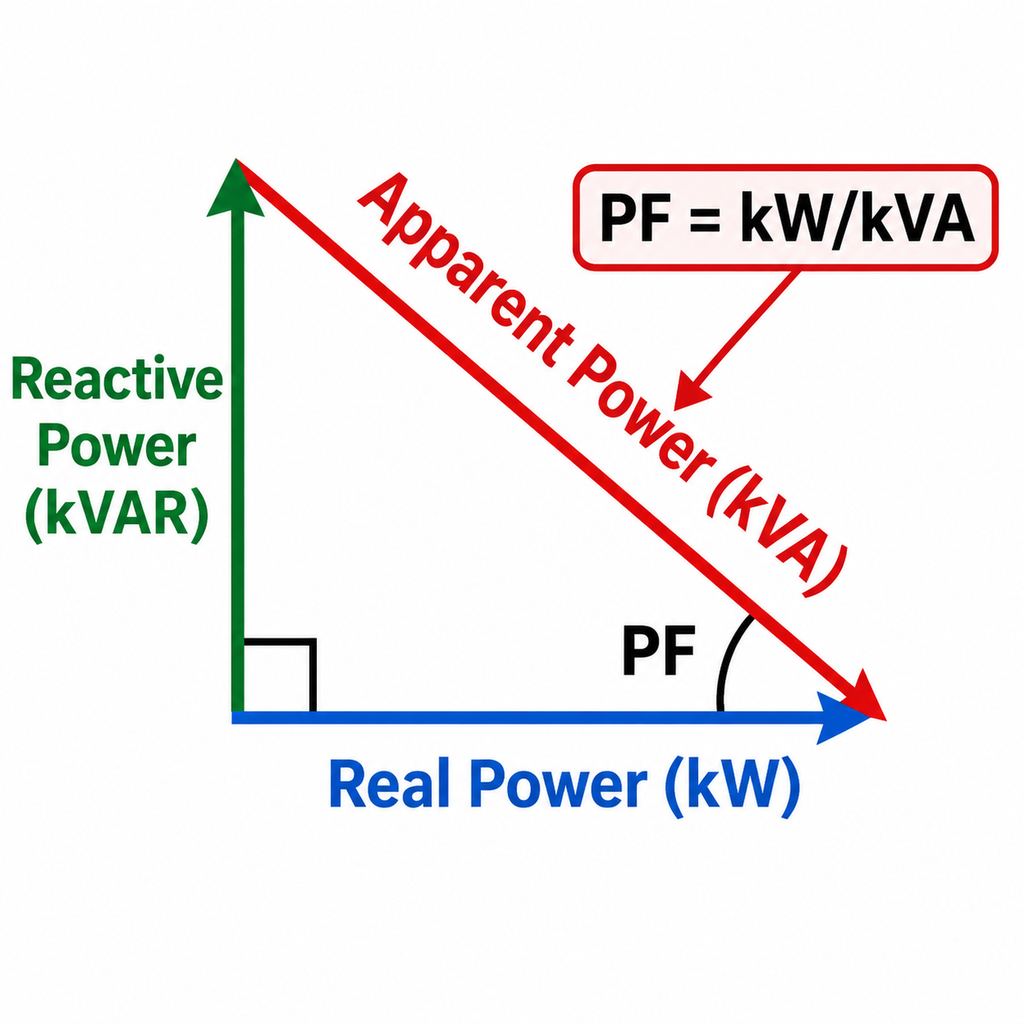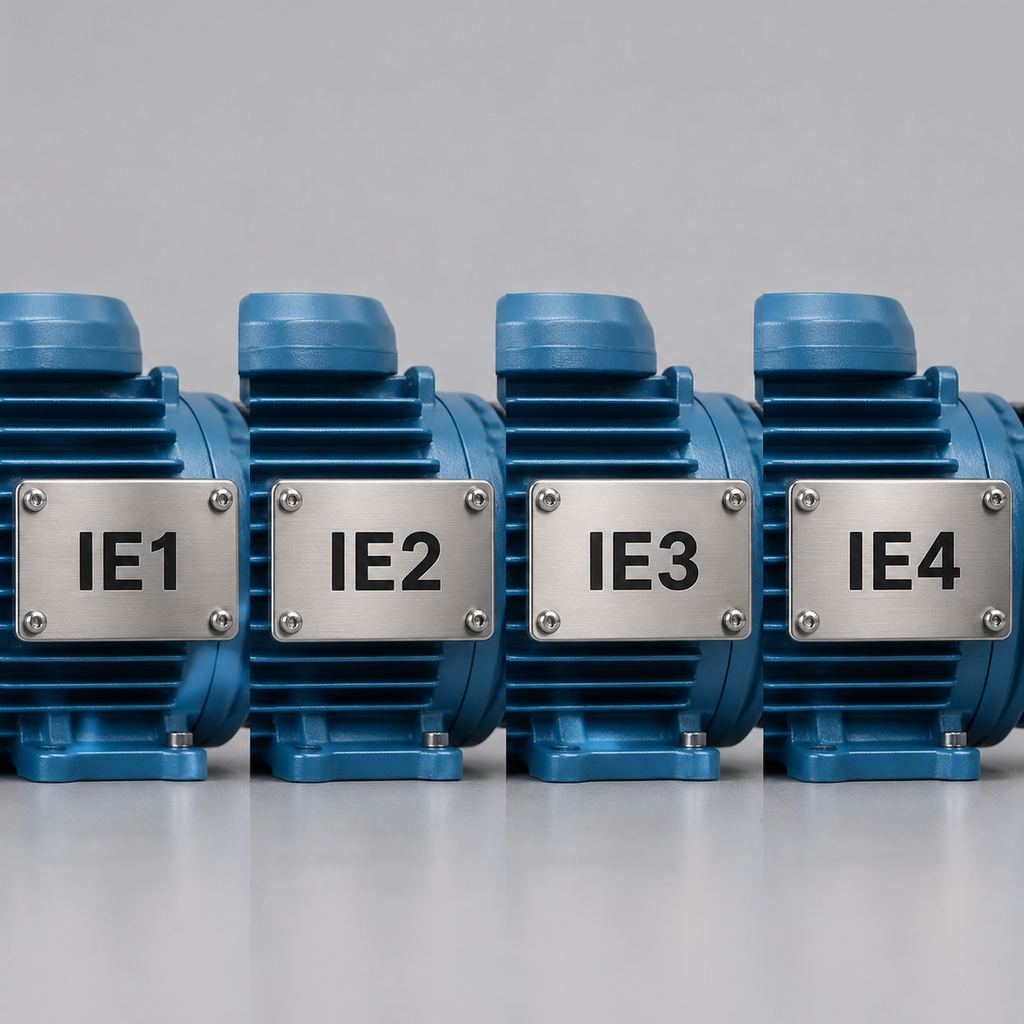
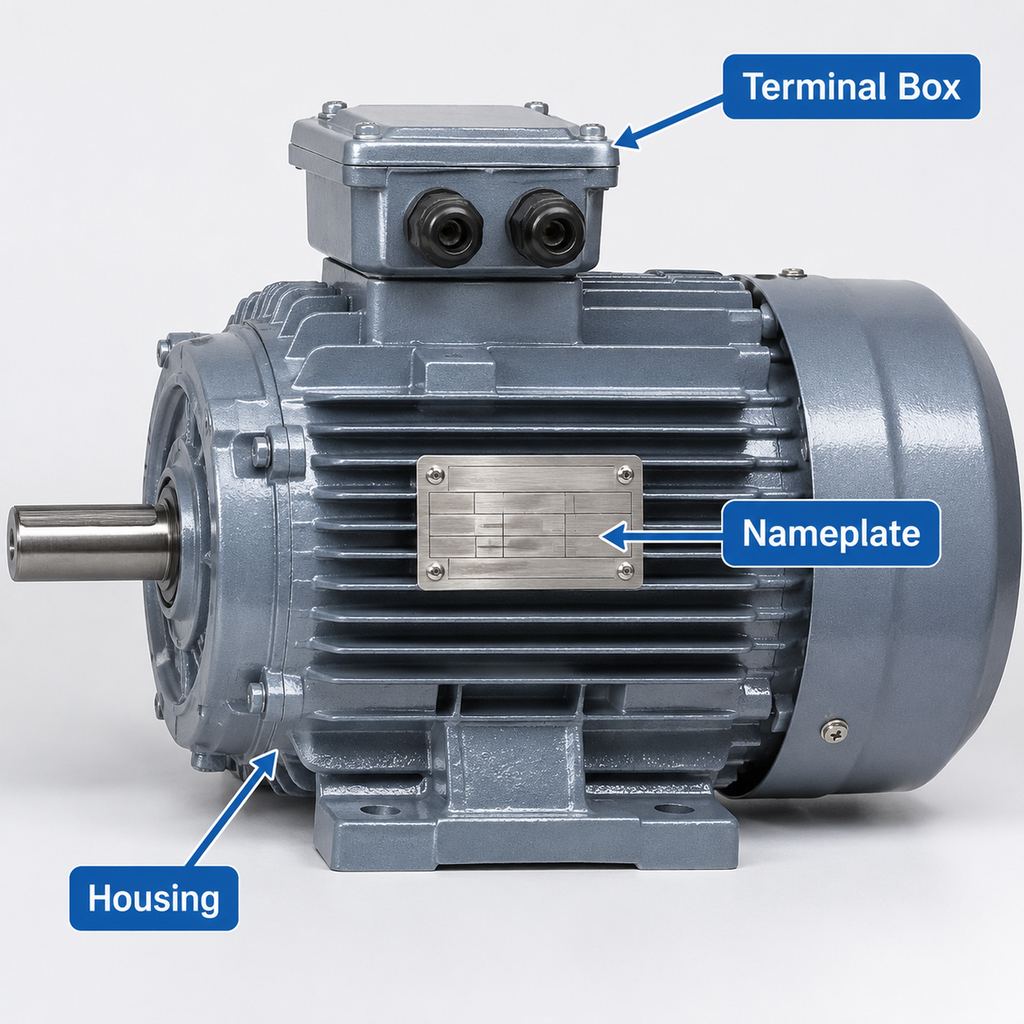
A Dahlander pole-changing motor is a two-speed three-phase induction motor that uses one stator winding, reconnected so the number of magnetic poles changes. The usual pole ratio is 1:2 (for example 2/4, 4/8 or 6/12), which gives a speed ratio of about 2:1. That is not the only two-speed method: separate windings and pole-amplitude modulation (PAM) can provide other combinations, such as 6/4 or 4/6 poles. Not every two-speed or YD-series motor is a Dahlander 2:1 machine. This article explains the principle, the nameplate data, and the usual pole combinations; it is not a wiring guide.
Introduction to Dahlander Pole Changing Motors
A Dahlander pole-changing motor achieves two distinct speeds from a single set of stator windings. Instead of a second winding or a change in supply frequency, the winding is reconnected so that the effective pole count changes, typically in a 1:2 pole ratio (for example 4/8 poles, which gives a 2:1 speed ratio). The design is used where two fixed speeds are enough, such as some fans, pumps and conveyors. Broader selection context is on the pole-changing motors and two-speed motors pages.
How Does a Dahlander Motor Operate?
The motor changes speed by changing the number of magnetic poles in the same stator winding. Common combinations are 2/4, 4/8 or 6/12 poles. The underlying idea is often described as consequent poles: reconnecting the winding, including reversing the current in half of the coil groups, changes whether adjacent groups act as separate poles or combine, so the expressed pole count is halved or doubled. This article does not provide a lead hookup or a factory winding drawing for that reconnection.
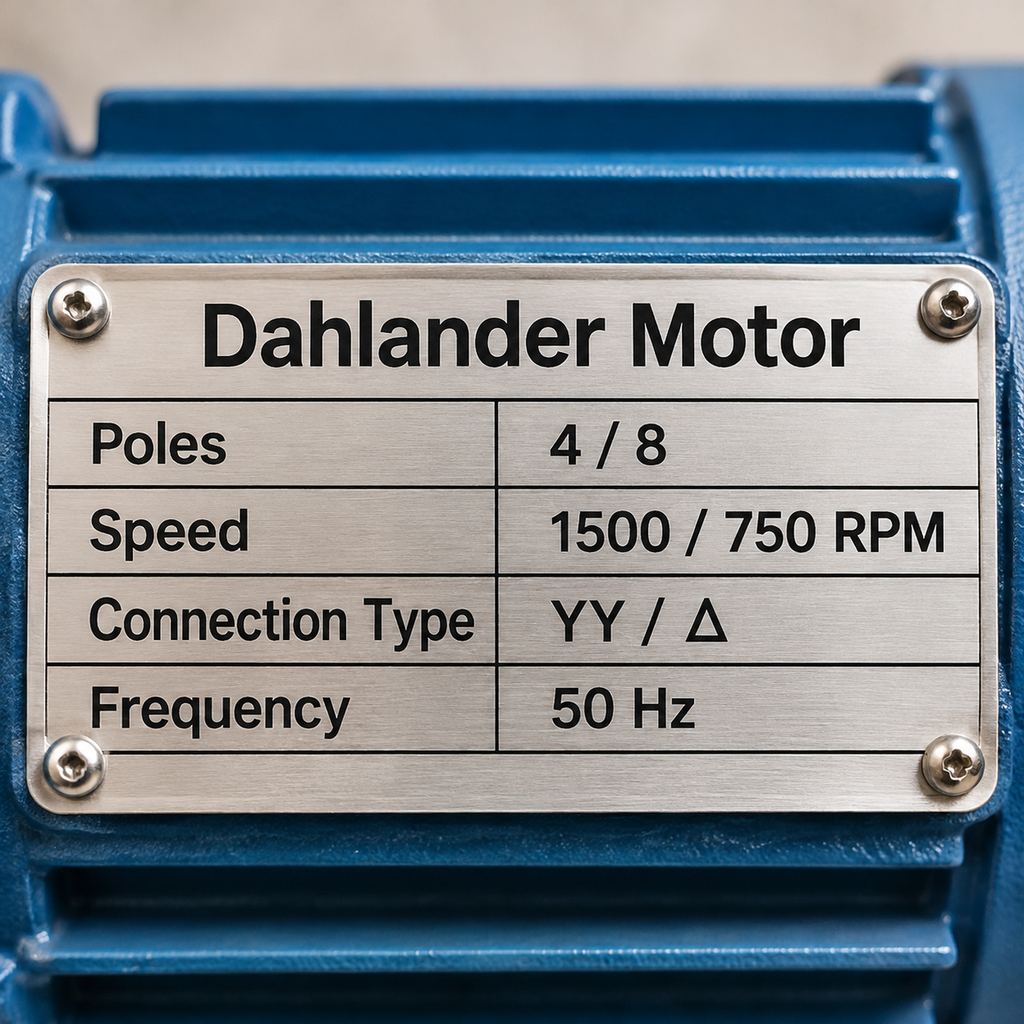
Synchronous speed follows ns = 120 × f / p, where f is the supply frequency in hertz and p is the number of poles. At 50 Hz, a 4-pole connection has a synchronous speed of 1500 r/min and an 8-pole connection has 750 r/min. The loaded (full-load) speed is slightly lower than that synchronous value because of slip, which is normal for an induction motor. The supply frequency must match the nameplate.
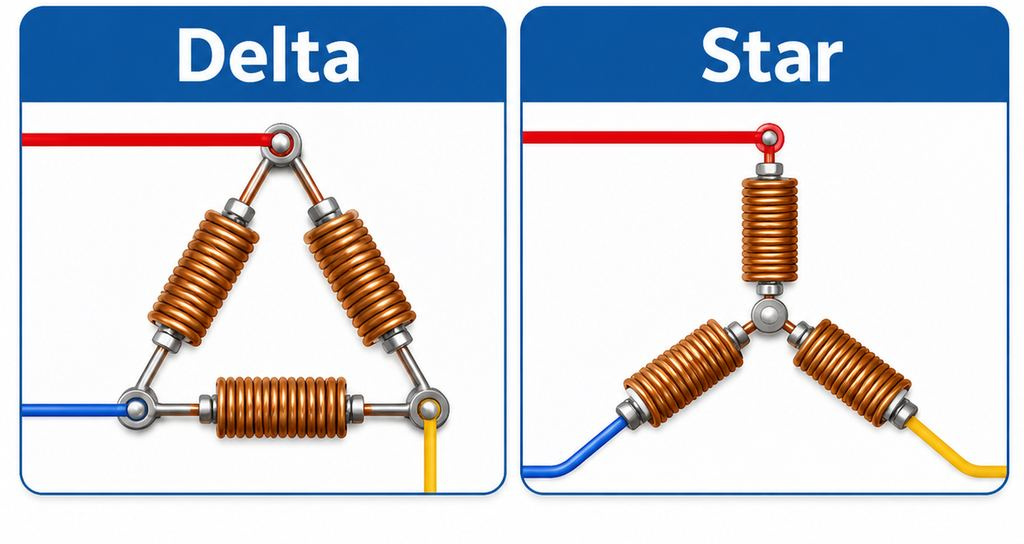
Different Dahlander connection families are built to match different load types. A delta / double-star (Δ/YY) arrangement is commonly used for approximately constant-torque duty; a star / double-star (Y/YY) arrangement is commonly used for square-law (fan or pump) torque. Some designs are rated for constant-power duty. In all cases, the nameplate values for speed, pole numbers, power, current, frequency and the stated connection type are the authority.
Key Features of Dahlander Motors
- A single stator winding is reconnected to change the pole count, giving a typical speed ratio of 2:1 (pole ratio 1:2).
- Usual pole combinations include 2/4, 4/8 and 6/12. These suit applications that need two fixed speeds, such as some ventilation, pump and material-handling drives.
- The connection family should match the load: Δ/YY is commonly chosen for approximately constant torque (for example some conveyors or hoists); Y/YY is commonly chosen for square-law torque on centrifugal fans and pumps. Read the type from the nameplate; do not assume one family covers both duties.
- Because only one winding is used at both speeds, the arrangement can be more compact than a two-winding motor of the same ratings. Cost and size still depend on the frame and the duty; they are not automatic advantages in every case.
- The method gives two fixed operating speeds. It is not a substitute for a variable-frequency drive when a continuous speed range is required.
Different Dahlander Connection Types
The notes below are principle and nameplate identifications only. They are not hookup instructions.
- Delta / double star (Δ/YY). This is the usual family for approximately constant torque at both speeds. The winding is connected in delta (Δ) at the lower speed (higher pole count) and in double star (YY) at the higher speed (lower pole count). Typical uses include some conveyor and hoist duties, where similar torque is needed at both speeds. Do not reverse these two connections: applying the high-speed connection logic to the low-speed pole count, or the reverse, is a common source of confusion.
- Star / double star (Y/YY). This family is commonly used for square-law torque, where the required torque rises with the square of speed, as on many centrifugal fans and pumps. The winding is connected in star (Y) at the lower speed and in double star (YY) at the higher speed.
- Constant-power designs. Some Dahlander motors are rated so that shaft power is approximately the same at both speeds (torque then falls as speed rises). Catalogs sometimes list a separate constant-power connection family. Treat the nameplate power at each speed as the authority; do not assume a universal kilowatt ratio.
Dahlander Motors vs. Other Two-Speed Solutions
Dahlander reconnection is one way to obtain two fixed speeds, and it is the usual choice when the required speed ratio is 2:1 and a single winding is acceptable. It is not automatically the best or the cheapest option for every two-speed duty.
Motors with two separate (independent) windings can provide combinations that Dahlander cannot, such as 6/4 or 8/6 poles (speed ratios of 1.5:1 or about 1.33:1). Each winding is built for one pole count. That flexibility can mean more copper, more terminals and a larger stator, but it is the standard route when the speeds are not in a 2:1 ratio.
Pole-amplitude modulation (PAM) is a different single-winding method. By grouping the coils in a special way and reconnecting them, PAM can also give ratios other than 2:1, for example 4/6 poles. It is not a Dahlander winding, and it should not be specified as one.
JWMotor’s two-speed and pole-changing ranges, including the YD series, are not limited to Dahlander 2:1 ratings. A 4/8-pole or 2/4-pole machine may use a Dahlander winding; a 6/4-pole or similar non-2:1 rating typically uses separate windings or another method. Use the nameplate and the product page, not a general 2:1 assumption, when you specify the motor. See also pole-changing motors and two-speed motors.
Frequently Asked Questions
What is a Dahlander pole changing motor?
It is a single-winding, two-speed induction motor. The winding is reconnected so that the pole count changes, usually in a 1:2 pole ratio (for example 4/8 or 2/4), which gives a speed ratio of about 2:1. The nameplate lists both speeds, both pole counts, and the connection type.
How does a Dahlander motor differ from PAM or separate-winding motors?
All three can provide two speeds, but they are not interchangeable. Dahlander uses one winding and is limited to a 2:1 speed ratio. Separate windings can provide other pairs, such as 6/4 poles. PAM also uses one winding, but a different coil grouping, and can give ratios other than 2:1 (for example 4/6). A YD or other two-speed catalog may include more than one of these methods.
Are Dahlander motors suitable for fans or pumps?
Many are, when the nameplate connection family matches the load. Square-law (fan or pump) duty commonly uses a Y/YY Dahlander arrangement. Approximately constant-torque duty more often uses Δ/YY. Confirm both speeds, both power ratings and the connection type on the plate before selecting the motor. This page does not describe how to wire the terminals.