
An induction motor’s magnetic field rotates at synchronous speed (Ns = 120f/p), but the rotor always turns slightly slower. That difference is called slip. Slip is how an induction motor produces torque: with no slip, no current would be induced in the rotor and the motor would produce no torque. For buyers and maintenance teams, slip explains why a “1500 rpm” motor runs at about 1450–1475 rpm. It also explains why speed drops as load rises and why unusually high slip is an early warning sign.
Slip Formula and How to Calculate Motor Slip
s = (Ns − N) / Ns × 100%
- Ns: synchronous speed in rpm, set by supply frequency and pole count
- N: actual rotor (shaft) speed in rpm
- Ns − N: slip speed in rpm
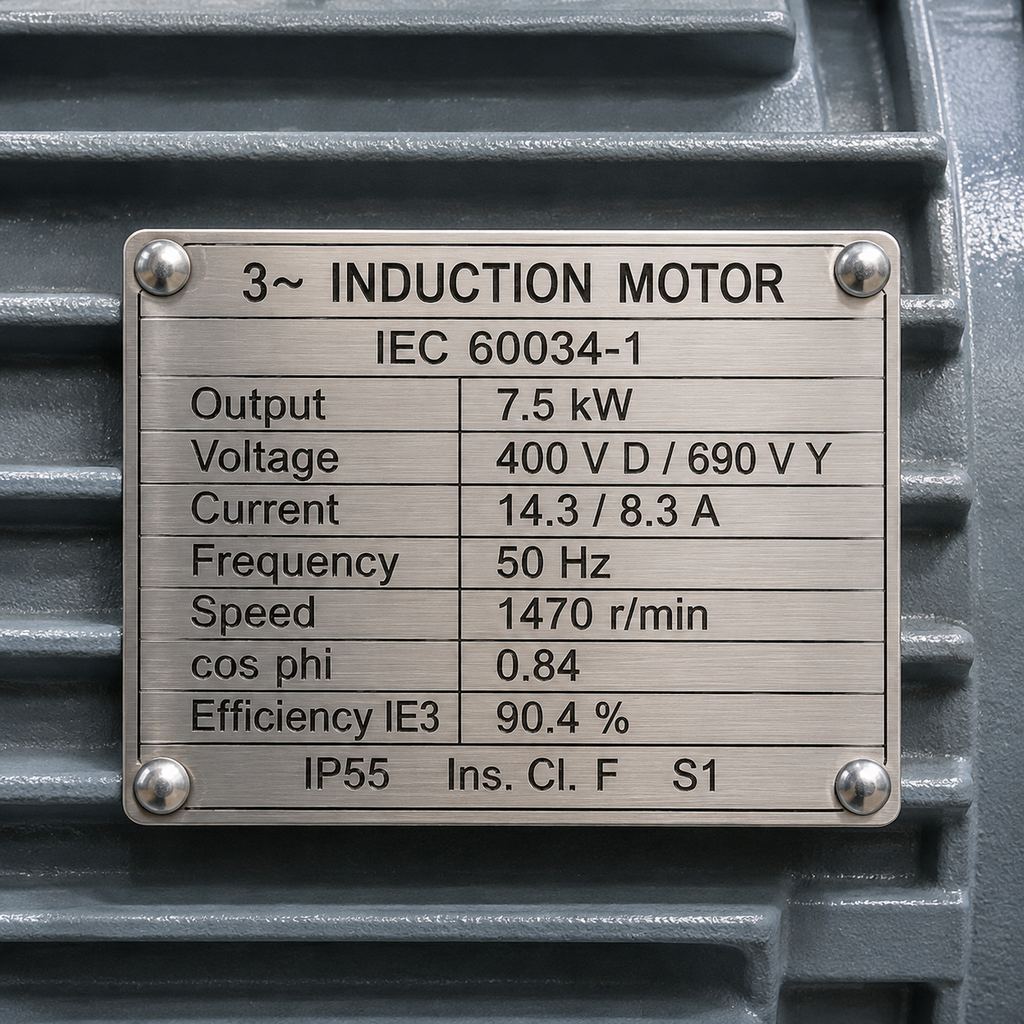
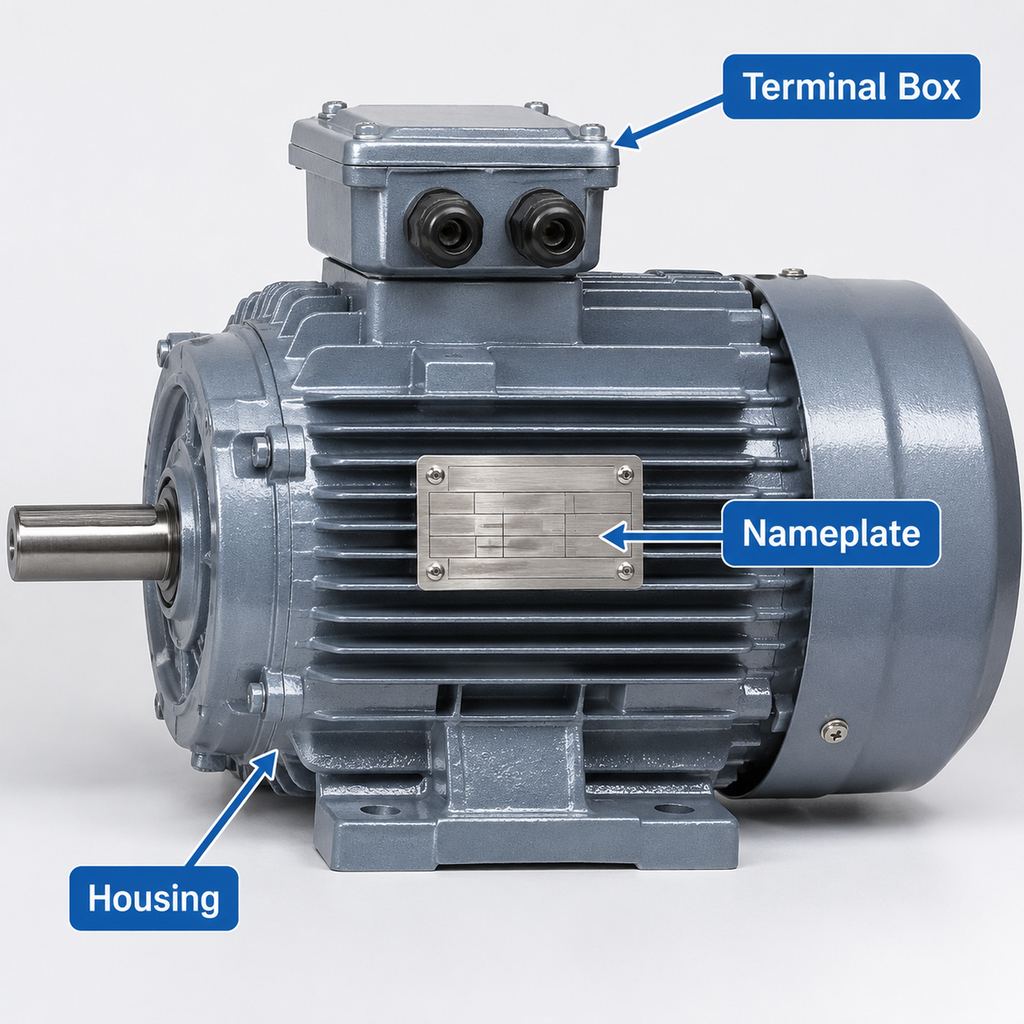
Nameplate examples (formula only): a 4-pole motor on 50 Hz has Ns = 1500 rpm.
| Rated speed on nameplate | Slip speed | Full-load slip |
|---|---|---|
| 1450 rpm | 50 rpm | 50 / 1500 ≈ 3.3% |
| 1475 rpm | 25 rpm | 25 / 1500 ≈ 1.7% |
The motor rated at 1475 rpm has about half the full-load slip of the 1450 rpm motor. As explained below, that usually means lower rotor losses. At standstill N = 0, so s = 100%. With no load, slip is very small but never quite zero.
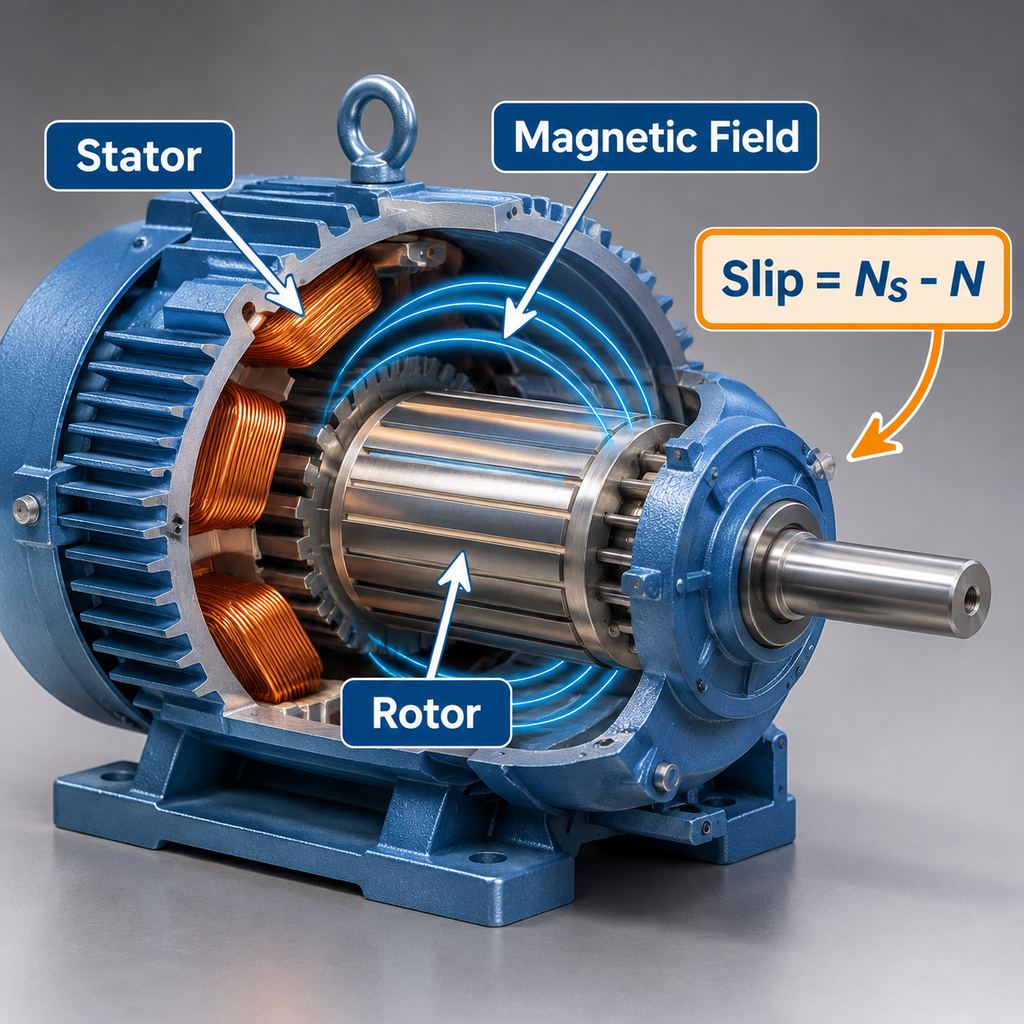
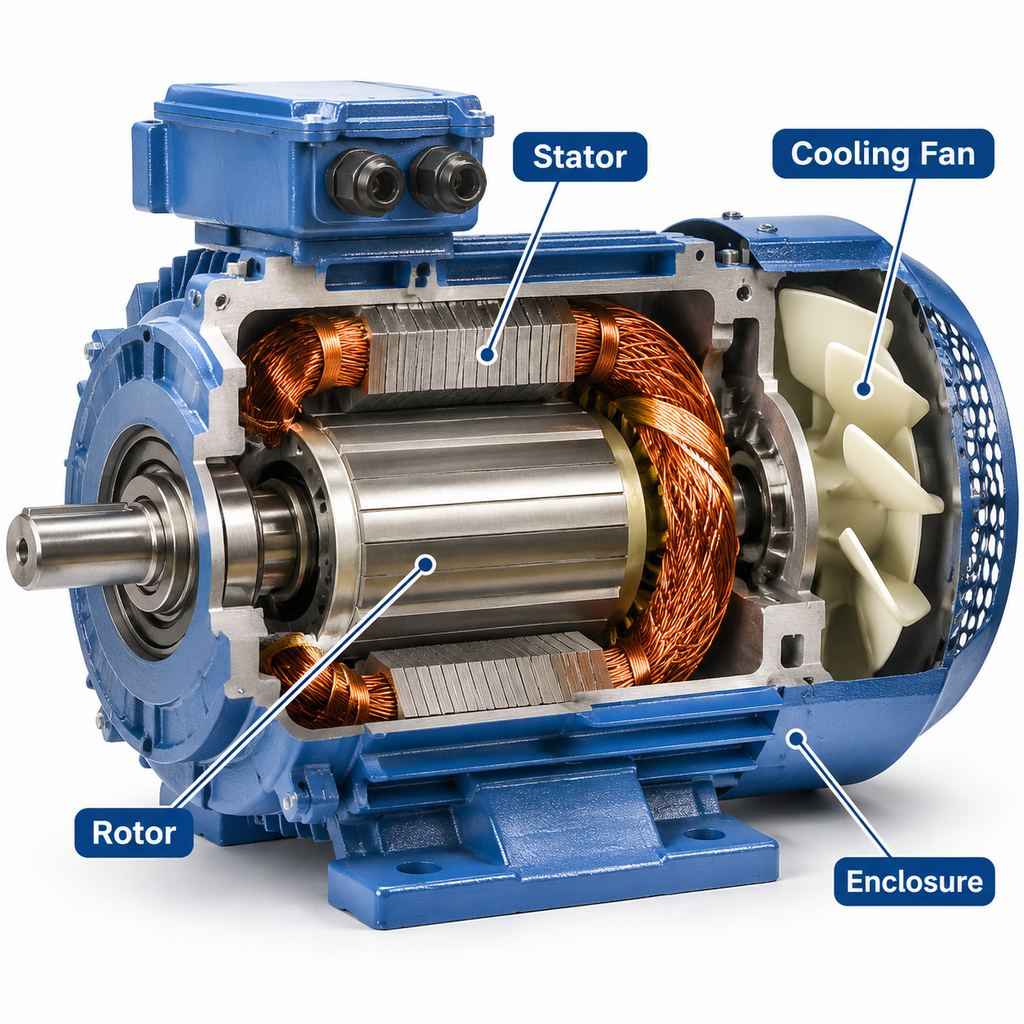
The stator field rotates at Ns and the rotor at N. Slip speed is Ns − N, usually expressed as a percentage of Ns.
Typical Slip Ranges
At full load, standard three-phase induction motors typically have about 1–5% slip. Small motors (around 1 kW and below) sit near the top of that range or above it. Medium motors are typically around 2–3%, and large motors often run below 1–1.5%. Within one size, high-efficiency designs usually have lower slip than older or standard designs, because they use more active material and lower-resistance rotor cages. Always take the exact figure from the rated speed on the nameplate or datasheet.
How Slip Changes With Load
Across the normal operating range, from no load to around rated load, slip rises roughly in proportion to load torque. A motor with 3% slip at full load runs at about 1.5% slip at half load. That is why speed falls a little as a pump or conveyor loads up. In practice you can roughly estimate load from measured speed:
Load ≈ (Ns − Nmeasured) / (Ns − Nrated) × rated load
This is an approximation. It is sensitive to supply voltage and to the tolerance on nameplate speed. Beyond rated load, slip rises faster. If load reaches the motor’s breakdown (pull-out) torque, the motor stalls.
Slip, Efficiency and Temperature Rise
Rotor copper loss equals slip × air-gap power (Protor cu = s × Pag). At 3% slip, about 3% of the power crossing the air gap becomes heat in the rotor cage. At 1.7%, the share is roughly half that. So higher slip means more rotor heating, a higher overall temperature rise and lower efficiency. This is one reason IE3 and IE4 designs, such as the YE3 and YE4 series, generally have higher rated speeds than older Y2 (IE2) designs of the same rating. For the full efficiency picture, see what is motor efficiency.
One practical side effect: a higher-efficiency motor with lower slip runs a little faster. On a centrifugal pump or fan, power rises roughly with the cube of speed. Swapping in a faster motor can therefore increase the absorbed power and cancel part of the expected energy saving, unless you trim the impeller or adjust the speed.
Causes of Excessive Slip
- Overload: the driven machine needs more torque than rated. Typical causes are a pump running past its design point, a clogged fan, a jammed conveyor or worn gearing. Slip and current rise together, and running continuously beyond rated load (see service factor) shortens winding life.
- Low supply voltage: torque varies roughly with the square of voltage. At reduced voltage, the motor has to slip more to deliver the same torque, which raises current and rotor loss. Long cable runs, weak transformers and voltage unbalance all contribute.
- Rotor problems: cracked or broken rotor bars and high-resistance end-ring joints raise rotor resistance. Speed under load then drops below nameplate, often with current pulsation and higher vibration. Treat these as faults to investigate, not normal operation.
- Mechanical drag: failing bearings, misalignment or a rubbing fan add load and increase slip.
Measuring Slip With a Tachometer
Use an optical (laser with reflective tape) or contact tachometer to measure shaft speed with the motor at its normal operating load. Then:
- Work out Ns from the supply frequency and pole count, or take it from the nameplate (e.g. 1500 rpm for 4-pole at 50 Hz).
- Calculate slip from the measured speed: s = (Ns − N) / Ns.
- Compare it with the rated slip from the nameplate speed. If measured slip is clearly above rated slip, check load, voltage and rotor condition.
Measure frequency too where the supply may deviate, and remember that nameplate speed has a manufacturing tolerance. Follow site safety rules near rotating shafts.
Reading Rated Speed When Selecting a Motor
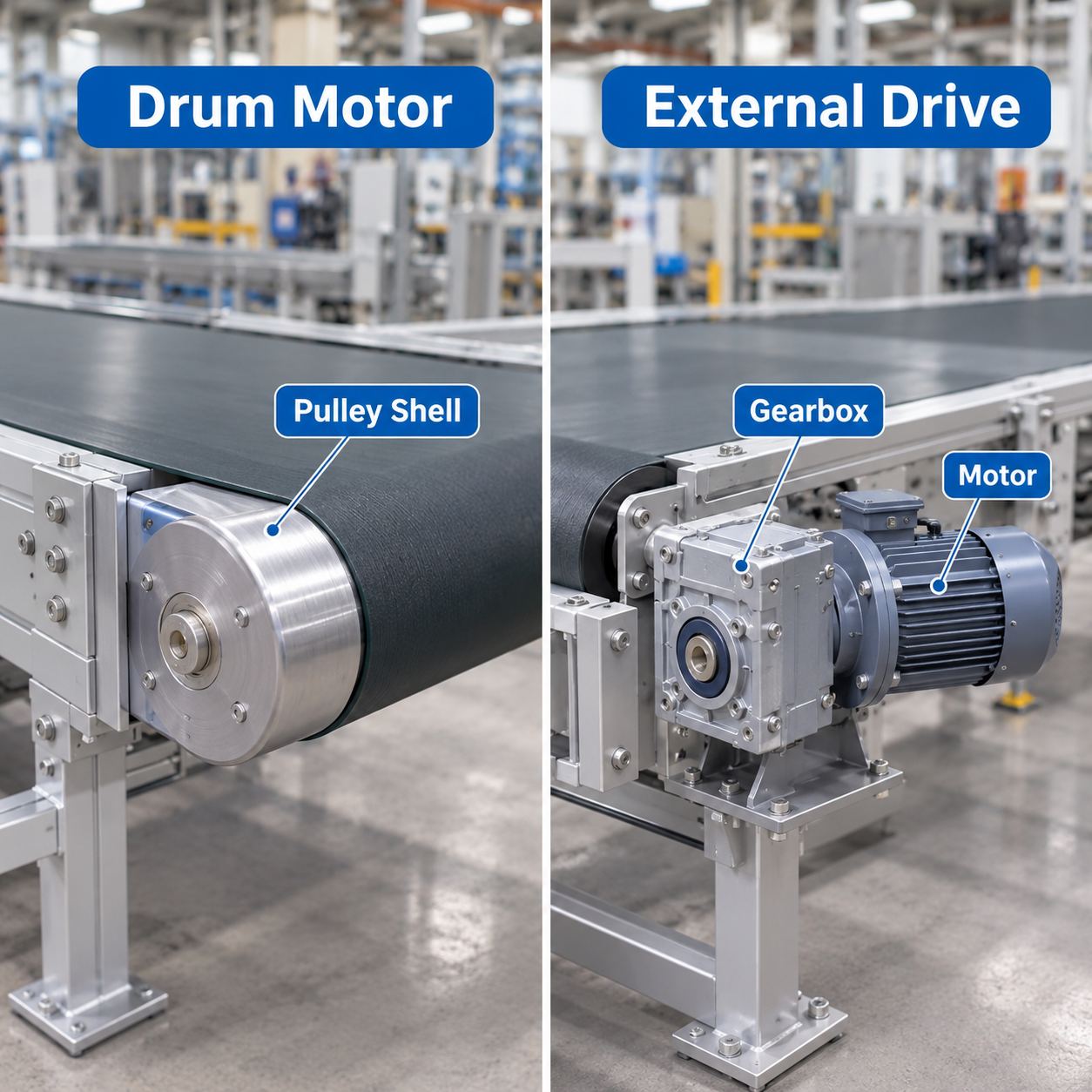
The nameplate rated speed is the full-load speed, synchronous speed minus full-load slip. Use it, not the synchronous speed, when matching pumps, fans and gear ratios. For a water and wastewater pump, the difference between 1450 and 1475 rpm moves the duty point. For material handling conveyors, it changes line speed after the gearbox. If you are replacing a motor, compare the old and new rated speeds and allow for the change.
Cast-iron Y2, YE3 and YE4 three-phase motors are listed under general-purpose motors, with the full range under all products. If an application needs a specific speed, winding or frame, see customization.
Slip on a VFD
A VFD changes synchronous speed by changing frequency, but slip still exists. The rotor still runs slightly below the field speed set by the output frequency, and slip speed in rpm stays roughly similar at a given torque. Drives with slip compensation boost frequency slightly to hold speed under load. For inverter-fed applications, inverter-duty motors such as the YVF2 series are listed under special-purpose motors.
FAQ
What is slip in a 3-phase induction motor?
It is the difference between synchronous speed and actual rotor speed, expressed as a fraction or percentage of synchronous speed. Typical full-load values are about 1–5%.
What is the slip formula?
s = (Ns − N) / Ns × 100%. For example, (1500 − 1450) / 1500 ≈ 3.3%.
Is higher slip bad?
Higher rated slip means more rotor loss and lower efficiency. Slip well above the nameplate value in service points to overload, low voltage or a rotor fault.
Can slip be zero?
Not in a working induction motor. At zero slip there would be no induced rotor current and no torque. Only synchronous motors run at exactly Ns.


2 thoughts on “What Is Slip in an Induction Motor? Formula, Typical Values, Causes and How to Measure It”