Pole-changing · YD · 4/2 · 6/4 · 8/4
Two speed motors
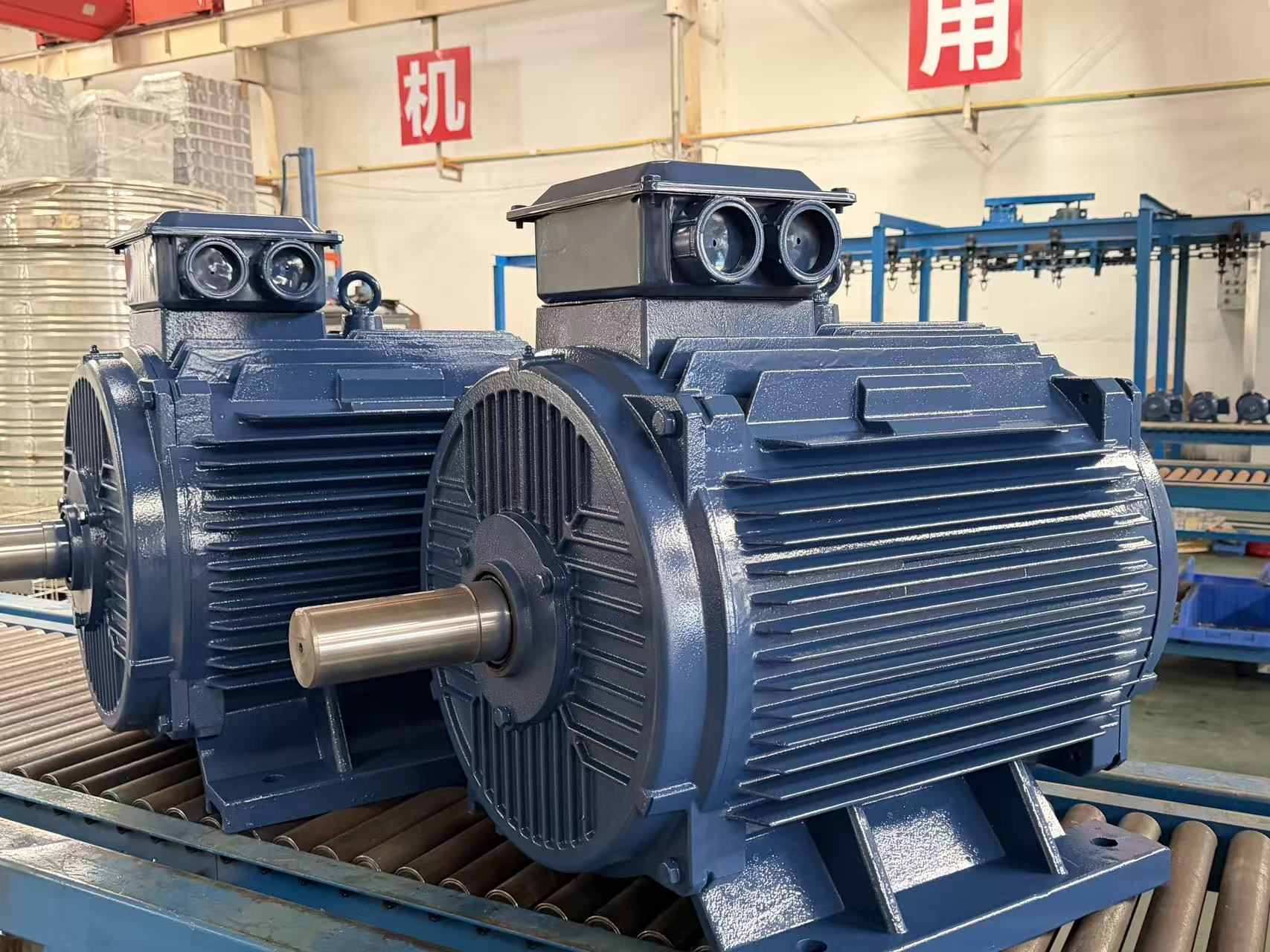
One three-phase motor, two fixed speeds. The stator winding is reconnected by contactors to change the number of poles, and the speed follows. No frequency converter in the circuit. JWMotor builds them as the YD series: two-speed pairs 4/2, 6/4 and 8/4, 0.45–82 kW, IEC frames 80–280.
Pick the pair first
The pole pair fixes the two speeds. At 50 Hz, 2 poles is 3000 r/min synchronous, 4 poles 1500, 6 poles 1000 and 8 poles 750. Rated speed is a little below that under load. Then pick the power you need at each speed.
| Pair | Synchronous speeds at 50 Hz | Power, low speed | Power, high speed | IEC frame |
|---|---|---|---|---|
| 4/2 | 1500 / 3000 r/min | 0.45–72 kW | 0.55–82 kW | 80–280 |
| 6/4 | 1000 / 1500 r/min | 0.65–55 kW | 0.85–72 kW | 90–280 |
| 8/4 | 750 / 1500 r/min | 0.45–14 kW | 0.75–22 kW | 90–200 |
The catalog lists 19 models in 4/2, 17 in 6/4 and 9 in 8/4, with performance at 380 V, 50 Hz. Rated voltage on the series page is 220–690 V. Every model has two ratings, one per speed. A YD132M-4/2 is 6.5 kW at 1450 r/min and 8 kW at 2880 r/min. A YD160L-8/4 is 7 kW at 730 r/min and 11 kW at 1450 r/min.
Contactors change the speed
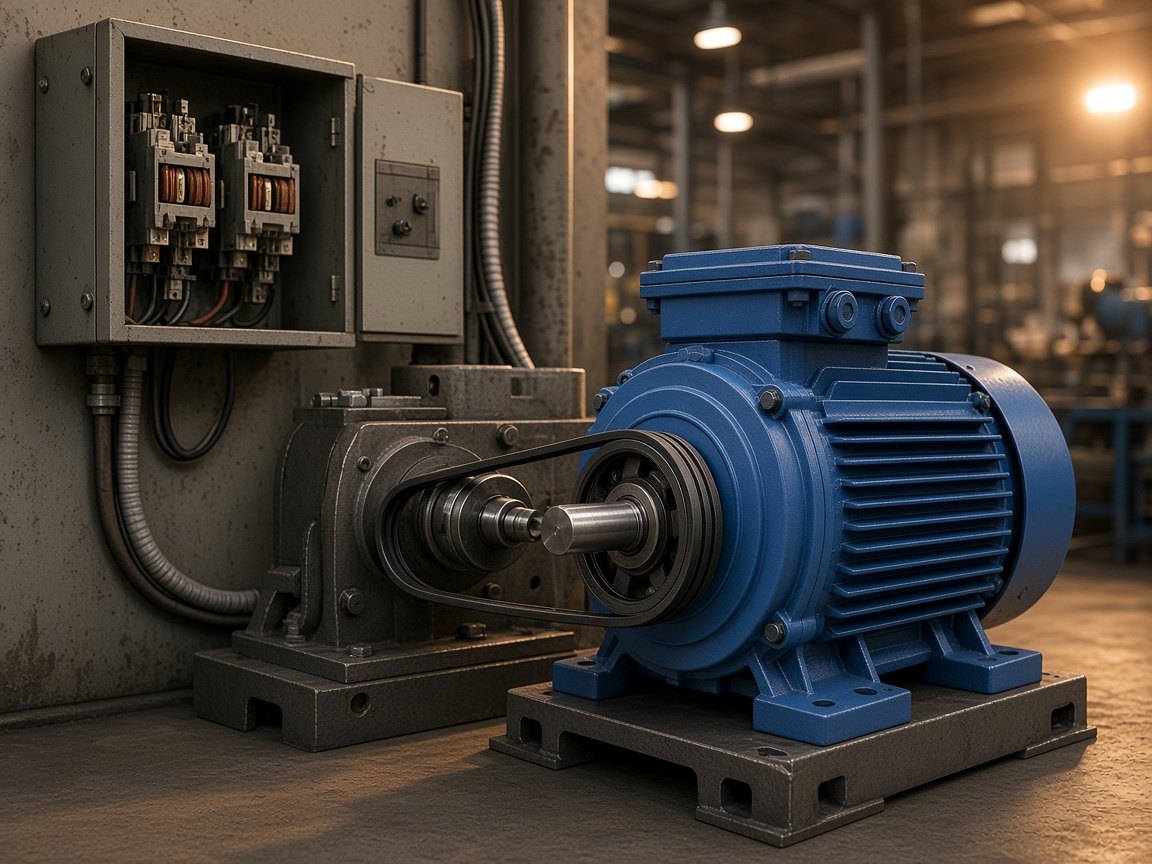
A two-speed motor has its winding brought out to the terminal box for two connections, typically a Dahlander connection. One contactor set selects the low speed, the other the high speed.
01
Speed stays on the supply
Once the poles are set, speed is locked to the supply frequency. No drive parameters to tune and no torque loss from a converter at low speed.
02
A stiff speed
The speed-torque curve is hard, so speed stays nearly constant as the load changes. That is what drill presses and milling machines need for a steady cutting speed.
03
No converter stack
No converter, shielded cable or filter. Contactors are the whole speed control, which keeps the first cost and the circuit simple.
04
No high-frequency harmonics
YD produces none. That is why the series page also names laboratory equipment and auxiliary drives on precision machine tools.
05
Starting figures
On the 4/2 pair the catalog gives starting current of 6.5 times rated at low speed and 7 times at high speed, and pull-out torque of 1.8 times rated. Check your starter for the speed you start on.
06
Site conditions
Ambient −15 °C to +40 °C. Altitude up to 1,000 m, with a power derating above that. Voltage tolerance ±5%. Catalog rows are IP55 with Class F insulation. Class H is available.
Two speeds, or something else?
A two-speed motor is the simple answer when the machine runs at a high speed and a low speed, and nothing in between.
Two fixed speeds
Machine tools, mixers and conveyors that switch between high and low. This page, and the YD series.
Three fixed speeds
Pairs 2/4/6 and 4/6/8 are on the series pages. See multi speed motors.
A fan or a pump
Load torque falls with the square of speed, so the low speed can be rated much lower. See the variable-torque YDT series.
Any speed in a band
If the speed has to move continuously, run a motor on a frequency converter. See YVF2, 5–100 Hz.
The YD series
The model code carries both speeds. In YD132M-4/2, YD is the series, 132 the frame height in millimetres, M the core length, and 4/2 the pole pair. Read it off the old nameplate and the replacement starts from the same frame and pair.
Pole-changing · three-phase
YD Series Two Speed Motors
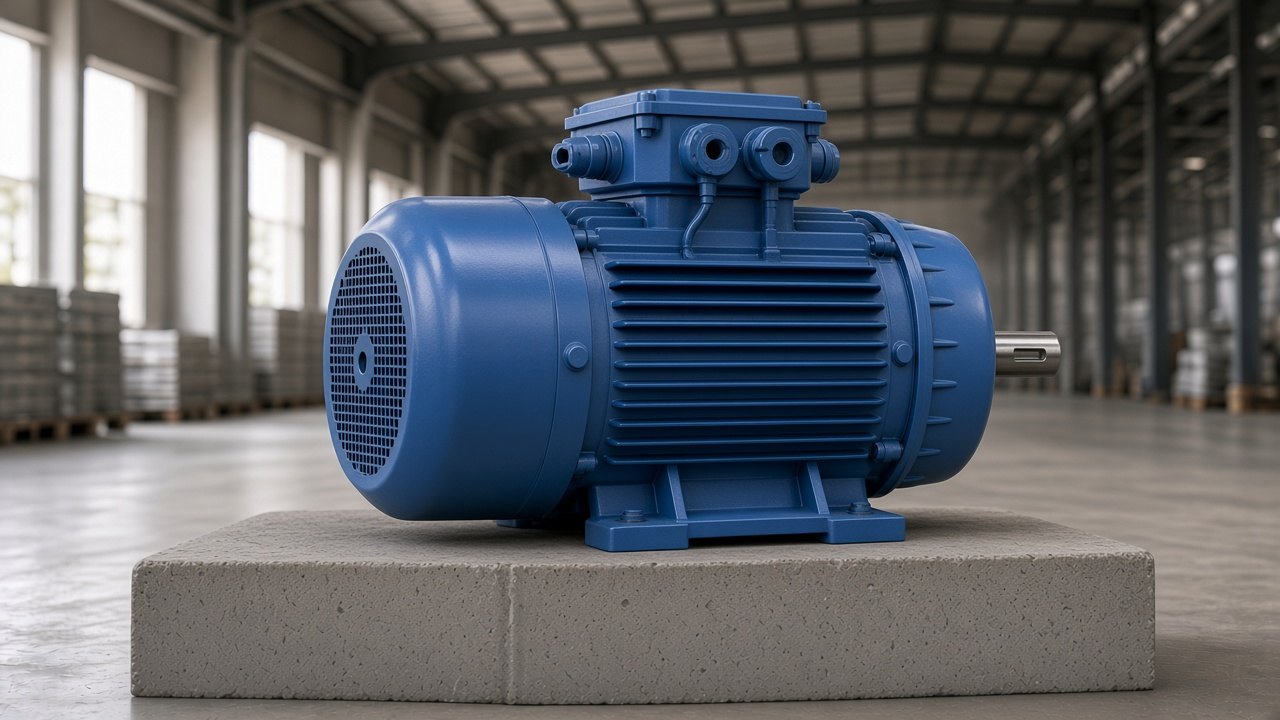
Pole-changing induction motor, copper and silicon steel. Two fixed speeds on contactors, no converter. Built for dust and heavy vibration. Pairs 4/2, 6/4 and 8/4 in the catalog.
0.45–82 kW · Frames 80–280 · 220–690 V
Where two speed motors go
Machine tools
Drill presses, milling machines and lathes, where the speed step has to hold as the cut loads up.
High and low
Mixers and conveyors that switch between a fast and a slow speed.
Marine and mining
Winches and drilling machines, where stepped speed is the duty.
Industry pages: Manufacturing · Mining and aggregates · Material handling
Send both speeds
A two-speed nameplate carries two powers. Send both, and the duty at each.
- Pole pair: 4/2, 6/4 or 8/4, or the model code from the old nameplate
- Kilowatts at the low speed and at the high speed
- Voltage and frequency
- Which speed the motor starts on, and how often it switches
- IEC frame
- Mounting: B3, B5, B35 or V1. The factory also builds B14, B34, V3 and V5.
Jiangxi Jiawang Special Motor · +86 199 0684 4761 · [email protected]
Before the quote
What is a two speed motor?
A three-phase induction motor whose stator winding can be connected two ways, giving two pole counts and so two fixed speeds. On YD the change is made by contactors. There is no frequency converter.
Which pole pairs are available?
The catalog lists 4/2 (1500 and 3000 r/min synchronous), 6/4 (1000 and 1500) and 8/4 (750 and 1500), from 0.45 kW to 82 kW in frames 80–280.
Is the power the same at both speeds?
No. Each speed has its own rating. On YD the low speed is rated lower, for example YD132M-4/2 at 6.5 kW and 8 kW, or YD160L-8/4 at 7 kW and 11 kW. Size the motor on the speed that needs the most power.
Two speed motor or VFD?
If the machine only needs two fixed speeds, a two-speed motor on contactors is simpler and costs less than a motor, converter, shielded cable and filter. It also produces no high-frequency harmonics. If speed has to move through a range, use a converter and a motor like YVF2.
Can I use YD on a fan or pump?
For centrifugal fans and pumps the variable-torque YDT series is the usual match, because its low-speed rating follows the fan curve. Tell us the duty and we will point you to the right series.
Do you build three-speed motors?
Yes. The series pages list three-speed pairs 2/4/6 and 4/6/8. See multi speed motors.