Input speed · ratio · output torque
Gear reduction electric motors
A gear reduction motor trades speed for torque. The motor’s pole count sets the speed going in. The reducer ratio divides it and multiplies the torque. JWMotor builds the motor side, RFKS for R, F, K and S reducers. Send us the ratio or the output speed you need.
How the reduction works
Two numbers decide the output: the motor speed and the gearbox ratio. We supply the first and fit it to the second.
Output speed
Motor rated speed divided by the gearbox ratio.
Output torque
Motor torque multiplied by the ratio, less the losses in the gearbox. The gearbox efficiency depends on its type: the product page gives K helical-bevel gearboxes up to 95%.
Pole count first
More poles means a slower motor with more torque per kilowatt, so the gearbox needs less reduction for the same output.
The gearbox has limits
Ratio, size and permitted output torque come from the gearbox maker’s data. We do not publish them here.
Same power, different input
Five RFKS catalog rows at 45 kW. Each pole count hands the gearbox a different speed and torque.
| Model | Poles | Rated speed | Rated torque | Starting / rated torque |
|---|---|---|---|---|
| RFKS 225M-2 | 2 | 2975 r/min | 143 N·m | 2.0 |
| RFKS 225M-4 | 4 | 1485 r/min | 287 N·m | 2.0 |
| RFKS 280S-6 | 6 | 990 r/min | 430 N·m | 2.0 |
| RFKS 280M-8 | 8 | 740 r/min | 573 N·m | 1.9 |
| RFKS 315S-10 | 10 | 590 r/min | 716.2 N·m | 1.5 |
Catalog data at 380 V, 50 Hz. Torques are at the motor shaft, before the gearbox. For more on torque, see high torque motors.
What we need from you
Any one of these lets us work out the motor. Two let us check it.
01
The ratio
From the gearbox nameplate, with the gearbox family and size.
02
The output speed
How fast the machine shaft must turn, in r/min.
03
The output torque or the load
The torque at the machine shaft, or what is being moved and how fast.
04
The starts
Heavy starts under load, frequent stops, long hours at low speed. The catalog upgrades RFKS windings and bearings for low-speed, high-torque duty.
The motor side: RFKS
One series for the input of R, F, K and S reducers.
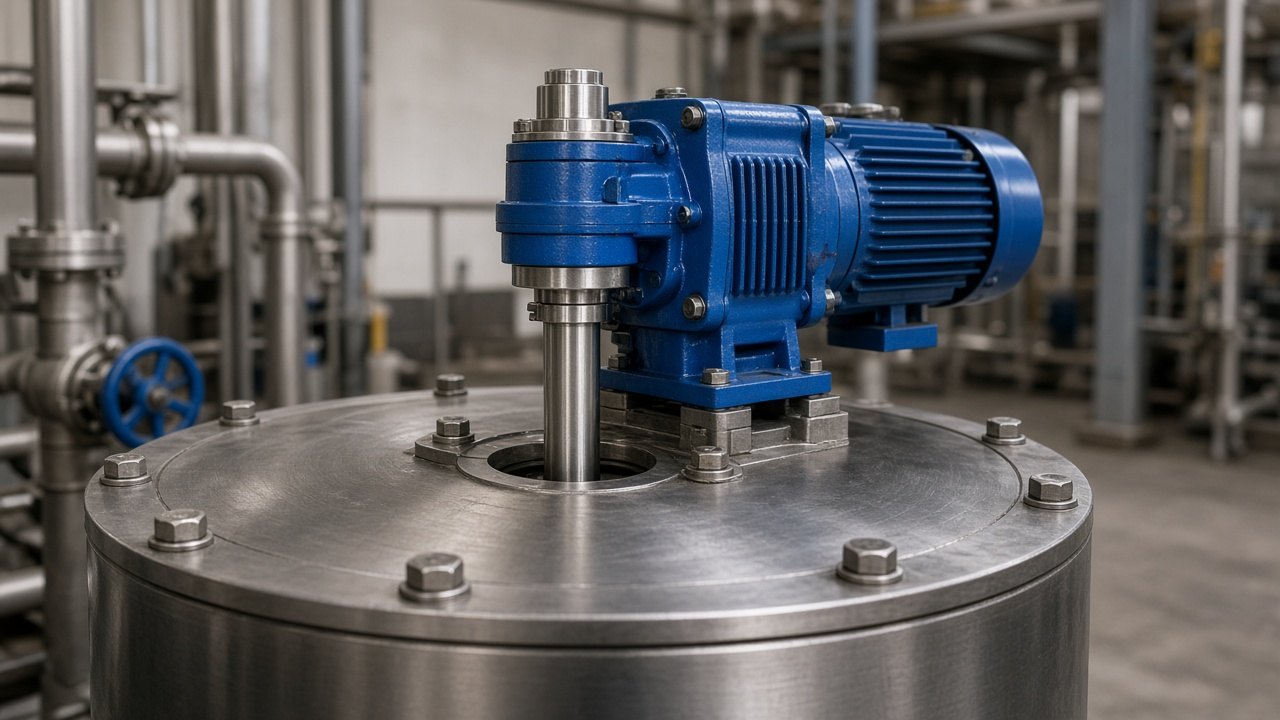
Aluminum housing motor for gear reducers
RFKS Series Motors
Three-phase asynchronous motor for direct insertion into R, F, K and S gear reducers. The shaft extension works as the gearbox’s first-stage pinion. FKM oil seals, high starting torque. IE3 to IEC 60034-30-1.
0.18–630 kW · 2 · 4 · 6 · 8 · 10 poles · Frames 80–400 · IE3 · IP55
No coupling and no adapter: against a standard motor plus flange adapter, the product page puts the axial length saving at 10–20%. Browse the gear motors category.
Where it goes
Conveyors and screws
Slow, steady output under load.
Hoists
Starts under load, where starting torque counts.
Mixers and feeders
Process and farm drives at low output speed.
Industry pages: Material handling · Agriculture · Manufacturing
Send the ratio or output speed
We size the motor to the gearbox and the load, not the other way round.
- Gearbox family, size and ratio, or the output speed in r/min
- Output torque, or the load and how it moves
- Kilowatts and poles of the old motor, if there is one
- Voltage and frequency
- Mounting position, including vertical V1 or V3
- Duty: heavy start, hours per day
Jiangxi Jiawang Special Motor · +86 199 0684 4761 · [email protected] · 1-year warranty on all products
Reduction questions
What is a gear reduction electric motor?
An electric motor driving a gear reducer, so the output turns slower and with more torque than the motor shaft. Output speed is the motor speed divided by the ratio; output torque is the motor torque times the ratio, less gearbox losses.
What ratios do you offer?
We do not list gearbox ratios on this page. The ratio comes from the reducer you use. Send it, or the output speed you need, and we size the RFKS motor to match.
Should I pick more poles or a bigger ratio?
Both slow the output. More poles give a slower motor with more torque per kilowatt, so less reduction is needed. Send the output speed and load and we will suggest a pole count.
How much torque does the motor give?
Rated torque is in the catalog for each model. At 45 kW it runs from 143 N·m on 2 poles to 716.2 N·m on 10 poles, at the motor shaft.
Which reducer types does RFKS fit?
R (helical), F (parallel shaft), K (helical-bevel) and S (helical-worm).
